Industry · July 21, 2026
Antibiotics After Cosmetic Surgery: Why the Ten-Day Prescription Is Fading
For years the standard souvenir of a cosmetic operation was a bottle of antibiotics to take for a week or more. The infection-prevention evidence has moved, and it now points somewhere uncomfortable for that habit: the dose that matters is the one given before the first incision, and the days of pills afterward do far less than patients assume. This is what antibiotic prophylaxis in cosmetic surgery actually prevents, what the guidelines say, why prolonged courses persist anyway, and what to ask when a surgeon hands you the prescription.
By The Editorial Desk
6 min read
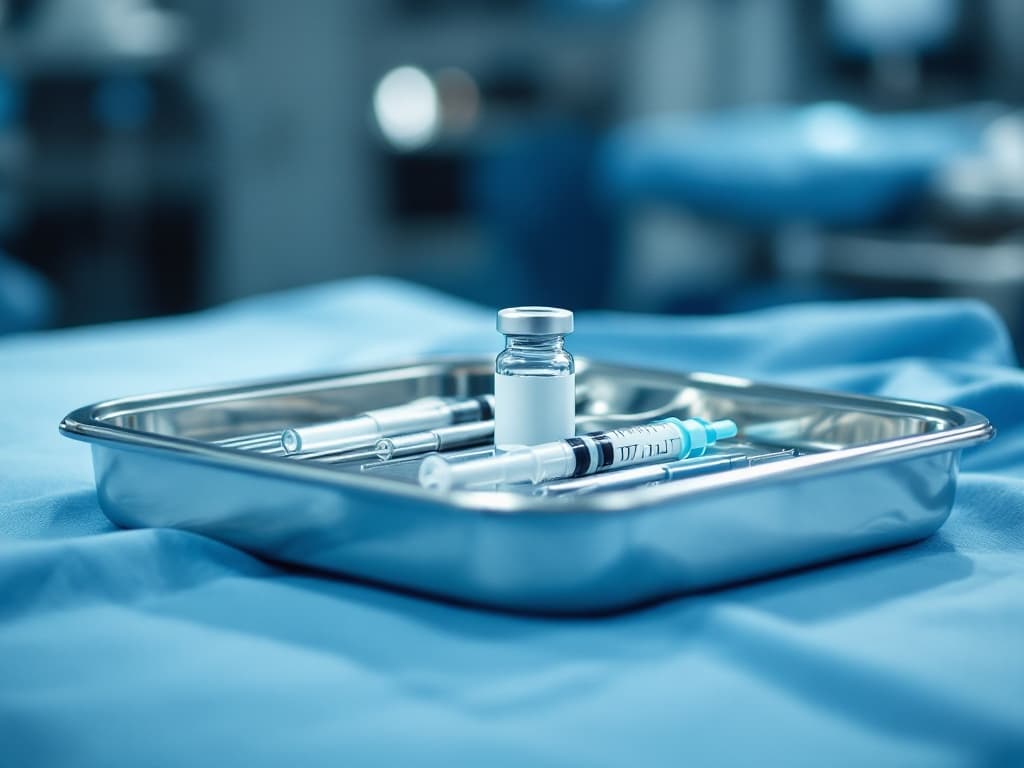
Almost every patient leaves a cosmetic operation with the same small paper bag: a pain plan, a scar plan, and a bottle of antibiotics with instructions to finish the course. The bottle feels like insurance. It is the part of the discharge packet nobody questions, because taking antibiotics after surgery has the texture of obvious common sense. The problem is that antibiotic prophylaxis in cosmetic surgery has been studied fairly carefully, and the evidence does not support the ritual the way patients think it does. The dose that carries almost all of the protective value is given in the operating room before the incision, usually within an hour of the first cut. The days of oral pills that follow are, for most clean elective procedures, doing far less work than the label implies. Some practices have quietly changed. Many have not. Knowing which conversation you are in tells you something real about how a surgeon reads evidence.
What the pre-incision dose actually does
The short answer: the antibiotic given intravenously shortly before the incision is the intervention with the strongest evidence behind it, because it puts drug in the tissue at the moment bacteria have their only meaningful chance to establish.
Surgical site infection prevention is a timing problem before it is a drug problem. Bacteria that cause a post-operative infection are introduced during the operation itself, from skin flora, from the air, from instruments and gloves. The window in which an antibiotic can prevent them from taking hold is narrow: the drug has to be present in the tissue while the wound is open. That is why guidance from the Centers for Disease Control and Prevention and from the World Health Organization converges on administering prophylaxis close to the time of incision rather than earlier or later, and why anesthesia teams treat the timing of that dose as a checklist item rather than a suggestion. For long operations, the same logic drives redosing partway through: as the drug clears, tissue levels fall, and the protection falls with them. Everything in that sequence happens before the patient wakes up. By the time the incision is closed and dressed, the biological window that antibiotics can influence has largely shut.
Why the week of pills afterward is losing its defenders
The short answer: multiple guideline bodies now advise against continuing antibiotics after the incision is closed for clean surgical procedures, because the studies do not show added infection prevention and the harms are real.
This is the part that surprises patients. The CDC's guideline for the prevention of surgical site infection recommends against additional prophylactic antibiotic doses after the surgical incision is closed in clean and clean-contaminated procedures, and the WHO guidance reaches a similar conclusion about extending prophylaxis into the post-operative period. Reviews in the plastic surgery literature examining prolonged prophylaxis in aesthetic and reconstructive cases have repeatedly failed to demonstrate that a multi-day oral course lowers infection rates compared with a single pre-operative dose. The reasoning is not that infections do not matter. It is that the extra days are treating a window that has already closed, while the costs continue to accrue: antibiotic-associated diarrhea, yeast infections, allergic reactions, the small but genuine risk of Clostridioides difficile colitis, and the slow societal bill of antimicrobial resistance. Antibiotic stewardship programs, which most accredited hospitals now run formally, exist precisely because prescribing "just in case" turned out to have a measurable price.
"The antibiotic that prevents your infection is given before you are awake. The bottle you carry home is mostly for the surgeon's peace of mind, and increasingly, for neither.
"
Where the exceptions genuinely live
The short answer: implants, drains, complex or prolonged operations, and specific patient risk factors are the places where reasonable surgeons still argue for extended coverage, and those arguments deserve to be made explicitly rather than by default.
The evidence against routine prolonged courses is strongest for clean, straightforward procedures that place no implant. It gets murkier at the edges, and honest practice acknowledges that. Breast augmentation introduces a permanent device, and the concern that low-grade bacterial contamination contributes to capsular contracture has driven a whole culture of infection-control measures in implant surgery: nipple shields, no-touch insertion techniques, pocket irrigation, glove changes. Whether oral antibiotics after discharge add anything on top of those measures is exactly the question the literature has struggled to answer cleanly, which is why practice varies. Drains are another live debate, since a drain is a physical channel between the outside world and a healing space, and some surgeons continue coverage while a drain is in place even though the supporting data is thin. Then there are patient factors that legitimately change the calculation: diabetes, active smoking, immunosuppression, obesity, prior infection at the site, and revision surgery through scarred tissue. The distinction that matters is between a surgeon who can name why your case is an exception and a practice where every patient gets ten days because every patient always has.
Why the habit persists anyway
The short answer: prolonged prophylaxis survives because the incentives around a rare, catastrophic-feeling complication are asymmetric, and because outpatient cosmetic practices sit outside the stewardship systems that changed hospital behavior.
Nobody in this system is behaving irrationally on their own terms. An infection after elective cosmetic surgery is a small-probability event with an outsized emotional and reputational cost: an unhappy patient, a compromised result, sometimes an implant removed and a year lost. Against that, a week of a cheap oral antibiotic feels like a trivial hedge, and the harms it causes are diffuse, delayed, and rarely traced back to the prescription. Patients reinforce it too, because a prescription reads as thoroughness and its absence can read as cutting corners. Hospitals have institutional stewardship committees, pharmacists, and infection-control auditing that pushed inpatient practice toward guideline concordance. A private accredited outpatient surgical suite often has none of that machinery, so the habit persists on momentum. This is the ordinary way medicine changes: the evidence arrives, the guidelines follow, and the practice takes another decade to catch up, unevenly, one practice at a time.
The honest summary
Antibiotics have a real and important role in cosmetic surgery, and this is not an argument against them. It is an argument about when they work. The intravenous dose given shortly before the incision, redosed during long operations, is supported by strong evidence and is standard of care. The days of oral pills afterward are a different matter: CDC and WHO guidance advise against continuing prophylaxis after closure for clean procedures, and the plastic surgery literature has not shown that extended courses lower infection rates in routine aesthetic cases. Meanwhile the downsides are documented, from gastrointestinal complications to resistance.
Genuine exceptions exist. Implants, drains, long or complex operations, and patients with diabetes, active smoking, or immunosuppression all shift the calculation, and a surgeon who explains that reasoning is doing the job properly. What should give a patient pause is the universal ten-day course handed to every case regardless of circumstance, because that is not a clinical decision. It is a policy substituting for one. The practices that prevent infection best are usually the ones focused on the unglamorous inputs: sterile technique, gentle tissue handling, keeping the patient warm and their blood sugar controlled, appropriate drain use, and getting the pre-incision dose right. If you take one thing from the paper bag, take the question rather than the assumption. Ask what the course is for. The answer tells you how the practice thinks.
Related reading: Blood Clots After Plastic Surgery: The Risk That Belongs in Every Consult and Capsular Contracture: The Breast Implant Complication Every Consult Should Name Out Loud.