Industry · August 28, 2026
Arnica and Bromelain for Bruising After Surgery: What the Trials Show and What the Recovery Kit Sells
Almost every cosmetic practice in Los Angeles sends patients home with arnica, bromelain, or both, and a growing number sell them at the front desk in a branded recovery kit. The evidence behind the habit is thinner than the confidence with which it is dispensed: a handful of small randomized trials, several of them contradictory, a systematic review that called the data inadequate, and a homeopathic product that by definition contains almost none of the plant on its label. Here is what arnica and bromelain have actually been shown to do for bruising after surgery, the difference between the versions that are harmless and the versions that are not, and how to tell whether the kit you were handed is medicine or merchandise.
By The Editorial Desk
10 min read
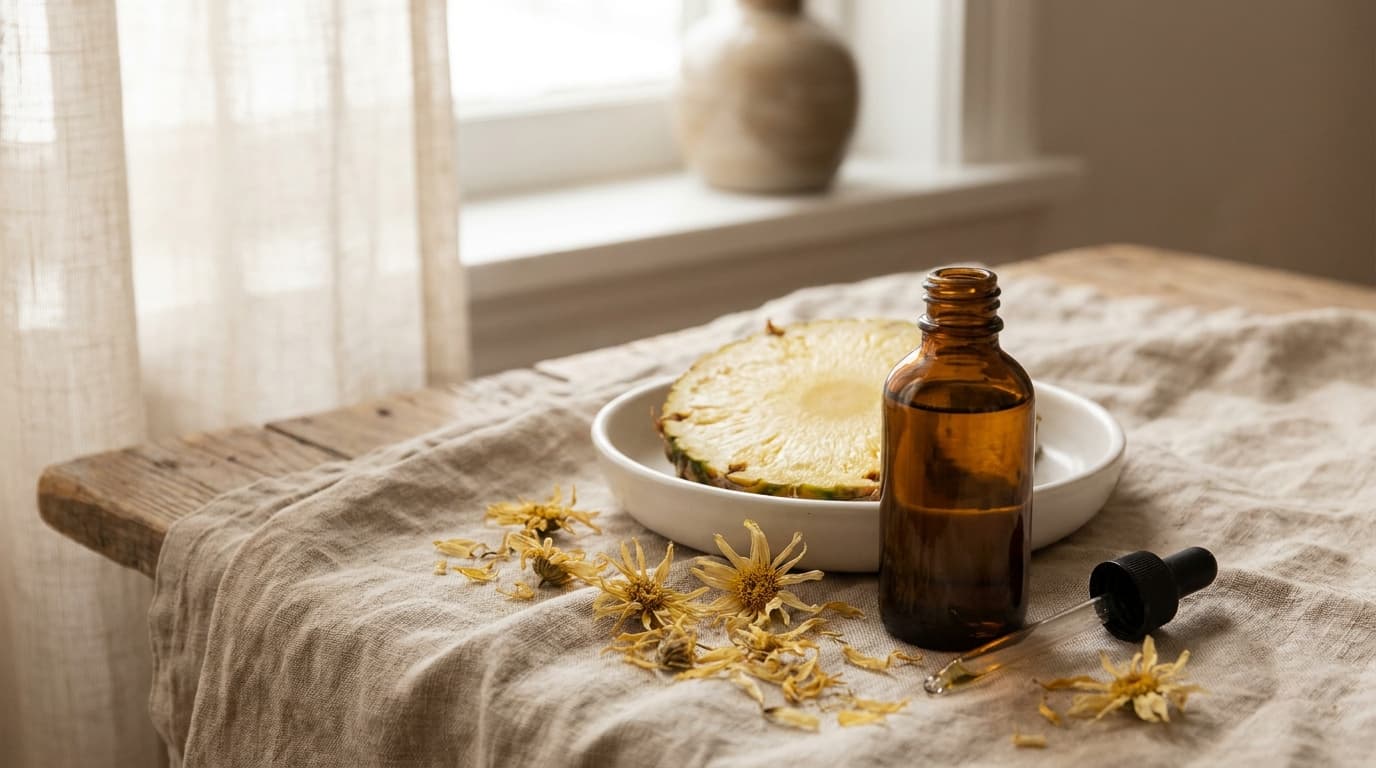
The post-operative instruction sheet is where a surgical practice reveals what it actually believes. Somewhere between "sleep with your head elevated" and "call us for a fever over 101," a large majority of aesthetic practices in this country now print a line about arnica and bromelain for bruising after surgery. Take the little white pellets under the tongue starting the night before. Take the pineapple-enzyme capsules three times a day for a week. Some practices stop there. A growing number have turned the instruction into a product, a "recovery kit" sold at checkout for anywhere from 40 to 200 dollars, often with the practice's name on the box.
None of this is dangerous in the form most patients receive it, and that is precisely why it has never been examined very hard. A harmless recommendation does not generate complaints, malpractice claims, or FDA warning letters. It just accumulates, year over year, until it is standard of care by repetition. The honest question is not whether arnica and bromelain hurt. It is whether they do anything at all, whether the trials that get cited say what the practices say they say, and what a patient who wants less bruising should actually be asking for instead.
What arnica has actually been shown to do
The short answer: the randomized trials of arnica for surgical bruising are small, mostly under 50 patients, and split roughly evenly between a modest measurable benefit and no benefit at all, and the one systematic review to pool them concluded the evidence was inadequate to recommend it.
The trial most often cited in favor is a 2006 study in the Archives of Facial Plastic Surgery that gave homeopathic arnica or placebo to patients undergoing facelift and measured the area of bruising from photographs. The arnica group had a smaller area of ecchymosis on some post-operative days, and the difference reached statistical significance on some measurements but not others. The study enrolled 29 patients. The trial most often cited against is a 2007 randomized comparison in Plastic and Reconstructive Surgery that put rhinoplasty patients on arnica, a corticosteroid, or nothing, and found that the steroid reduced early bruising and swelling while arnica did not separate from the control group in any meaningful way. A 2016 rhinoplasty trial in Aesthetic Plastic Surgery went the other direction again, reporting less extensive and less intense bruising with perioperative arnica, in a sample of about two dozen patients.
When researchers at the University of California, Davis pooled the available trials for a 2016 systematic review in Dermatologic Surgery, they found a mix of positive, null, and methodologically weak studies for both arnica and bromelain and described the overall evidence as insufficient to support a recommendation for either. That review is now the standard reference on the question, and it is not the reference most practices are relying on when they print the instruction sheet. What they are relying on is the 2006 facelift study, a pleasant decade of patient anecdote, and the fact that no one has ever been harmed by a sugar pellet.
The homeopathic problem nobody mentions
The short answer: the arnica sold in most recovery kits is a homeopathic preparation, typically diluted to 30C, which means the finished pellet contains no measurable amount of the arnica plant, and any effect it has cannot be pharmacological.
This is the part of the conversation that practices tend to skip, because it is awkward. Arnica montana the plant contains helenalin, a sesquiterpene lactone that is genuinely bioactive and genuinely toxic when swallowed. The FDA does not permit arnica as an ingredient in food or oral supplements outside a narrow flavoring exemption, and the National Institutes of Health's supplement fact sheets list oral arnica as unsafe. The reason the pellets in the recovery kit are legal and safe is that they are homeopathic: the plant extract has been diluted serially, one part in a hundred, thirty times over, until the probability of a single molecule of the original substance remaining in the pellet is effectively zero. That is not a criticism of the product. It is the product's own description of itself, printed on the tube.
A patient can reasonably decide that a 30C pellet is a harmless ritual worth ten dollars. What a patient should not be told is that the pellet is delivering a plant compound to the tissue, because it is not. The one form of arnica with a plausible mechanism is topical: a 2010 randomized trial in the British Journal of Dermatology created standardized bruises with a laser and found that a 20 percent topical arnica ointment reduced bruise intensity relative to placebo, while a 10 percent preparation did not. Topical arnica applied directly over a bruise, away from incisions, has a mechanism and a trial behind it. Sublingual homeopathic arnica has a tradition. Practices frequently conflate the two, and the recovery kit almost always contains the second.
"The arnica in the recovery kit is diluted until nothing of the plant remains, and the bromelain has been tested mostly in dental patients. Neither fact stops the kit from being sold as post-surgical medicine.
"
What bromelain does, and where it was tested
The short answer: bromelain, a protein-digesting enzyme extracted from pineapple stem, has a real anti-inflammatory mechanism and a small body of trials showing modest reductions in swelling and bruising, most of them in oral surgery patients rather than cosmetic surgery patients, and it carries a mild antiplatelet effect that matters before an operation.
Bromelain is the more interesting of the two, because it is at least a drug. It is absorbed in measurable amounts from the gut, it reduces levels of bradykinin and certain prostaglandins in tissue, and it has been studied for swelling after third-molar extraction, after episiotomy, and after nasal and sinus surgery, with several small trials reporting less edema and faster resolution of bruising. The dental literature is the largest, and it is mixed: some trials show a meaningful reduction in facial swelling in the first three days, others show no difference from placebo, and the doses vary so widely across studies (from 200 to more than 3,000 milligrams a day) that pooling them is guesswork. The Dermatologic Surgery review reached the same conclusion for bromelain as for arnica. There is a signal. It is not strong enough to call a standard.
The antiplatelet effect is the practical detail. Bromelain inhibits platelet aggregation in laboratory studies and is listed by the American Society of Plastic Surgeons among the supplements patients should stop before surgery, alongside fish oil, vitamin E, ginkgo, garlic, and the other entries on the pre-operative stop list. A practice that tells a patient to start bromelain three days before a facelift is asking for the enzyme's anti-inflammatory effect on one hand while accepting a small increase in bleeding tendency on the other, in an operation where a hematoma is the most common serious complication. The more defensible protocol, and the one careful practices use, starts bromelain after the operation, once the surgical field has stopped bleeding, and stops it if the patient is on any anticoagulant. Under the Dietary Supplement Health and Education Act, none of this dosing is regulated, tested for potency, or standardized between brands, which means the 500-milligram capsule in one kit and the 500-milligram capsule in another may not contain the same amount of active enzyme.
What actually reduces bruising
The short answer: the interventions with real trial support for reducing bruising after cosmetic surgery are a single intra-operative dose of dexamethasone, tranexamic acid, strict blood pressure control, head elevation, cold compresses in the first 48 hours, and stopping anticoagulant supplements and medications two weeks before, and none of them come in a branded box.
A bruise is blood that has left a vessel and pooled in tissue, and the body clears it on a schedule that supplements do not materially change: hemoglobin is broken down by macrophages into biliverdin, then bilirubin, then hemosiderin, which is why a bruise cycles from purple through green and yellow to brown over ten to fourteen days. The only ways to have a smaller bruise are to spill less blood in the first place or to clear it faster, and the second is largely out of anyone's hands. The first is where the evidence lives. Tranexamic acid, given intravenously or infiltrated locally, reduces bleeding and post-operative ecchymosis in rhinoplasty and facelift with randomized-trial support that dwarfs anything published on arnica. A single dose of dexamethasone at the start of surgery reduces early swelling and bruising in the rhinoplasty literature and has been meta-analyzed. Keeping blood pressure controlled in the recovery room and through the first night is the single most important thing a facelift practice does to prevent bleeding, and it is a nursing protocol, not a purchase.
The cheap measures work too. Head elevation for the first several nights reduces venous pressure in the face. Cold compresses applied intermittently in the first 48 hours, then stopped, reduce early extravasation. Avoiding aspirin, ibuprofen, naproxen, and the supplement list for two weeks before surgery removes the most common patient-driven cause of excess bruising. The full swelling timeline after any operation is governed by dissection plane, technique, and lymphatic drainage, and a patient whose surgeon does these things well will bruise less than a patient who took every capsule in the kit.
Why the kit persists
The short answer: the recovery kit survives because it is profitable, because it gives anxious patients something to do, and because the placebo effect on a patient's perception of their own bruising is real even when the effect on the bruise is not.
A branded recovery kit with a 30C arnica tube, a bottle of bromelain, a scar gel, and a compression sleeve costs a practice perhaps 15 to 30 dollars in wholesale product and sells for several times that. Multiply by a few hundred procedures a year and it is a meaningful line on the income statement, and one that is entirely unregulated because supplements are not drugs. Practices that sell the kit are not committing fraud; they are selling something harmless with a plausible story. But the incentive should be named, because it is the same incentive that governs every other retail shelf in a cosmetic practice, from skincare lines to LED masks, and a patient is entitled to know that the recommendation and the sale come from the same desk.
The second reason is the more humane one. Recovery from cosmetic surgery is a week or two of looking worse than you did before the operation while waiting to look better, and patients want agency in that window. A twice-daily ritual with pellets and capsules gives them some. The trials that report a benefit from arnica are consistent with a real effect, but they are also consistent with patients who took the pellets rating their own bruising more favorably, and the photograph-based studies were designed precisely to strip that out. A practice that hands over the kit with a candid sentence, "the evidence for this is weak, it will not hurt you, and some patients feel better doing something," is being honest. A practice that presents it as the reason the patient will bruise less is selling the ritual as the medicine.
The honest summary
Arnica and bromelain for bruising after surgery are supported by a handful of small, inconsistent trials and a systematic review that called the evidence inadequate for both. The arnica in most recovery kits is homeopathic, diluted to the point where no plant compound remains, and any benefit it has is not pharmacological; topical arnica at 20 percent has one laser-bruise trial behind it and is a different product. Bromelain has a real mechanism, a mild antiplatelet effect that argues against starting it before surgery, and a trial record built mostly in dental patients. Neither will harm a healthy patient with no anticoagulants, and neither is the reason a patient bruises less. The interventions with genuine support are tranexamic acid, a single intra-operative dose of dexamethasone, blood pressure control, head elevation, cold compresses in the first two days, and a strict two-week stop on anticoagulant medications and supplements. Take the kit if it makes the week easier. Judge the practice by what it does in the operating room, not by what it sells at the desk on the way out.