Procedure Deep-Dive · May 22, 2026
Can You Dissolve Dermal Filler? The Answer Depends Entirely on What You Were Injected With
Dissolving dermal filler is a routine same-week fix for one category of injectable and flatly impossible for the rest. Here is what hyaluronidase can reverse, what it cannot touch, and why reversibility should never be the reason you relax about who holds the needle.
By Rosalie Vega
5 min read
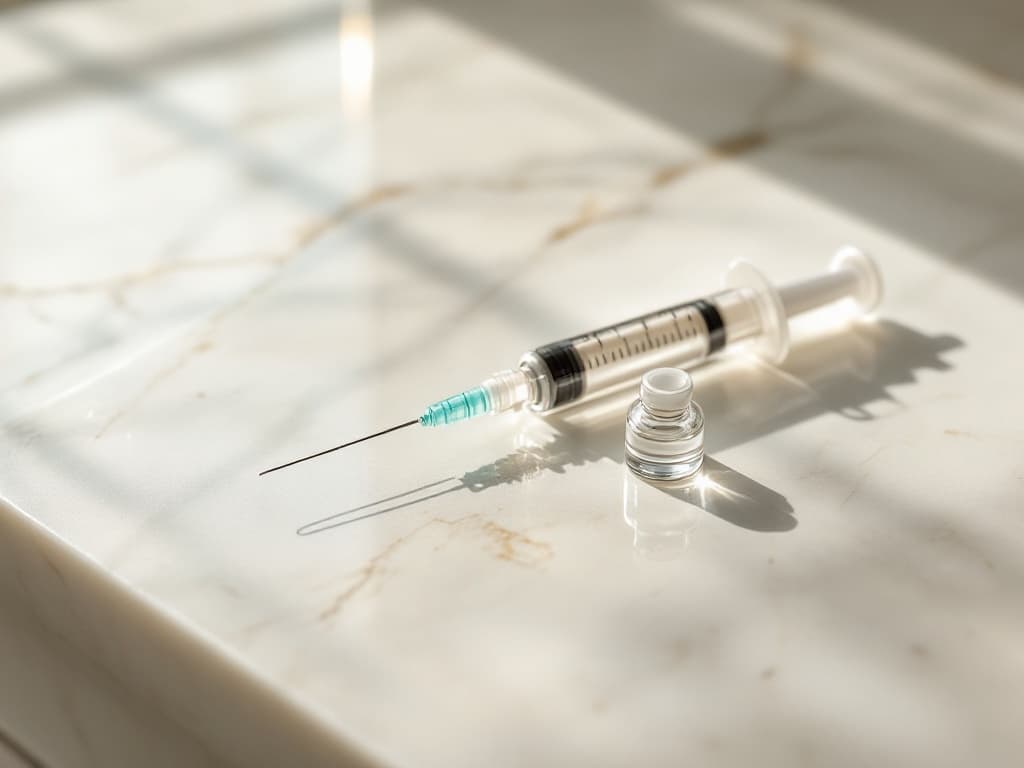
The single most reassuring sentence in aesthetic medicine is also one of the most misleading. Yes, you can dissolve dermal filler. The reversibility of injectables has become a standard part of the consultation script, offered as a safety net that makes the whole decision feel low-stakes: if you do not like the result, it can simply be undone. That is true for one category of filler and flatly false for several others, and the gap between those two facts is exactly where patients get hurt. Whether you can dissolve dermal filler depends entirely on what was injected, and almost nobody asks the question in those terms before they are in the chair.
The short answer: only hyaluronic acid filler is reliably reversible
Only one widely used class of filler can be dissolved on demand, and that is hyaluronic acid.
Hyaluronic acid (the gel in Juvederm, Restylane, RHA, and most of the products people mean when they say "filler") can be broken down by an injected enzyme called hyaluronidase. Veteran injectors state the mechanism plainly: hyaluronic acid fillers can be safely and effectively dissolved using an enzyme called hyaluronidase, which gives patients a way out of overcorrection, asymmetry, or a result that simply does not look right. That reversibility is genuine, and it is the reason HA became the default filler in serious practices. It is forgiving in a field where forgiveness is rare.
The trouble is that "filler" in a marketing brochure and "filler" in a treatment room are not the same word. The reassurance attaches to the category most patients have heard of and quietly does not apply to the rest of the menu.
How dissolving filler actually works
Hyaluronidase works by accelerating a process your body already runs.
The enzyme breaks the bonds holding the hyaluronic acid gel together, and the area returns toward its untreated state as the body absorbs the fragments. It is fast: patients typically notice improvement within 24 to 48 hours, with the full effect visible within a few days. Compared to the months a filler would otherwise sit in the tissue, that is close to an undo button.
It is not without cost. Hyaluronidase carries a small but real risk of allergic reaction, which is why a careful injector asks about bee-sting allergies and sometimes spot-tests first. It is also indiscriminate: the enzyme dissolves the filler and some of your native hyaluronic acid in the treated area, which is why an over-dissolved lip can briefly look deflated before it rebounds. Reversible is not the same as consequence-free.
""Filler" in a marketing brochure and "filler" in a treatment room are not the same word. The promise of reversibility attaches to hyaluronic acid and quietly does not apply to the rest of the menu.
"
The fillers nobody mentions when they say it is reversible
Several of the most common injectables cannot be dissolved at all, and the consultation rarely makes that distinction loudly.
- Biostimulatory fillers. Poly-L-lactic acid (Sculptra) and calcium hydroxylapatite (Radiesse) do not sit in your face as a removable gel. They provoke your own tissue to build collagen over months. There is no enzyme that reverses that. If the placement is wrong or the volume is too much, the options are limited to waiting it out, which can mean a year or longer, or surgical revision.
- Permanent fillers. Silicone and polymethylmethacrylate (PMMA, branded as Bellafill) are designed to stay. The FDA has issued explicit warnings against injectable silicone for body and facial contouring because of severe, sometimes delayed complications, and none of these materials respond to hyaluronidase. When a permanent filler goes wrong, the correction is excision: cutting it out.
- Fat transfer. Grafted fat is living tissue, not filler in the pharmacological sense, but patients lump it in. It cannot be dissolved either. Over-grafting is corrected with liposuction or it is lived with.
This is the part a reversibility pitch tends to skip. The American Society of Plastic Surgeons and the FDA both treat the durability of biostimulatory and permanent products as a feature to be planned around, not a footnote. A patient who hears "filler is reversible" and then receives Sculptra has been told something true about a product they did not get.
Reversibility is not a license to overfill
Here is where the safety net becomes a trap. The upside is real: the ability to reverse or refine results adds a level of flexibility rarely available anywhere else in aesthetic care. That flexibility belongs to hyaluronic acid alone. The danger is letting it lower the bar for the decision that actually matters, which is who is holding the syringe.
The honest hierarchy runs in the opposite direction from the marketing. Prevention through conservative dosing and accurate anatomy is the goal. Dissolving is the backstop, not the plan. An injector who leans on "we can always dissolve it" as a reason to be aggressive has the logic backwards, because over-dissolving has its own learning curve, vascular complications from filler (the rare but serious event where filler blocks a blood vessel) are a medical emergency that hyaluronidase treats but does not make trivial, and biostimulators offer no backstop at all. The reversibility of HA is a reason to trust the material. It is not a reason to relax about the hand.
The honest summary
Can you dissolve dermal filler? Yes, if it is hyaluronic acid, and the reversal is fast, reliable, and one of the genuine reasons HA became the standard. No, if it is a biostimulator like Sculptra or Radiesse, a permanent filler like silicone or PMMA, or transferred fat, in which case your only real corrections are time or surgery. The reassuring line you hear in consultations is accurate for one product and false for the others, and the burden is on the patient to ask which one they are getting. Reversibility is a safety net, not a substitute for an injector who places filler conservatively and knows the anatomy cold.
For patients weighing the question, the FDA's published warnings on permanent and unapproved fillers are the essential reading, paired with one direct question to your injector: what exactly is going in, and can that specific product be dissolved?
Related reading: Dermal Atrophy: Why Skin Gets Thinner With Age, and Why Moisturizer Cannot Reverse It.