Industry · July 30, 2026
Cellulite: The Biggest Treatment Market in Aesthetics, Built on the Thinnest Evidence
Cellulite affects most adult women, is not caused by being overweight, and has almost no treatment with strong published support. The two products that actually worked on the structural cause have both been pulled from the market for commercial reasons. Here is what the anatomy says, what the evidence review found, and how to read a clinic's cellulite menu.
By The Editorial Desk
8 min read
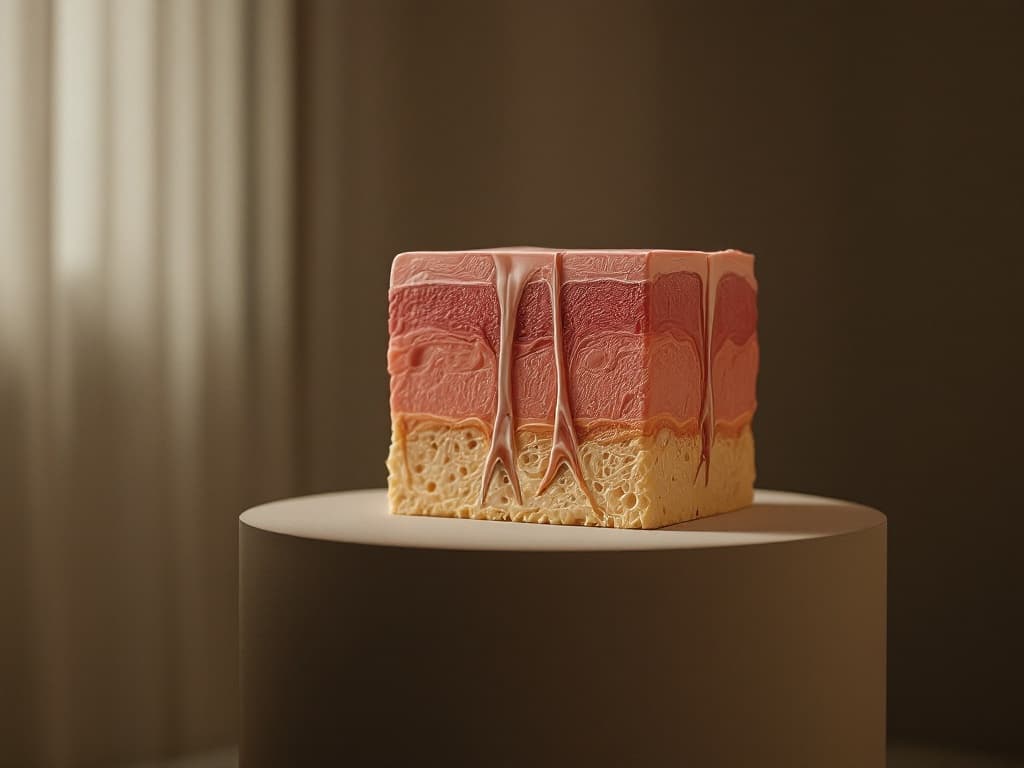
Cellulite is the most commonly treated cosmetic complaint with the weakest published support behind its treatments. That sentence is not a provocation. It is roughly what the medical literature says when you read it end to end, and it explains why a condition present in the large majority of adult women sustains a global device and injectable market while producing almost no durable results.
The interesting part is not that the industry sells weak treatments. Every industry does. The interesting part is that the two products with the best mechanistic logic and the longest durability data have both been withdrawn from the American market by their own manufacturers, for reasons that had nothing to do with whether they worked.
Cellulite is a structural problem, not a fat problem
The short answer: cellulite is caused by fibrous bands under the skin, not by having too much fat, which is why thin women get it and why fat-removal procedures do not fix it.
The anatomy is well described. Fibrous bands called septae run from the underside of the dermis down to the deep fascia that overlies muscle. Fat sits in lobules between them. When those septae are short, dense, and oriented perpendicular to the skin, they tether the surface downward while the fat lobules between them push outward. The result is the dimpled, quilted topography that everyone recognizes on the buttocks and posterior thighs.
Cellulite is thought to affect eighty to ninety percent of postpubertal women, though no reliable epidemiologic survey exists to pin the number down. It is uncommon in men, and the accepted explanation is architectural: the septal arrangement in male subcutaneous tissue tends to run at an angle rather than straight up and down, and male dermis is thicker on average. Contributing factors stack on top of the architecture, including microvascular changes, low-grade inflammation in the subcutaneous layer, dermal thinning with age, and hormonal influence on connective tissue.
None of that describes a disease. Cellulite has carried medical-sounding names for a century, including gynoid lipodystrophy and edematous fibrosclerotic panniculopathy, and the naming is part of the marketing. A structure present in most healthy women is not a pathology. It is a normal variant that the aesthetic market has successfully framed as a condition requiring intervention.
Weight loss does not reliably fix it, and liposuction can make it worse
The short answer: losing weight changes the volume of the fat lobules but does nothing to the bands that tether the skin, and removing deep fat surgically can deepen the dimples it leaves behind.
This is the single most useful thing a patient can learn about cellulite, and it is the opposite of what most people assume. Weight loss reduces the outward push of the fat between the septae, which can soften the appearance somewhat. It can also worsen it, because thinner skin over a released volume drapes more visibly across the same tethering points. Lean athletes have cellulite. This is not a discipline problem.
Liposuction is worse than neutral here. The American Society of Plastic Surgeons puts it plainly on its own patient pages: because liposuction removes soft fatty tissue and does not alter the skin or the fibrous connecting bands, the mechanism producing cellulite is untouched. Removing the deep fat that provided bulk underneath can accentuate the superficial dimpling that remains. Surgeons quoted by the society have described liposuction devolumizing the skin and making cellulite considerably worse.
"A patient who arrives asking for liposuction to treat cellulite is asking for a procedure that addresses none of the responsible anatomy and can worsen the appearance of the tissue it leaves behind. A surgeon who agrees without correcting the premise has told you something about the practice.
"
The corollary matters for anyone planning body contouring. Cellulite is not a complication of good liposuction and it is not evidence of bad liposuction. It was there before, the operation did not target it, and any consent conversation worth having names that in advance rather than after.
What the evidence review actually found
The short answer: a systematic review of the cellulite treatment literature found no modality with clear evidence of good efficacy, with weak positive signals for only two.
The reference point is the evidence-based review published in the American Journal of Clinical Dermatology in 2015. Of the sixty-seven studies the authors assessed, only nineteen were randomized and placebo-controlled. Their conclusion was that no clear evidence of good efficacy could be identified for any evaluated cellulite treatment, and that the studies carried important methodological flaws across the board, including the laser and light-based devices, radiofrequency, and topical products. The two modalities showing some potential benefit were acoustic wave therapy and the minimally invasive 1440 nanometer Nd:YAG laser.
Later systematic reviews have not overturned that picture. Reviews of electrophysical agents and of cosmetic topical products continue to report small effect sizes, short follow-up, and inconsistent outcome measurement. Part of the problem is real and structural: cellulite has no accepted objective endpoint. Grading depends on photographic severity scales, and standardized lighting, posture, and muscle contraction change the appearance of the same buttock enough to swing a grade. A modality that shows improvement in unblinded before-and-after photographs at four weeks has demonstrated very little.
The practical translation is that the entire non-invasive category, meaning creams, massage, radiofrequency, cryolipolysis, and the wide field of energy devices sold in packages of six or twelve sessions, is selling temporary and modest change at best. That is not fraud. Most of these devices carry clearance language that says exactly this, using the phrase "temporary reduction in the appearance of cellulite." Patients read the clearance and hear a cure.
The two treatments that worked, and what happened to them
The short answer: the products that targeted the fibrous septae directly produced the longest lasting results in the field, and both were discontinued by their manufacturers for commercial and tolerability reasons rather than for lack of effect.
If the septae cause the dimple, cutting or dissolving the septae should fix the dimple. That logic held up.
Cellfina, cleared by the FDA in 2015, used a guided mechanical subcision device to release the bands under individual dimples. It went on to receive a three-year durability clearance and then, in 2019, a five-year indication, the longest durability claim ever granted to a cellulite treatment. It has since been discontinued and is no longer sold in the United States, a commercial decision rather than a safety one.
Qwo, collagenase clostridium histolyticum-aaes, was approved by the FDA in July 2020 for moderate to severe cellulite in the buttocks of adult women. It was the first injectable ever approved for cellulite, and it worked by enzymatically dissolving the collagen in the septae. On December 6, 2022, after less than two years on the market, Endo announced it would cease production and sale, citing market concerns about the extent and variability of bruising after the initial treatment and the potential for prolonged skin discoloration. The company had run an open-label study in 2022 specifically to test bruising mitigation and reported only modest reductions. The drug remained approved. It simply stopped being made.
What remains in the same category is Avéli, cleared in 2022 for long-term reduction of cellulite in the buttocks and thighs, using a targeted subcision approach that lets the operator confirm in real time that a specific band has been released. Its clinical claim is reduction in appearance for up to one year after a single session, which is a considerably more modest claim than the five-year Cellfina indication it effectively replaced.
How to read a clinic's cellulite menu
The short answer: sort every offering by whether it targets septae, and treat the length and hedging of the marketing language as an inverse indicator of the evidence behind it.
A cellulite page that lists eight treatments is not offering choice. It is offering coverage, because nothing on the list reliably works and the practice needs something to sell to everyone who walks in. Sort the list yourself. Subcision-type procedures act on the responsible anatomy. Acoustic wave therapy has the thinnest defensible evidence signal in the non-invasive group. Radiofrequency, ultrasound, massage systems, and topicals produce temporary and small changes, and the honest version of that pitch is a short-term appearance improvement before an event, priced accordingly.
Two other patterns are worth naming. Fillers and biostimulators are increasingly marketed for cellulite dimples, using volume beneath the depression to lift it. There is early published work on this, mostly small case series, and it is not a substitute for releasing the band. And any practice presenting cellulite improvement as a benefit of liposuction or of a body contouring package has either not read its own society's patient education or has decided not to mention it.
The honest summary
Cellulite is a normal structural feature of most adult female subcutaneous tissue, not a disease and not a consequence of body weight.
The tethering fibrous septae are the cause. Any treatment that does not act on them is working on the wrong tissue, which is why weight loss produces inconsistent results and why liposuction can deepen the appearance rather than improve it.
The published evidence across the treatment field is genuinely poor. The most cited systematic review found no modality with clear efficacy across sixty-seven studies, of which fewer than a third were randomized and placebo-controlled. Nothing published since has changed that conclusion in any meaningful way.
The treatments that worked best mechanically are the ones the market retired. Cellfina held a five-year durability indication and is gone. Qwo was the first approved injectable for cellulite and was discontinued inside two years over bruising variability, while remaining an approved drug. Targeted subcision continues under a newer device with a one-year claim.
The reasonable positions are therefore narrower than the menu suggests. Accept it, which is what most dermatologists quietly do about their own. Or pursue targeted subcision with clear expectations about which specific dimples are being released and for how long. What is not reasonable is a twelve-session package of energy treatments sold on the promise of a structural change that no energy device has been shown to produce.