Industry · August 29, 2026
Driving and Going Back to Work After Plastic Surgery: What the Impairment Data Actually Says
The two questions every patient asks in the last five minutes of a consultation, when can I drive and when can I go back to work, usually get answered with a number pulled from habit. The evidence behind the numbers is more interesting than the numbers. Anesthesia impairs driving for a full day whether or not you feel it, prescription opioids make you a legally impaired driver in every state, a lap belt sits precisely on an abdominoplasty incision, and the federal leave law most patients assume covers cosmetic surgery specifically does not. Here is how the timelines are actually set, procedure by procedure, and the questions that separate a practice with a plan from one with a pamphlet.
By The Editorial Desk
10 min read
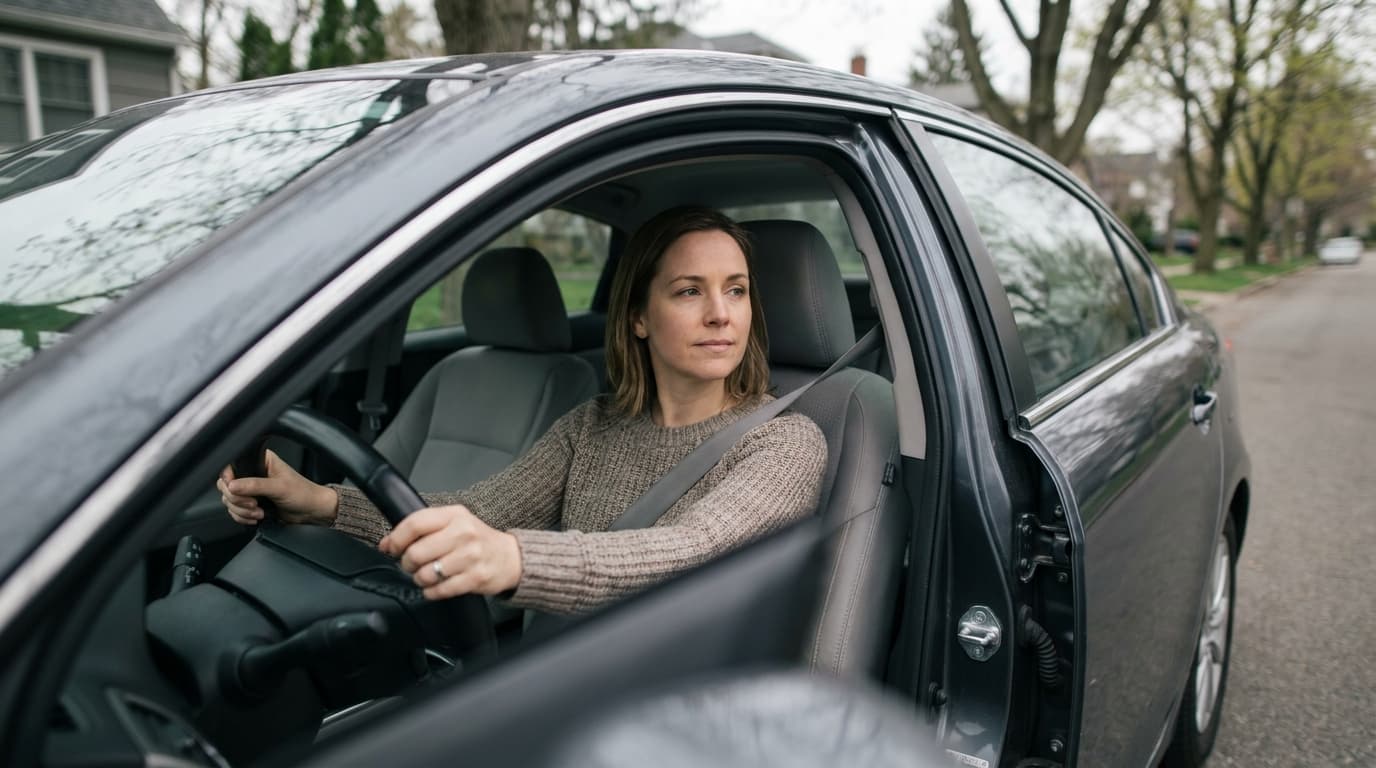
There is a moment near the end of most cosmetic surgery consultations when the clinical conversation is over and the logistical one begins. The patient has heard about the technique, the risks, and the price. What they want to know now is whether they can drive themselves home from the follow-up appointment and how many days they need to tell their manager they will be out. The answers they get are usually brisk: a week for driving, two weeks for a desk job, six for anything physical. Sometimes those figures are right. They are rarely explained, and the explanation is where the useful information lives.
Driving and returning to work after plastic surgery are not really recovery questions. They are impairment questions, and impairment has been studied far more carefully than most recovery advice has. The anesthesia literature knows to the hour how long a general anesthetic degrades reaction time. The traffic safety literature knows what a prescription opioid does to a driver and what a prosecutor can do with it. The orthopedic literature has measured brake reaction time after surgery on the limbs that operate the pedals. Almost none of this gets translated into the cosmetic surgery discharge sheet, which is why the same patient who is told not to lift a gallon of milk for two weeks is often told nothing at all about the seatbelt that will cross her fresh incision on the drive home.
When the anesthetic actually wears off
The short answer: you should not drive for at least 24 hours after any general anesthetic or intravenous sedation, regardless of how alert you feel, because the psychomotor impairment outlasts the subjective grogginess by most of a day.
This is the one timeline with genuinely hard evidence behind it. The American Society of Anesthesiologists' practice guidelines for postanesthetic care and the discharge criteria used by accredited ambulatory surgery facilities both require that a patient leaving after general anesthesia or sedation be released to a responsible adult and not drive for the remainder of that day and night. The reason is not caution for its own sake. A driving simulator study published in Anesthesiology tested patients after brief general anesthesia for outpatient procedures and found measurable deterioration in lane control and reaction time at two hours that had resolved by 24 hours. Other work on propofol and midazolam sedation shows the same shape: performance on divided-attention tasks recovers well after the patient reports feeling normal. The feeling of clarity returns first. The reflexes follow later.
The practical translation is that the day of surgery is not a driving day under any circumstances, and for longer operations the next morning is questionable too. A six-hour body contouring case under general anesthesia with a long-acting opioid on board at the end is a different pharmacological event from a 40-minute eyelid procedure under local with light sedation, and a practice that gives both patients the same 24-hour instruction is rounding down for the first one. Facilities that take this seriously write the escort requirement into the pre-admission paperwork and will cancel a case if the patient arrives planning to take a rideshare home alone. That policy is inconvenient and correct, and it is worth knowing whether your surgeon's facility enforces it, because a facility that does not is telling you something about how it reads the rest of its safety guidance. We covered what accreditation actually requires in the piece on outpatient facility accreditation.
The opioid problem is a legal problem
The short answer: a patient taking prescription hydrocodone, oxycodone, or tramadol is impaired for driving purposes in every state, and "it was prescribed to me" is not a defense to a charge of driving under the influence.
This is the part of the discharge conversation that surgeons tend to leave to the pharmacist and pharmacists tend to leave to the label. The label is unambiguous. Every opioid analgesic approved by the FDA carries a warning that the drug may impair the mental and physical abilities required for driving and operating machinery, and the National Highway Traffic Safety Administration's drug-impaired driving guidance lists prescription opioids alongside alcohol and cannabis as substances that degrade the skills driving requires. Impaired-driving statutes in all 50 states cover impairment by any drug, and a valid prescription establishes only that you were allowed to take it, not that you were fit to drive after you did. Several states have gone further and treat driving under the influence of a controlled substance without regard to whether you were impaired at all.
The clinical timeline follows from this. As long as a patient is taking any opioid for pain, they should not be driving, full stop. That makes the question of when you can drive partly a question of how quickly you can get off narcotics, which is a strong argument for the opioid-sparing recovery protocols the better practices have moved to. A patient managing an abdominoplasty on scheduled acetaminophen, an anti-inflammatory where the surgeon permits one, and a nerve block that lasts through the worst 48 hours can be legitimately off opioids by day three or four. A patient handed 40 tablets of oxycodone and told to take them as needed will be driving on them by the end of the first week, because pain and habit will make that decision for them. The prescription is a recovery choice and a legal exposure at the same time, and few patients are told to see it that way.
"The number of days until you can drive is not written on the calendar. It is written on the pill bottle. As long as the bottle is open, the answer is no.
"
What the seatbelt does to an incision, and what the incision does to your driving
The short answer: you are fit to drive when you can perform an emergency stop and a full turn of the wheel without hesitation or pain, when you can turn your head and torso to check a blind spot, and when a three-point belt can be worn correctly across the operated area, which for most abdominoplasty patients means two weeks and for facelift, breast, and arm patients somewhere between several days and two weeks.
The test that serious clinicians actually use comes from outside cosmetic surgery. The United Kingdom's driver licensing authority frames fitness after any operation as the ability to be in full control of the vehicle, including an emergency stop, and warns that driving before that point may invalidate insurance. The orthopedic literature has put numbers on this: studies of brake reaction time after right knee and ankle surgery, published in the Journal of Bone and Joint Surgery and elsewhere, show that reaction times return to baseline four to six weeks after the operation, not when the patient feels ready. Plastic surgery does not operate on the braking leg, but it does operate on the arms that steer, the abdominal wall that braces a sudden stop, the neck that turns to check a mirror, and the eyes that read the road.
Each of those imposes its own limit. After a facelift or neck lift, turning the head to check a blind spot is restricted by swelling and the healing platysma for a week or more, and the risk is not so much pain as the fact that a patient who cannot turn will simply not check. After blepharoplasty, ointment in the eyes, swelling, and the transient blurring that follows eyelid surgery keep most patients from driving safely for about a week, and the dry eye that follows can degrade night vision longer. After breast augmentation, especially with implants placed under the muscle, pushing and pulling the wheel loads the pectoralis, and the honest answer is a week to ten days before the arms move without guarding. After brachioplasty or an arm lift, the incisions run along the very surface that rests on a steering wheel. After abdominoplasty, the lap belt sits directly on a low transverse incision, and the shoulder belt crosses an abdomen with a freshly tightened rectus sheath. Two weeks is the typical figure, and it is set as much by the belt as by the bending. Patients are sometimes told to slide the belt under the incision or pad it, which is reasonable, and sometimes told to skip the belt, which is not: a belt over a healing incision will do less damage in a crash than no belt at all.
None of this is settled by a date. It is settled by function. The surgeon who tells a patient "two weeks" without asking what car they drive, whether they can reach across their body, and whether they are still taking anything for pain has given a number rather than a clearance. And a patient who drives before they can brace, turn, and brake is not only risking the incision. They are accepting liability for whatever the impaired reflex fails to prevent, which is a higher price than an extra week of asking for rides.
Return to work is a job-description question, not a procedure question
The short answer: patients with sedentary jobs return to work one to two weeks after most facial and breast procedures and two to three weeks after abdominoplasty and major body contouring, while patients whose work involves lifting, standing all day, or physical strain need four to six weeks, and the honest variable is what the job asks of the body, not what the procedure did to it.
The figures in the previous sentence are consistent with the patient guidance published by the American Society of Plastic Surgeons, and they are broadly accurate as averages. What they hide is the spread. A software engineer working from a couch can log in three days after a rhinoplasty; the cast is on, the face is bruised, but nothing about the job asks the nose to do anything. That same patient would need the full two weeks if the job involved video calls with clients, because the constraint is appearance rather than function. A nurse, a hairstylist, a contractor, or a parent of toddlers has a physical job whether or not it appears on a payroll, and an abdominoplasty patient who returns to lifting patients or children at two weeks is inviting the seroma and the wound separation that the six-week restriction exists to prevent. Standing all day in retail adds swelling in the legs after any body procedure and raises the clotting risk that immobility already creates.
Fatigue is the variable that surprises people most. Even a patient whose incisions are healing well finds that the body's recovery from anesthesia and tissue trauma consumes energy for weeks. The first full day back at a desk after a facelift is commonly followed by a crash the next morning. The better practices tell patients to plan for a half-day schedule the first week back where the job allows it, and to expect that the return will be to attendance before it is a return to output. Work-from-home arrangements have made this easier to stage than it was a decade ago, and they have also made it easier to return too early, since nobody sees you wince.
There is also a paperwork reality that catches patients off guard. The federal Family and Medical Leave Act, which many assume covers any surgery, specifically excludes cosmetic procedures from its definition of a serious health condition unless they require inpatient hospital care or produce complications, under the Department of Labor's regulations implementing the law. Most outpatient cosmetic surgery therefore carries no FMLA protection, and many employer short-term disability policies exclude elective cosmetic procedures outright. A patient who discovers this after scheduling has few options. A patient who discovers it before can plan around accrued leave, negotiate remote work, or time the operation to a slow season, which is exactly what the better practices' patient coordinators help with and the worse ones never mention.
The honest summary
The driving timeline after plastic surgery is set by three things, and none of them is the calendar. The anesthetic makes you unfit for 24 hours whether or not you feel it. The opioid makes you unfit, and legally exposed, for as long as you are taking it. The operation makes you unfit until you can brake hard, turn fully, check a blind spot, and wear a seatbelt properly over the site, which for facial and breast surgery is roughly one to two weeks and for abdominoplasty closer to two. The return-to-work timeline is set by the job rather than the procedure: one to two weeks for sedentary work after facial and breast surgery, two to three after body contouring, four to six for anything physical, with fatigue as the tax on all of them. None of these is a rule a surgeon can hand you in a sentence, because the honest answer depends on what you are taking, what you drive, and what you do all day. Ask for the function test rather than the number. Ask which day the pain plan expects you to be off narcotics. Ask how to wear the belt. And find out before surgery, not after, that the leave law you were counting on does not apply to the operation you chose.