Industry · August 5, 2026
The Hands Give It Away: What Actually Works on the One Area Nobody Lifts
A face can be resurfaced, lifted, filled, and lit well enough to hold a decade at bay. The hands sitting in the same photograph are usually untouched, and they are the one part of the body where the aging is not subtle, not slow, and not hidden by anything. Hand rejuvenation is also the rare corner of aesthetics where the volume products carry real FDA approvals for the exact area being treated. Here is what the approvals actually say, what the fat grafting literature reports, and why the vein question deserves more thought than the consult usually gives it.
By The Editorial Desk
9 min read
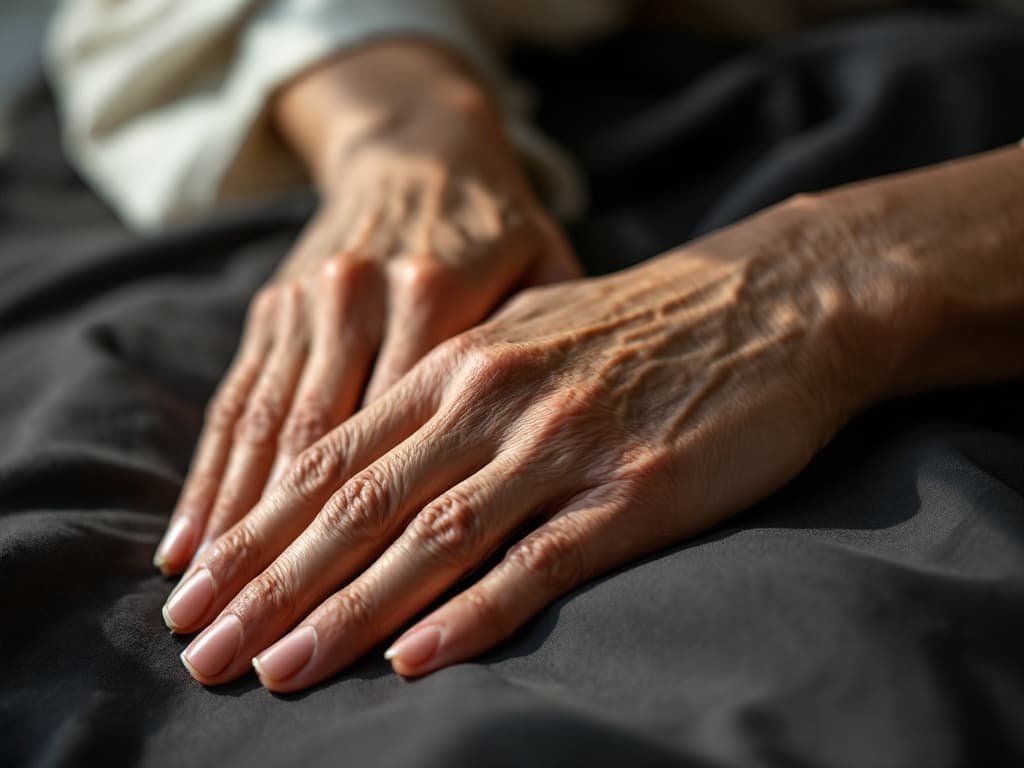
There is a familiar moment in aesthetic medicine that nobody markets. A patient who has spent years and a serious amount of money keeping a face in good condition holds up a phone, or reaches for a glass, and the hands say something the face has stopped saying. Prominent tendons. Visible veins. Brown spots that were not there a decade ago. Skin that creases and stays creased for a second longer than it used to.
Hands are the second most looked-at surface on a person and close to the least treated. That gap is not an accident of vanity. It is a combination of anatomy that ages badly, sun exposure nobody manages, and an aesthetics industry that has historically had very little that was approved, durable, and honest to sell for the area. That last part has changed more than most patients realize.
Why hands age faster than anything else you show people
The short answer: the skin on the back of the hand is thin, has almost no subcutaneous fat to lose, and absorbs a lifetime of ultraviolet exposure that nobody protects it from, so three separate aging processes land in the same small area at once.
The dorsal hand is built for mobility, not padding. The skin there is thin and loosely attached so the hand can make a fist, and the fat layer beneath it is shallow to begin with. When that shallow layer atrophies with age, there is nothing left to disguise the structures underneath. Extensor tendons become visible ropes. The dorsal venous network, which was always there, appears to stand up out of the skin. Nothing new grew. The covering thinned.
Ultraviolet exposure does the rest. The backs of the hands sit on a steering wheel, on a desk, on the arm of a chair, exposed for decades, and they are the body part most reliably skipped when sunscreen is applied. The result is solar lentigines, the flat brown spots patients call age spots or liver spots, along with a dulled, roughened surface. Repeated washing and sanitizer use strips the barrier further, which is why the crepey quality became noticeably more common in the population after 2020.
The clinical point is that these are three distinct problems: lost volume, prominent veins, and surface damage. They have three different treatments and three different price points, and treating one does close to nothing for the other two. A patient who fills the hands and skips the pigment gets plump hands covered in brown spots. A patient who lasers the spots and skips the volume gets clean skin stretched over visible tendons.
Volume: the one place filler has an actual approval
The short answer: the back of the hand is one of very few non-facial areas with dermal fillers specifically approved by the FDA for that exact indication, which puts it in better regulatory shape than a long list of popular facial injection sites.
This is worth stating plainly because so much of injectable aesthetics runs on off-label use. In June 2015 the FDA approved Radiesse, a calcium hydroxylapatite filler, for the correction of volume loss in the dorsum of the hand. The approval rested on a randomized controlled trial in which masked evaluators judged both hands improved at three months in roughly three quarters of treated patients. In May 2018 the FDA approved Restylane Lyft for correction of age-related volume deficit in the back of the hands, making it the first hyaluronic acid filler cleared for any area outside the face. That trial was a multi-center, evaluator-blinded, split-hand study of 89 patients, and it demonstrated meaningful correction for up to six months.
Read those two durability figures again, because they are the part that gets rounded up in a treatment room. Radiesse in the hand is generally described as lasting up to about a year. The Restylane Lyft data supported improvement for up to six months. Neither is permanent, both require maintenance, and the ongoing cost of maintaining two hands is not trivial. This belongs in the same category as every other recurring aesthetic expense, and it should be priced across five years rather than per syringe, which is a habit we have argued for when reading any cosmetic surgery quote.
The technique matters here in a way it does not always matter elsewhere. Product on the dorsal hand is placed in the loose plane above the tendons and below the skin, then massaged to distribute it, because a discrete bolus in a thin-skinned area is visible and palpable. The hand also has a dense superficial vascular network, so the general risks that apply to filler and vascular occlusion do not vanish because the target is a hand. Injection site swelling, tenderness, bruising, and temporary impairment of hand function were the common findings in the approval trial, mostly mild and mostly short-lived.
"Nothing new grew on the back of your hand. The covering thinned. That single sentence explains why volume replacement works there, and why laser alone never will.
"
Fat grafting: a higher ceiling and a wider spread
The short answer: autologous fat transfer to the hands reports high satisfaction and long durability in the published series, with retention around half of what is placed, but the evidence base is small and dominated by case series rather than trials.
Fat has an obvious appeal in this area. It is the patient's own tissue, it can be placed in larger volumes than filler economically allows, and what survives tends to stay. A systematic review of hand rejuvenation by fat grafting pooled eleven studies published between 2001 and 2019, covering roughly 300 patients, of which only three were randomized clinical trials. Reported satisfaction across the pooled data was very high, above 95 percent. A separate twelve-year single-surgeon series reported 84 percent of patients satisfied, 12 percent needing an additional procedure, and 4 percent dissatisfied, which is a more textured and probably more useful set of numbers.
Complications in the pooled data were mostly minor: bruising in about 7 percent, temporary altered sensation in about 5 percent, cysts or contour irregularity in roughly 1 percent, and infection well under 1 percent. Retention after a single session of micro-fat transfer has been estimated at around 50 percent, which is consistent with what fat graft survival biology predicts anywhere in the body. Half of what goes in does not stay, so either the surgeon overfills deliberately or the patient accepts a second session.
The caveat is the study design, not the technique. Case series with surgeon-assessed outcomes and short follow-up systematically flatter the intervention. When a review reports 97 percent satisfaction from that kind of evidence, the correct posture is interest rather than certainty.
The veins are the decision to slow down on
The short answer: prominent dorsal hand veins can be closed with sclerotherapy or removed by micro-phlebectomy, both are considered technically safe because deeper veins handle the drainage, but these are the veins clinicians use for intravenous access, and a considered plan leaves some of them.
This is the part of hand rejuvenation that deserves genuine deliberation rather than enthusiasm. The dorsal hand veins are cosmetically prominent for the same reason they are clinically convenient: they are superficial, accessible, and easy to see. They are a standard site for placing an IV line for surgery, for hydration, for imaging contrast, and for cancer treatment. Removing all of them because they photograph poorly at 55 is a decision made on behalf of a person who may be 75 and in a hospital bed.
The vascular surgery position is that treating superficial dorsal hand veins is safe, because deep venous drainage of the hand is preserved and continues to do the work. That is a reasonable claim and the procedures do carry a good safety record in practice. The reasonable operating principle sitting alongside it is selectivity. Treat the veins that actually drive the complaint, and deliberately preserve some accessible superficial vessels. If a practitioner cannot articulate which veins they intend to leave and why, the conversation is happening at a cosmetic level only.
There is also a sequencing argument. Restoring volume to the dorsum with filler or fat often reduces vein prominence on its own, because the veins were never the problem. The lack of anything covering them was. Volume first, then reassess the veins, is a more conservative order of operations than treating both in the same visit.
Pigment and texture: the cheapest win, sold last
The short answer: solar lentigines and surface roughness respond well to lasers, intense pulsed light, and cryotherapy, this is usually the least expensive part of a hand plan, and it is frequently the change that other people actually notice.
Volume gets sold because it is dramatic and it is what the injectable industry has approved products for. Pigment is often the higher-yield intervention. Flat brown spots on the dorsal hand respond to Q-switched and picosecond lasers, to intense pulsed light, and to simple cryotherapy, using the same logic that applies to treating sun spots and pigmentation anywhere on the body. Fractional resurfacing can address the crepey surface quality, though the hand heals more slowly than the face and settings that are routine on a cheek are not automatically appropriate here.
Two cautions. First, device selection and settings on deeper skin tones require specific expertise, because post-inflammatory hyperpigmentation on the hand is a real and visible outcome, a point covered in our reporting on cosmetic procedures on deeper skin tones. Second, a pigmented lesion on a sun-exposed hand should be looked at by someone qualified to say it is benign before it is lasered off. Destroying a lesion without a diagnosis destroys the evidence too.
The unglamorous finish to this section is that daily sunscreen on the backs of the hands, reapplied after washing, prevents more of this than any device reverses. It is the single highest-return intervention in hand aesthetics and it has no revenue attached to it, which is roughly why it comes up last.
The honest summary
Hands are the most reliable age tell on the body and the least addressed, and the reason is not complicated. Until the last decade there was little approved, durable, and honest to offer for the area.
That has changed. The back of the hand now has two fillers with FDA approval for that specific indication, a fat grafting literature that is small but broadly favorable, well-established pigment treatments, and vein procedures with a good safety record. It is, unusually for aesthetics, a well-supplied field.
What has not changed is the need to treat the right problem. Volume loss, vein prominence, and sun damage are three separate findings, and a plan that names only one is incomplete. Filler and fat cover the tendons and veins by restoring what atrophied. Lasers and light address the pigment and the texture. Vein treatment should be selective, should come after volume rather than before it, and should leave a working limb with accessible veins for the decades when a hand is needed for medicine rather than photographs.
And the results are rented, not owned. Six months to a year for hyaluronic acid, up to about a year for calcium hydroxylapatite, roughly half retention for fat with a second session often required. Price it annually, ask which of the three problems each line item addresses, and put sunscreen on the backs of your hands. The last item is the only one on the list that stops the clock rather than turning it back.