Industry · August 24, 2026
Hyperbaric Oxygen After Plastic Surgery: Flap Rescue Tool or Recovery Upsell
Hyperbaric oxygen has a real, narrow job in plastic surgery: it can help save a skin flap or graft whose blood supply is failing, and it works only when it is started fast. It also has a second life as a cash-pay 'recovery accelerator' sold by med spas and some surgical practices to healthy patients with no failing tissue at all. Here is what the chamber actually does to a struggling flap, what the evidence supports and does not, which pressures and protocols the accredited centers use, what it costs and who pays, and how to tell a rescue from an upsell.
By The Editorial Desk
10 min read
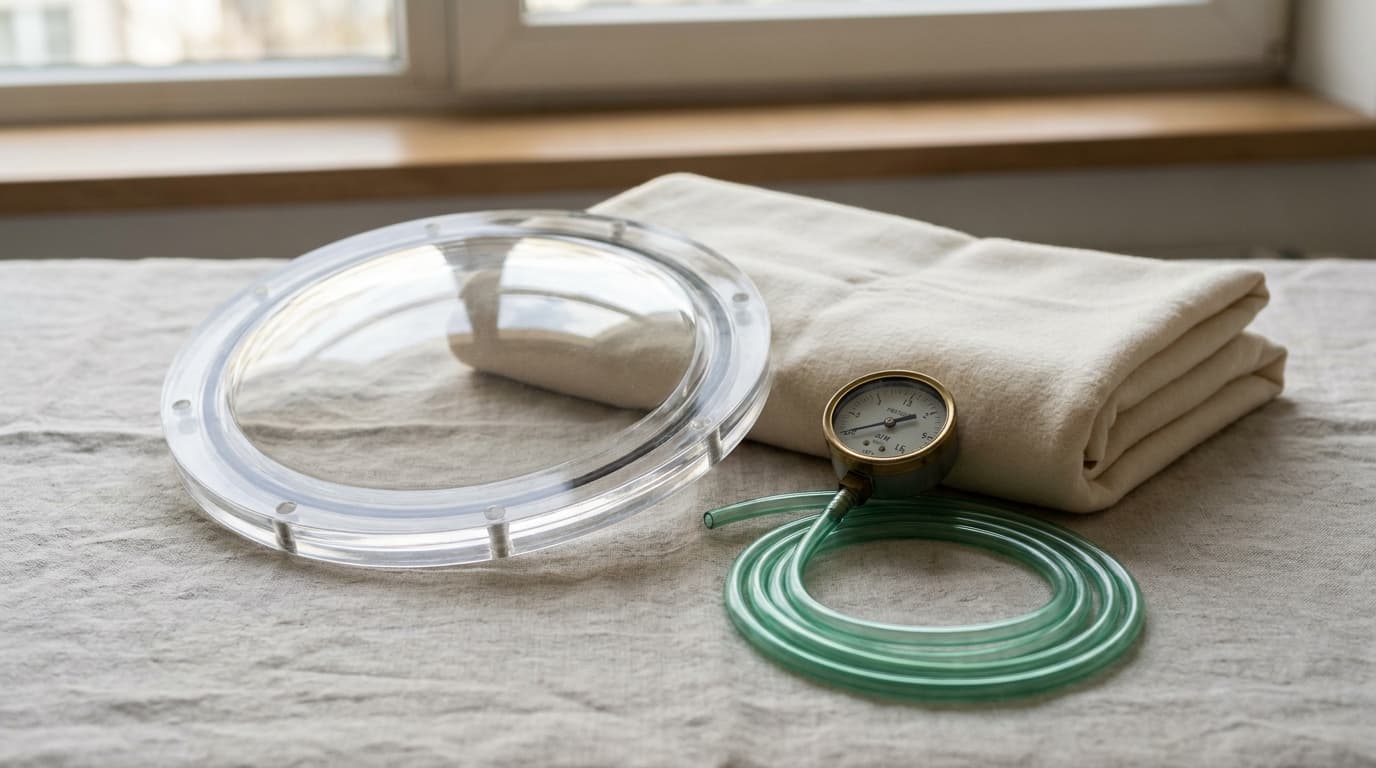
Two patients sit in the same hyperbaric chamber on the same afternoon. One had a facelift four days ago and the skin in front of her ear turned a dusky purple overnight; her surgeon called the hospital's wound center at seven in the morning and she was in the chamber by noon. The other had a tummy tuck two weeks ago, is healing normally, and bought a package of ten sessions because the practice's recovery menu described the chamber as "oxygen therapy to speed healing and reduce swelling." Same device, same pressure, same ninety minutes. One of these is medicine with a plausible mechanism and a body of evidence behind it. The other is a spa treatment with a medical-looking price.
Hyperbaric oxygen therapy (HBOT) keeps surfacing in cosmetic surgery, and it is worth understanding precisely, because the difference between its legitimate use and its promotional use is not subtle once you know what the chamber does. This is the eighth entry in a series on the complications of aesthetic surgery, and it follows directly from the piece on skin necrosis after a facelift or tummy tuck, where hyperbaric oxygen was mentioned in passing as one of the tools a surgeon reaches for when a flap starts to die. This is the long version.
What hyperbaric oxygen does to a failing flap
The short answer: breathing 100 percent oxygen at two to two and a half times atmospheric pressure dissolves enough oxygen directly into the blood plasma to supply tissue that its red blood cells can no longer reach, which buys a compromised flap time while its blood supply recovers or new vessels grow in.
At normal pressure, almost all the oxygen in blood rides on hemoglobin inside red cells, and the plasma carries a trivial amount. A skin flap that has been lifted during a facelift or an abdominoplasty survives on a reduced blood supply for the first several days, and if that supply is further compromised by tension, a hematoma, nicotine, or a kinked vessel, the red cells stop arriving at the far edge of the flap and the tissue starts to die. Raising the ambient pressure to 2.0 to 2.5 atmospheres while breathing pure oxygen increases the amount of oxygen dissolved in plasma roughly tenfold, to a level that can meet resting tissue demand on its own. Plasma reaches places that congested capillaries cannot.
That is the immediate effect, and it lasts only as long as the session. The secondary effects are the ones that make repeated sessions worthwhile. High tissue oxygen reduces swelling by constricting vessels while still delivering more oxygen than before, which matters in a flap where edema is squeezing the capillaries shut. It improves the function of white cells against infection, promotes the formation of new small vessels over days, and, in the specific case of a flap that has had its blood supply interrupted and restored, appears to reduce the reperfusion injury that follows. The Undersea and Hyperbaric Medical Society, which sets the indication list that insurers and accredited centers follow, has recognized "compromised grafts and flaps" as an approved indication for decades, and the FDA lists it among the cleared uses for hyperbaric chambers.
Note the word: compromised. The indication is not "grafts and flaps." It is grafts and flaps that are failing. A flap with a normal blood supply already has all the oxygen it can use, and pushing more into the plasma does nothing for it.
"Hyperbaric oxygen does not make a healthy flap heal faster. It keeps a dying one alive long enough for its blood supply to catch up. The distinction is the entire subject.
"
What the evidence actually supports
The short answer: the evidence for hyperbaric oxygen in compromised flaps is a large body of animal studies, a long series of clinical case series, and essentially no randomized trials, which is enough to justify its use in a genuinely threatened flap and not enough to justify it as a routine adjunct.
The animal data is consistent and old. Rat and pig flap models going back to the 1960s show that hyperbaric oxygen started soon after a flap is raised or its blood supply is compromised improves the surviving area, in some studies by a third or more, and that the effect disappears when treatment is delayed by more than a day or two. The clinical literature is thinner in the way that rescue therapies usually are: nobody randomizes a patient with a dying flap to no treatment. What exists are retrospective series from hyperbaric centers reporting flap and graft salvage rates, typically in the range of 70 to 90 percent for tissue that was judged to be failing at referral, published in journals including Plastic and Reconstructive Surgery, Undersea and Hyperbaric Medicine, and Wound Repair and Regeneration. Those numbers sound impressive until you notice that there is no control arm and that "compromised" is a judgment call made by the referring surgeon.
The systematic reviews are honest about this. A Cochrane review of hyperbaric oxygen for acute surgical and traumatic wounds found few trials, small numbers, and evidence it rated as low quality, while noting a possible benefit for graft survival. Reviews in the plastic surgery literature reach the same place: a plausible mechanism, a supportive animal base, a clinical tradition, and a real gap in controlled data. Nobody serious argues that hyperbaric oxygen is worthless for a threatened flap, and nobody serious argues that it is proven.
Two things in that evidence base are worth carrying into a consult. First, timing. Every dataset that looks at it finds that treatment started within hours of the flap turning dusky does far more than treatment started after the tissue is black. A surgeon who sends a patient to the chamber on day one of a color change is using the tool as designed; a surgeon who offers it on day six for an eschar that has already formed is offering something that no longer has a mechanism. Second, the dose. Accredited centers treat compromised flaps at 2.0 to 2.5 atmospheres for 90 to 120 minutes, once or twice a day, for a course that usually runs 10 to 20 sessions and is stopped when the tissue has declared itself. Anything that departs from that protocol is not the treatment the literature describes.
The soft chamber and the recovery menu
The short answer: the "mild hyperbaric" sessions sold by wellness clinics and some cosmetic practices use inflatable chambers at 1.3 atmospheres, usually on room air or a concentrator, and deliver a fraction of the oxygen dose that the flap salvage evidence is built on, for patients who have no failing tissue to salvage.
Hyperbaric oxygen has become a wellness product. Inflatable soft chambers that pressurize to around 1.3 atmospheres are sold to spas, gyms, and med spas, and the marketing around them borrows the clinical vocabulary of the hospital chamber: healing, recovery, reduced inflammation, collagen. Some plastic surgery practices have added them to a post-operative "recovery suite" alongside lymphatic massage and LED panels, and sell packages of sessions to patients who are healing normally. The pitch is that more oxygen means faster healing and less swelling.
The physics does not cooperate. At 1.3 atmospheres on room air, the increase in dissolved plasma oxygen is small, a fraction of what the clinical protocols deliver, and the patient in the soft chamber is breathing a gas mixture that the FDA has not cleared for hyperbaric use at all; the agency's consumer warning on hyperbaric oxygen names the unproven uses specifically and notes that soft chambers are cleared only for acute mountain sickness. There is no controlled evidence that mild hyperbaric sessions shorten recovery after a facelift, a tummy tuck, or liposuction in patients whose tissue is healthy. The swelling those patients experience is normal post-surgical edema and resolves on its own, on roughly the same schedule the lymphatic drainage massage piece described for that other recovery add-on.
None of this makes the soft chamber dangerous. It makes it a purchase. A patient who enjoys the session and understands that it is not doing anything measurable has spent money on comfort, which is a legitimate thing to spend money on. A patient who was told it would protect her result has been sold a medical claim that the practice cannot support.
Who should not go in the chamber
The short answer: the absolute contraindication is an untreated pneumothorax, and the relative ones that matter to cosmetic patients are certain chemotherapy histories, uncontrolled seizure disorders, severe claustrophobia, and ear or sinus disease that cannot equalize pressure.
Hyperbaric oxygen is safe in the sense that its serious complications are rare, and it has a side-effect profile that patients should know before they consent. The most common problem is middle ear barotrauma, the same squeeze a diver feels, which affects a meaningful minority of patients and occasionally ruptures an eardrum. Transient nearsightedness develops in many patients over a course of twenty or more sessions and reverses within weeks. Oxygen toxicity seizures occur at roughly one in every several thousand treatments at clinical pressures and are managed by removing the oxygen; they are frightening and rarely harmful in a monitored chamber. Confinement anxiety in a monoplace chamber is common enough that centers screen for it.
The contraindications are specific. An untreated pneumothorax can expand catastrophically on decompression. Patients who have received bleomycin at any point, or doxorubicin or cisplatin recently, are generally excluded because of pulmonary and cardiac toxicity concerns. Poorly controlled seizures, a recent ear surgery, and an active upper respiratory infection that blocks equalization are relative reasons to wait. And a patient who is still using nicotine is undermining the therapy with every dose, since nicotine constricts the same vessels the chamber is trying to reopen; a hyperbaric referral for a smoker's failing flap is an argument for a nicotine test, not a reason to skip one.
What it costs and who pays
The short answer: at an accredited hospital center a compromised flap course runs roughly $250 to $600 per session, which insurers including Medicare cover for the compromised graft and flap indication even after elective cosmetic surgery, while wellness sessions at 1.3 atmospheres cost $75 to $200 each, are never covered, and are sold in packages.
This is the part that surprises patients. A complication of a cosmetic operation is a medical problem, and the treatment of a compromised flap is a covered indication under the Medicare national coverage determination for hyperbaric oxygen and under most commercial plans, regardless of whether the operation that created the flap was elective. The referral has to come from a physician, the center has to document that the tissue is compromised, and prior authorization is often required, which is one reason a surgeon who has a relationship with the local hyperbaric center gets patients treated faster than one who does not. A course of fifteen sessions at a hospital-based center is a five-figure charge on paper and, with coverage, a deductible-and-coinsurance charge in practice.
The wellness chamber runs on a different economy. The sessions are cheaper individually, sold in blocks, paid in cash, and never billed to insurance because there is no indication to bill. A surgical practice that offers them is running a retail line, and a patient should read the price list the way she would read the price list for any other retail add-on. The same accreditation question applies to the room the chamber is in as to the operating facility itself: a chamber is a pressurized vessel full of oxygen, the fire and barotrauma risks are real, and the accredited centers have engineering and supervision standards that a spa does not.
The honest summary
Hyperbaric oxygen is a legitimate rescue tool for a skin flap or graft whose blood supply is failing, and any surgeon who does facelifts, tummy tucks, or breast lifts should know where the nearest accredited chamber is and how fast a patient can be in it. The mechanism is sound, the animal data is consistent, the clinical series are encouraging, and the controlled trials do not exist, which puts it in the category of treatments a reasonable surgeon uses for a threatened flap and does not promise results from. Started within hours at 2.0 to 2.5 atmospheres under physician supervision, it may turn a full-thickness loss into a superficial one. Started late, or at spa pressures, it does nothing the literature can point to.
The recovery-package version is a different product wearing the same name. A patient healing normally has no compromised tissue, gains nothing measurable from a 1.3 atmosphere session, and is buying comfort at a medical markup. The tell is the question the practice cannot answer: what, specifically, is wrong with the healing that this is meant to fix. If there is an answer, it is medicine, it is time-critical, and insurance will likely pay for it. If there is not, it is a menu item, and the honest thing a practice can do is say so.