Procedure Deep-Dive · August 2, 2026
Laser Hair Removal: Permanent Reduction Is Not Permanent Removal
Laser hair removal is one of the highest-volume cosmetic procedures in the country, and the phrase on the sign outside is not the phrase the FDA cleared. Devices are cleared for permanent hair reduction, which is a specific regulatory claim with a specific meaning, and it is not the same promise most patients think they are buying. The gap between those two phrases explains almost everything patients find surprising later: why it takes six sessions instead of one, why it does very little for gray or blonde hair, why the device that is safe on one skin tone can burn another, and why the single largest variable in the risk profile is not the laser at all. It is who is holding it.
By The Editorial Desk
9 min read
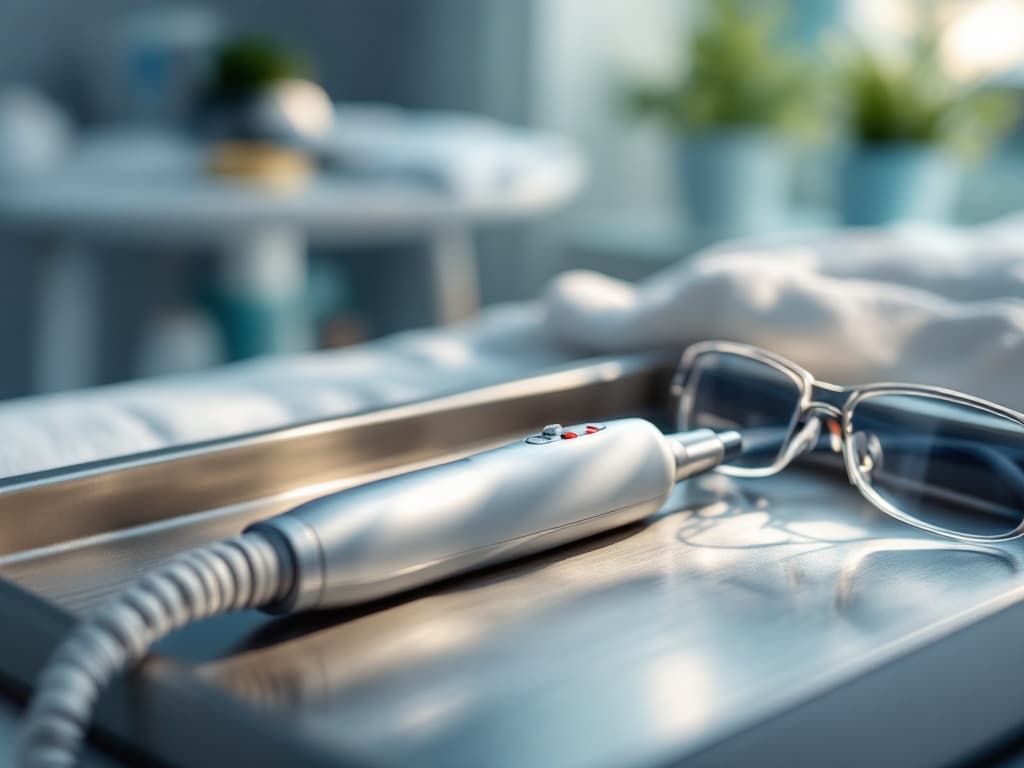
Laser hair removal occupies an odd position in aesthetic medicine. By volume it is enormous, sitting near the top of the minimally invasive procedure counts alongside neurotoxin and filler. By scrutiny it is close to invisible. Patients who would interrogate a surgeon for an hour about implant profiles will book a six-session laser package from a window sign without asking a single clinical question, because the procedure reads as cosmetic housekeeping rather than medicine.
It is medicine. The device is a prescription-grade medical laser, the mechanism is a controlled thermal injury, and the complications, while uncommon, are the kind that leave a mark. The single most useful thing a patient can know before booking is that the industry's own regulatory language quietly concedes the main point. The devices are not cleared for hair removal. They are cleared for hair reduction.
The word the FDA actually cleared is "reduction"
The short answer: the FDA clears these devices for permanent hair reduction, defined as a long-term stable decrease in the number of hairs regrowing after a course of treatment, and that is a materially weaker claim than permanent removal.
The distinction is not marketing pedantry. Permanent hair reduction is a defined regulatory term meaning a lasting reduction in the number of hairs that regrow, measured after an interval longer than the complete growth cycle for that body site, which runs anywhere from four to twelve months depending on where the hair is. Note what the definition does not say. It does not say the hair is gone. It says there is less of it, durably, and that the count was taken far enough out to rule out the temporary shedding any thermal treatment produces.
Electrolysis, by contrast, is the method the FDA permits to be described as permanent hair removal. That single asymmetry tells you more than any before-and-after gallery. Two treatments exist in the same category, one is allowed to say removal and the other is not, and the one that cannot say it is the one being advertised as if it could.
What patients should expect from a well-run course is a substantial, lasting thinning: fewer hairs, finer hairs, slower regrowth, and in many cases the end of daily maintenance. The better clinical literature generally lands in the range of a fifty to eighty percent reduction sustained at six months after a full course, with the honest caveat that data past the one-year mark is thinner than the marketing implies. That is a genuinely good outcome. It is simply not the outcome described by the word "removal."
The laser is aiming at pigment, and that decides who it works on
The short answer: the target is melanin in the hair follicle, so the treatment works best when the hair is dark and the surrounding skin is not, and it barely works at all on gray, white, red, or fine blonde hair.
Everything about laser hair removal follows from selective photothermolysis, the principle described by Anderson and Parrish in 1983 that made modern cutaneous lasers possible. Pick a wavelength that the intended target absorbs more strongly than the surrounding tissue does, deliver it in a pulse shorter than the time the target needs to cool, and you can cook the target while leaving its neighbors intact. For hair, the target is the melanin packed into the hair shaft and follicular matrix.
Two consequences follow, and both are usually left off the consultation.
- No pigment, no target. Gray and white hair contain essentially no melanin. Red hair contains pheomelanin, which absorbs poorly at the relevant wavelengths. Fine blonde vellus hair has too little of anything to heat. Patients with these hair colors are frequently sold identical packages and get close to nothing for the money. Electrolysis, which destroys the follicle electrically rather than optically, does not care what color the hair is, and is the correct referral.
- Skin melanin competes for the same energy. In deeper skin tones, epidermal melanin absorbs a meaningful share of the beam on the way down, which is a burn and pigment-change risk rather than a treatment. The established workaround is a longer wavelength that penetrates deeper and is absorbed less by the epidermis, which is why the 1064 nm Nd:YAG has been the standard device for darker skin for two decades. A practice treating Fitzpatrick IV through VI skin on a 755 nm alexandrite because that is the only machine in the building is making the patient absorb the cost of its equipment budget. This is the same wavelength-matching problem that governs cosmetic laser work on deeper skin tones generally.
One more piece of vocabulary worth owning: IPL is not a laser. Intense pulsed light is broadband, non-coherent light filtered across a range of wavelengths rather than a single one. It can work, particularly on light skin with dark hair, and it is generally less precise and more operator-dependent than a true laser. Many storefronts use the terms interchangeably. The machine in the room is a fair question to ask by name.
"Two hair treatments sit in the same category. One is permitted to call itself permanent removal, and the other is not. The one that cannot say it is the one on the billboard.
"
Why it takes six sessions, and why that is biology rather than upselling
The short answer: only follicles in the active growth phase are vulnerable, and at any moment that is a minority of them, so a course of treatments is chasing the same follicles into the phase where they can be hit.
Hair grows in cycles. Anagen is the active growth phase, catagen the brief regression, telogen the resting phase before shedding. Melanin concentration in the follicular bulb peaks during anagen, which means anagen follicles are the ones the laser can actually destroy. The proportion of hairs in anagen at any given moment varies dramatically by body site, and it is never close to all of them.
That is the entire explanation for the multi-session model. Each treatment takes out the fraction of follicles that happened to be in the vulnerable phase that day. Sessions are spaced by weeks to let a new cohort cycle into anagen, with shorter intervals on the face and longer ones on the body, and a typical course runs six to eight sessions before maintenance. A clinic that promises the job is finished in two sessions is either misinformed or counting on the shedding that follows the first treatment to look like a result. Treated hairs are expelled over the following one to three weeks, which reads to the patient as immediate success and is not yet evidence of anything.
This also reframes how to read a package price. Six sessions is not a discount structure. It is the minimum biologically coherent course, and any clinic selling fewer as a complete treatment has priced a partial job as a whole one.
The risk profile is small, real, and concentrated in one variable
The short answer: serious complications are uncommon, they cluster in mismatched settings and untrained operators, and the operator is the least regulated part of the entire transaction.
The recognized complications are well described: blistering and burns, post-inflammatory hyperpigmentation and hypopigmentation, crusting, and rarely scarring. Risk rises with darker skin, with recent tanning, and with aggressive settings. Eye injury deserves separate mention, because periorbital treatment without proper ocular shielding has caused documented iris damage and uveitis, and it is the one complication that is both catastrophic and completely preventable by a two-dollar pair of shields.
There is also paradoxical hypertrichosis, which patients find hard to believe until they see it: an increase in hair growth at or near the treated area, most often reported on the face and neck, and more frequently in patients with darker skin types and Mediterranean or Middle Eastern backgrounds. It is uncommon, it is documented, and it is essentially never mentioned in a sales consultation.
The variable that does the most work, though, is not clinical. It is regulatory. Who may fire a medical laser is decided state by state, and the rules range from physician-performed or tightly supervised delegation to almost nothing at all. An analysis of cutaneous laser surgery litigation published in JAMA Dermatology found that laser hair removal was the most frequently litigated laser procedure, and that the proportion of cases involving non-physician operators rose over the period studied. That is the same structural problem covered previously in medical spa supervision and delegation, and it applies with more force here, because a laser burn is not reversible the way an injectable result can be dissolved. The parallel with laser tattoo removal scarring risk is exact: same physics, same dependence on settings, same consequence when the settings are wrong.
What it cannot fix, including the reason the hair showed up
The short answer: laser treats follicles that already exist, and it does nothing about an endocrine cause that keeps recruiting new ones.
This is the failure mode that produces the angriest reviews. A patient with hormonally driven hirsutism, most commonly from polycystic ovary syndrome, completes a full course, gets a good early result, and watches new terminal hairs appear over the following year. The laser did its job. The underlying driver was never addressed, and it kept converting fine vellus hair into coarse terminal hair on the same schedule as before.
A practice doing this properly screens for it. New-onset coarse hair growth in an adult woman, particularly with irregular cycles, warrants a medical workup rather than a package, and the durable answer usually combines medical management with laser rather than substituting one for the other. Ongoing maintenance sessions are the norm in these cases, and framing them as a failure of the laser misreads what the laser was ever able to do.
Two smaller limits belong here as well. At-home IPL devices are cleared at much lower energies with explicit restrictions on skin tone and on use above the cheekbones, and they are properly understood as maintenance tools, not as a course of treatment. And treatment on actively tanned skin should be deferred, because a tan is additional epidermal melanin competing for the beam. A clinic willing to treat you the week you return from vacation is telling you how it sets its priorities.
The honest summary
Laser hair removal works. That is the starting point, and it deserves to be said plainly before the caveats, because the caveats can read as dismissal and they are not. For a patient with dark hair whose skin tone is correctly matched to the right wavelength, a proper course produces a large, durable reduction that ends daily maintenance for years. That is a real result and a reasonable purchase.
The problem is the gap between that result and the language used to sell it. The regulatory claim is permanent reduction, the marketing claim is permanent removal, and everything patients report as a surprise lives in the space between the two. Six sessions is the biological minimum, not a payment plan. Gray, white, red, and fine blonde hair will not respond meaningfully, and a clinic that sells a package anyway is selling a known non-result. Deeper skin tones need a longer wavelength and a practice that owns the right machine, not a practice willing to run the wrong one carefully.
And the largest single risk is the one nobody thinks to price. The device is a medical laser, the operator may be regulated barely or not at all depending on the state line you happen to live on, and a burn or a pigment change from a wrongly configured pulse is a permanent souvenir of a procedure that was supposed to be routine.
Ask what machine, ask what wavelength, ask who is holding it and who supervises them, and ask what result your specific hair color makes possible. Four questions, none of them adversarial, all of them answerable in a minute by anyone competent. The clinics that answer easily are the ones worth booking. The ones that answer in adjectives have told you what the session will be like.