Industry · August 25, 2026
Split Earlobe Repair: The Twenty-Minute Operation That Gets Redone More Than It Should
Split earlobe repair is one of the smallest procedures in aesthetic surgery and one of the most casually done. It is a local-anesthetic office case, it takes well under an hour, and it is offered by plastic surgeons, dermatologists, ear-nose-throat surgeons, and, increasingly, whoever is running the med spa. The trouble is in the details: the straight-line closure that leaves a notch, the re-pierce through the fresh scar that tears again, the keloid on the one body site most likely to produce one, and the stretched gauge lobe that is a reconstruction rather than a repair. Here is how the tear happens, why the closure technique matters more than the price, when to pierce again, and who should actually be holding the scalpel.
By The Editorial Desk
13 min read
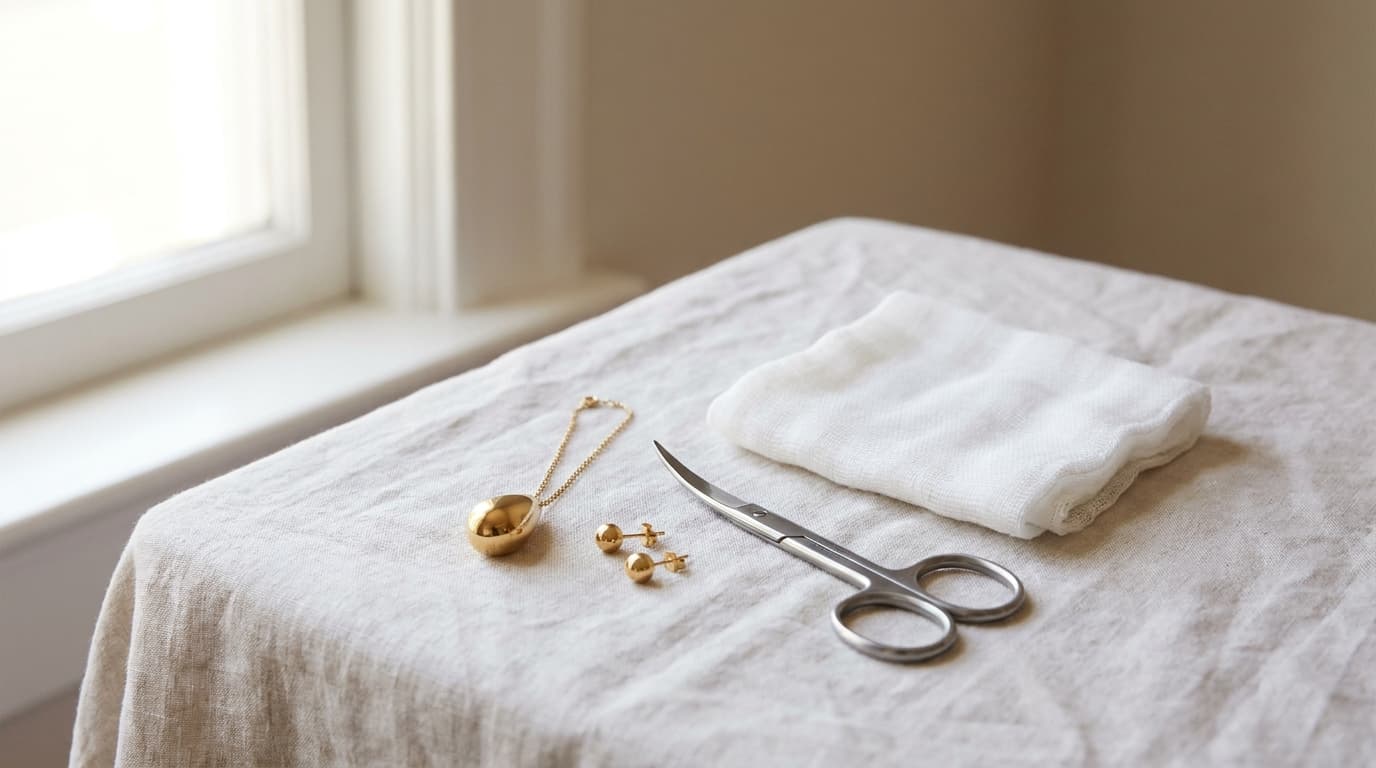
The earlobe is the only part of the ear with no cartilage, which is why it can be pierced by a teenager with a needle and an ice cube, and why it can be torn by a toddler with a good grip. It is skin, fat, and a little connective tissue, hanging off the bottom of the ear like a pendant, and it spends decades supporting jewelry that was never designed with tissue tolerance in mind. The result is a steady, unglamorous stream of patients in their forties and beyond whose piercing has migrated downward into a slot, or torn through the rim entirely, and who want it closed so they can wear earrings again.
Split earlobe repair sits at the bottom of every plastic surgeon's price list and at the top of very few marketing pages. That is precisely why it deserves attention. Small procedures get done quickly, by whoever is available, with whatever technique that person learned first, and the earlobe punishes carelessness in ways the patient does not see until months later: a notch at the rim, a lump of scar, a new piercing that tears through the old one. The good version of this operation is genuinely simple. The bad version is simple too, and looks fine for about six weeks.
How an earlobe tears
The short answer: most split earlobes are not sudden injuries but the end of a slow process in which heavy earrings pull a piercing downward through the lobe over years, and a smaller number result from a single pull on an earring that finishes the job in a second.
The piercing tract is lined with skin, and skin under constant downward tension does what skin does everywhere else on the body under load: it stretches, thins, and remodels. A stud worn daily for thirty years exerts almost no force. A pendant earring worn daily for thirty years exerts a small force continuously, and the tract elongates from a pinhole into a vertical slit, a stage clinicians describe as an elongated or partial cleft. Patients notice their earrings hanging lower and tilting forward, then that the post no longer sits in the hole but at the bottom of a slot. Left there, the remaining bridge of tissue below the slot thins until it either parts on its own or is caught by a sweater, a phone, a hairbrush, or a child.
The single traumatic tear is the other pathway, and it is the one people remember. A hoop caught during a workout, an earring grabbed by a baby, an assault, or a dog can convert an intact lobe into a complete cleft that runs from the piercing to the lower rim. Bleeding is brisk for a minute and then stops, and the two halves heal separately, each edge covering itself with skin, which is why a torn lobe does not simply grow back together. Once the edges have epithelialized, usually within two weeks, the cleft is permanent until someone cuts the skin off those edges and sews the raw surfaces to one another.
Then there is the third category, which has grown steadily: the deliberately stretched lobe. Gauge plugs expand the piercing to a diameter measured in millimeters or, in committed cases, centimeters, and the lobe accommodates by thinning into a ring of tissue around a hole. Below roughly a centimeter, some lobes will contract partway on their own when the plug is removed. Above that, the hole stays, the ring of tissue hangs, and what the patient is asking for is not a repair but a reconstruction of a lobe shape from the tissue that remains. The American Society of Plastic Surgeons lists earlobe repair among its minor office procedures, but a large gauge closure is closer in spirit to a small otoplasty than to closing a slit, and it should be priced and planned that way.
Why the closure technique is the whole game
The short answer: the simplest repair, cutting the edges of the cleft and sewing them together in a straight line, is fast and heals well on the flat surfaces of the lobe but frequently leaves a notch at the lower rim, and the surgeons who get consistently smooth rims use some form of interdigitated or Z-shaped closure at the rim to prevent the scar from contracting into a dent.
Every scar shortens as it matures. A straight scar running from the piercing down through the lower rim of the lobe shortens along its length, and the only direction it can pull is the rim inward, which produces the small V-shaped notch that is the signature of an earlobe repair done in a hurry. The notch is subtle in the mirror and glaringly obvious when the patient puts on an earring and the rim beneath it has a bite out of it. The dermatologic and plastic surgery literature has spent decades on this problem and produced a library of solutions: a small Z-plasty at the rim, a broken-line closure, a wedge that removes the cleft along with a triangle of adjacent tissue so the rim is closed under a different geometry, a flap from one side that overlaps the other. None of them is dramatically harder than a straight line. All of them require the operator to know the notch is coming and to plan for it.
The other technical fork is what to do with the piercing. Some surgeons close the cleft completely and ask the patient to have the lobe pierced again, in a new location, months later. Others preserve a small tract during the repair, often by leaving the top of the old hole intact or by placing a fine tube or suture through a fresh site at the time of closure, so the patient walks out with a piercing already established. The preserved-tract approach is convenient and works well when the new hole is placed in intact tissue away from the scar line. It works badly when the surgeon leaves the tract in the scar itself, which is exactly the tissue least able to bear an earring's weight. A repair that fails the same way it originally failed, within a year or two, is nearly always one where the new hole and the old scar share an address.
"A straight-line earlobe closure looks perfect on the day of surgery and for six weeks afterward. The notch shows up when the scar matures, which is after the follow-up visit and long after the invoice was paid.
"
Anesthesia and setting are the easy part. The procedure is done under local anesthetic in an office, takes fifteen to forty-five minutes per ear depending on the technique and the size of the defect, and uses fine sutures that come out in five to seven days. Bleeding is minor, infection is rare, and the pain afterward is closer to a piercing than to an operation. This ease is the problem in disguise: the case is so undemanding that the people offering it range from board-certified surgeons who have done hundreds to practitioners who learned it from a video last month, and the price is not a reliable signal of which is which.
The scar problem, and the patients for whom it is a much bigger deal
The short answer: the earlobe is one of the body's highest-risk sites for keloid formation, patients with darker skin or a personal or family history of keloids face a real chance of trading a cleft for a lump, and that risk should be discussed and planned for before the first incision rather than discovered at the three-month visit.
The American Academy of Dermatology names the earlobe, along with the chest, shoulders, and jawline, among the sites where keloids most often form, and earlobe keloids after piercing are common enough that dermatology clinics see them weekly. A keloid is scar tissue that keeps growing beyond the wound that started it; a hypertrophic scar is a raised, thick scar that stays within the wound and usually softens over a year or more. Both are more frequent in patients of African, Asian, and Hispanic ancestry, both run in families, and both are provoked by exactly the kind of tension and repeated injury an earlobe piercing delivers. An earlobe that has already produced a keloid from a piercing is announcing what it will do to a surgical incision unless someone intervenes. This site's earlier piece on cosmetic procedures in deeper skin tones made the broader point: the good practices ask about scar history before they operate, and they plan prophylaxis rather than reacting to a problem.
Prophylaxis at the earlobe is well established. Removing an existing keloid together with the cleft, injecting corticosteroid into the closure at the time of surgery and at intervals afterward, and pressure therapy with a clip-on earring or a purpose-made pressure device worn for months are the standard tools, and the dermatologic surgery literature reports meaningfully lower recurrence when excision is combined with steroid or pressure than with excision alone. Silicone sheeting, the evidence for which was reviewed in the scar care piece, is reasonable but awkward to apply to a lobe. For a patient with a florid keloid history, low-dose superficial radiation after excision is used at some centers and is a specialist decision. What none of this substitutes for is the conversation itself. A patient who is told "it is a tiny scar, you will never see it" and then grows a marble on the lobe was not warned, and the fix is far harder than the original repair would have been.
For everyone else, the scar is a thin line on the front and back of the lobe that fades over six to twelve months and is invisible under an earring. Ordinary scar care applies: sun protection for the first year, no picking, and no jewelry until the surgeon clears it.
Piercing again, and the redo problem
The short answer: re-piercing a repaired lobe is safe once the scar has matured, which most surgeons put at somewhere between six weeks and three months, and the new hole must sit in intact tissue away from the scar line, because a piercing through a scar is the single most common reason a repaired earlobe tears a second time.
Scar tissue is weaker than the skin it replaces for a long time. Wound strength recovers over months, and it never fully returns to the tensile strength of unwounded skin. A piercing placed in the scar of a repair is a hole in the weakest tissue on the lobe, and the weight of a pendant earring on that hole reproduces the original elongation faster than it happened the first time. The surgeons who see the fewest redo cases do two things: they place the new piercing a few millimeters to one side of the scar, usually slightly higher and closer to the face where the lobe is thicker, and they tell the patient in plain terms that heavy earrings are what caused the problem and will cause it again. Patients who then go back to the same pendants on a repaired lobe are not being reckless so much as uninformed, because the warning was often never delivered.
Redo repairs are common enough to be a recognizable category in practice. They come in three flavors: the notch that was never addressed, the tear through a piercing placed in the scar, and the keloid. The first two are the operator's fault more often than the patient's, and both are avoidable with a technique that was published decades ago. This is the small-procedure version of the argument made in the revision consult piece: the redo is where the quality of the original work becomes visible, and the practitioners who are busy fixing other people's earlobes are worth listening to about how the first repair should have been done.
Gauge closures deserve their own note here. A lobe that has been stretched to a large diameter and then reconstructed has been cut and reassembled, and the tissue that remains is thinner than a native lobe. Re-piercing a reconstructed gauge lobe is possible, and many patients do it, but the lobe will not tolerate weight the way it once did, and some surgeons advise against anything heavier than a stud. Military applicants are a distinct population for this procedure: the United States Army and other services publish appearance standards that disqualify visible stretched piercings, and enlistment-motivated gauge closures are a steady referral stream for surgeons who do this work. Those patients typically want the lobe to look as though it was never stretched, which is a higher bar than closing a hole and one that depends heavily on how much tissue is left to work with.
Who should do it, and what it should cost
The short answer: any board-certified plastic surgeon, facial plastic surgeon, or dermatologic surgeon does this operation competently, the price is typically several hundred to a couple of thousand dollars per ear and is almost never covered by insurance, and the questions to ask are not about credentials in the abstract but about whether this particular person closes the rim thoughtfully and has a plan for the scar.
Earlobe repair is a procedure at the boundary of surgical scope. It is small enough that estheticians and nurse injectors in some states perform it, on the theory that a lobe is skin and skin is what they treat. The med spa supervision piece on this site covered the regulatory patchwork that makes those arrangements legal in some places and not others, and the lobe is a good test case for why the rules exist. The operation involves an incision, excision of tissue, suture closure with attention to a three-dimensional rim, and management of a scar on a keloid-prone site. None of that is beyond a well-trained surgeon; all of it is beyond the training of someone whose experience is with needles. When the cheap repair produces a notch or a keloid, the second operation is done by the surgeon who should have done the first, at a higher price and with less tissue to work with.
Cost varies widely and is a poor guide to quality in this particular procedure, because the surgeon's fee for a twenty-minute case is set mostly by overhead and the local market rather than by technique. Insurers treat the repair as cosmetic in nearly all cases, with rare exceptions for a fresh traumatic laceration repaired within days of the injury, which is an emergency room or urgent care matter and is closed as a wound rather than as an aesthetic reconstruction. Patients sometimes ask whether they should have a fresh tear closed immediately for that reason, and the honest answer is that immediate closure of a clean tear is reasonable and may be reimbursed, but that the aesthetic result is often better when the tear is allowed to heal, the edges are then excised cleanly, and the rim is closed with a planned technique a few weeks later.
Earlobe rejuvenation is the adjacent offering that has grown alongside repair. Lobes lose volume and elongate with age, in the same way the rest of the face does, and a small amount of hyaluronic acid filler in a deflated lobe plumps it and helps a stud sit upright rather than tilting forward in a slack hole. The evidence base is thin, the effect is modest and temporary, and it is a reasonable add-on for the right patient rather than a treatment anyone needs. It is also, notably, off-label for every filler on the market, and the practitioner should say so. The facelift literature has a longer-running earlobe concern of its own: the pulled-down, attached "pixie ear" that a tight facelift produces when tension is carried to the lobe, which is a different problem with a different fix and belongs to a different consultation.
The honest summary
Split earlobe repair is a small operation that rewards a little thought and punishes the absence of it. The tear is almost always the product of years of heavy earrings, the closure is easy, and the difference between a good result and a mediocre one lies in three decisions the patient will never see being made: how the rim is closed, where the new piercing goes, and whether anyone asked about keloids. A straight-line closure with a re-pierce through the scar is the version that comes back for a redo. A closure with a planned rim technique, a new hole in intact tissue after the scar has matured, and scar prophylaxis where the history calls for it is the version that lasts. Ask the three questions in the box above. If the person across the desk answers them specifically, you are in the right office, whatever it costs. If they wave the procedure off as trivial, they have told you how much attention it is going to get.