Industry · July 15, 2026
What the Procedure Statistics Actually Say About American Plastic Surgery
Every year the surgical societies publish a census of what Americans actually had done. The plastic surgery statistics are the closest thing the field has to an honest mirror, and they tell a story that runs against most of the marketing. The volume is not in facelifts and tummy tucks. It is in needles. The growth is not in the operating room. It is in the exam chair. And the demographic quietly reshaping the numbers is one the brochures still mostly ignore. Here is what a decade of data says, and what it means for a patient trying to read the field clearly.
By The Editorial Desk
6 min read
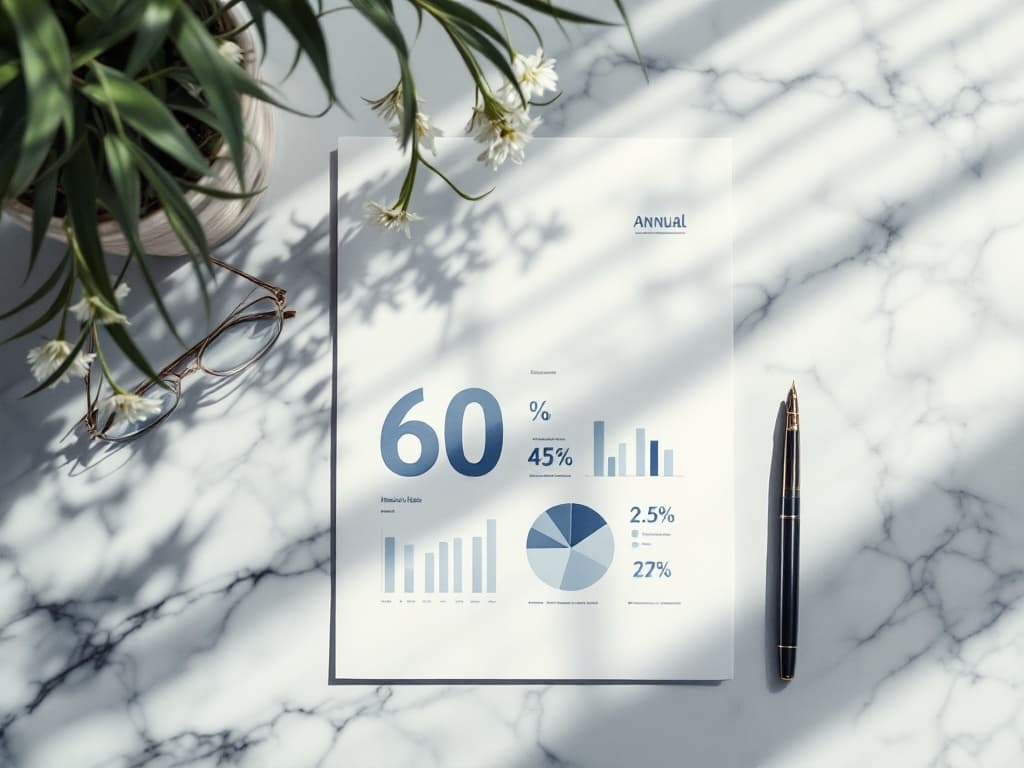
The plastic surgery statistics published each year by the American Society of Plastic Surgeons and the Aesthetic Society are the least glamorous document the field produces and the most useful one a patient can read. They are a headcount. They record what Americans actually paid for, not what the industry wishes they wanted, and the gap between those two things is where the real story lives. Read the numbers instead of the advertising and three facts jump out immediately: the overwhelming majority of cosmetic procedures involve no scalpel at all, the growth in the field is almost entirely in non-surgical treatments, and the patient population is shifting in ways the standard consultation has been slow to reflect. None of that is hidden. It is printed in the annual report every year. It is just rarely the part anyone quotes.
The numbers are mostly needles, not knives
The short answer: minimally invasive procedures outnumber surgical ones by roughly ten to one, and it is not close.
When people picture plastic surgery they picture an operation. The data describes something else. In any recent year, the ASPS report counts millions of minimally invasive cosmetic procedures against a surgical total an order of magnitude smaller. Botulinum toxin injection sits at the top of the entire list by a wide margin, performed several million times a year, followed by soft-tissue fillers, chemical peels, laser hair removal, and microdermabrasion. The surgical procedures that dominate the public imagination, the facelift and the tummy tuck, are far down the volume chart. Liposuction and breast augmentation lead the surgical category, but even the most common operation is dwarfed by the least remarkable injectable.
This matters for how a patient should calibrate. The field's center of gravity is a fifteen-minute appointment with a syringe, repeated on a schedule, not a once-in-a-lifetime operation. That reframes cost, since the recurring expense of maintenance treatments often exceeds a single surgery over a decade. It reframes risk, since the aggregate exposure comes from volume of small procedures rather than the drama of one big one. And it reframes who is doing the work, because a large share of injectable volume happens outside the plastic surgeon's office entirely.
"The public imagines plastic surgery as an operation. The statistics describe an appointment. For every surgical procedure performed in the United States in a typical year, roughly ten minimally invasive ones are, and the single most common thing done to an American face is an injection, not an incision.
"
Growth is in the exam chair, not the operating room
The short answer: the surgical numbers have stayed relatively flat while non-surgical volume has climbed steadily, and the trend line has held for years.
Surgical procedure counts move slowly. They rise and fall a few percent with the economy and the culture, but the overall surgical volume in the most recent reports is not dramatically different from a decade ago. The non-surgical category is where the expansion lives. Injectables, energy-based skin treatments, and non-invasive body contouring have grown year over year, and the pandemic period accelerated it as remote work and video calls pushed demand toward low-downtime treatments people could recover from over a weekend. The Aesthetic Society's spending data tells the same story from the money side: a growing share of the total dollars spent on aesthetics now goes to non-surgical treatment.
The honest read is that the field is professionalizing around maintenance. The old model was a discrete surgical event with a long recovery and a durable result. The emerging model is a subscription-like relationship of smaller, repeated, lower-risk treatments that hold a result in place. Neither is better in the abstract. But a patient who walks in expecting to be sold one operation, when the field's momentum is toward an ongoing program, should understand which model they are actually being offered and price it accordingly.
The demographic story the brochures skip
The short answer: men remain a small minority of cosmetic patients, historically around one in ten, but their numbers have grown and concentrated in specific procedures.
The cosmetic patient in the statistics is still overwhelmingly a woman, and the marketing reflects that with a decade of lag. But the male share has risen, and it has done so unevenly. The growth clusters in a handful of categories: injectables for the forehead and around the eyes, liposuction for the flank and chest, treatment for enlarged male breast tissue, and hair-related procedures. The age distribution is shifting too. The largest block of cosmetic patients has long sat in the middle-age range, but the report consistently shows meaningful volume at both younger and older ends, with younger patients weighted heavily toward injectables and preventive treatment rather than surgery.
What the numbers cannot tell you
The short answer: volume measures popularity, not quality or appropriateness, and a common procedure is not automatically the right one for you.
The statistics are a powerful corrective to marketing, but they have a ceiling. They count procedures performed, not outcomes achieved. A treatment can be enormously popular and still be wrong for a specific patient, and a procedure can be uncommon precisely because it is reserved for the narrow group it actually helps. The reports also capture what was done, not what should have been done, so they cannot distinguish a well-indicated surgery from an oversold one. And the injectable dominance in the numbers partly reflects accessibility and price point, not superiority: a treatment that is cheaper and lower-commitment will always post higher volume than one that is neither, independent of which produces the better result for any given face.
The useful posture is to treat the statistics as context rather than instruction. Knowing that the field runs on injectables tells you to ask why surgery is being recommended if it is. Knowing that non-surgical growth is the trend tells you to scrutinize whether a maintenance program serves you or the practice's recurring revenue. The numbers sharpen the questions. They do not answer them.
The honest summary
The annual plastic surgery statistics are the field's most honest self-portrait, and they say something quieter than the advertising. The work is mostly injectable, not surgical. The growth is in low-downtime non-surgical treatment, not the operating room. The patient base is still mostly women but is broadening at both ends of age and slowly across gender. And the whole picture has been trending this way steadily enough that any practice presenting itself as primarily a surgical destination is describing a shrinking slice of what Americans actually buy.
For a patient, the value of the data is calibration. It tells you the default path in the field is a series of small maintenance treatments, that surgery is the exception rather than the rule by sheer volume, and that a recommendation should be measured against where people like you actually land in the numbers. What the statistics cannot do is decide for you. Popular is not the same as appropriate, and common is not the same as correct. Read the census to understand the field, then judge the specific recommendation on its own merits. The numbers are the map. They were never the territory.
Related reading: Why Male Aesthetic Surgery Numbers Are Growing and The Maturation of Non-Surgical Body Contouring.