Industry · August 6, 2026
The Belly Button Is the Tell: What the Umbilicus Says About Who Did Your Tummy Tuck
In a full abdominoplasty the belly button never actually moves. The skin moves around it, and the surgeon cuts a new opening and sews it back in. That one small step is where the operation is won or lost cosmetically, it is the detail that makes a tummy tuck obvious across a locker room, and it is almost never discussed in a consultation. Here is what a well-made umbilicus looks like, what goes wrong, and why you should be looking at belly buttons in every before-and-after gallery you scroll.
By The Editorial Desk
9 min read
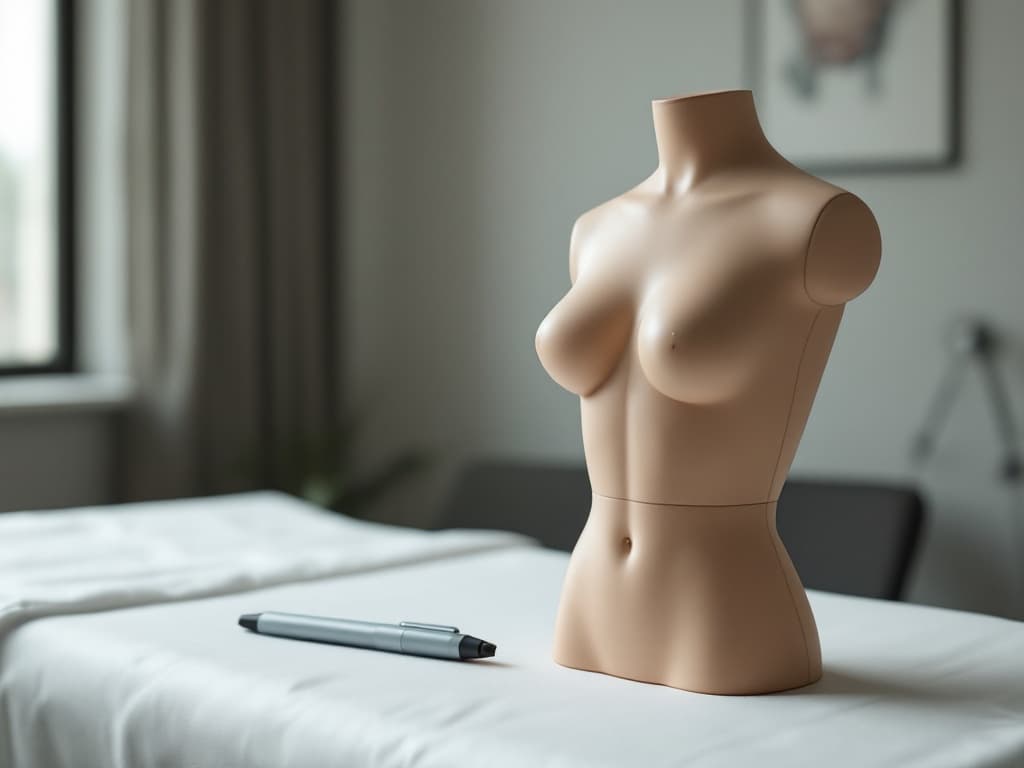
Patients researching abdominoplasty ask about three things: the length of the scar, the recovery, and whether the muscle repair will hold. Almost nobody asks about the belly button. Then they heal, the swelling settles at around the six month mark, and they discover that the flat abdomen looks fine in clothes while the thing in the middle of it looks like it belongs to somebody else. Round where it used to be oval. Sitting a little too high. Ringed by a faint white circle that catches the light in a bathing suit.
That circle is the signature of the operation. It is the one part of a tummy tuck that cannot be hidden under a waistband, and it is the part surgeons quietly use to judge each other's work. If you are going to look at one detail in a gallery of results, look at that one.
Your belly button does not move, and that is the entire problem
The short answer: in a full abdominoplasty the umbilicus stays exactly where it always was, attached to the abdominal wall on a stalk, while the skin of the abdomen is pulled down past it and a new hole is cut for it to come through.
This surprises most patients, and it explains everything that follows. The umbilicus is not a piece of skin. It is a short tethered structure connected to the fascia underneath, the healed remnant of the cord, and it has its own blood supply arriving through that stalk and the tissue immediately around it. A surgeon cannot slide it up or down the way a decorator moves a picture hook.
So the operation goes like this. The umbilicus is cut away from the surrounding skin in a small circle and left standing on its stalk. The skin flap of the entire abdomen is lifted, the muscle repair is done if one is planned, and that flap is pulled downward toward the pubis. The old belly button opening travels down with the skin and gets cut away entirely, which is why a low horizontal scar and a periumbilical scar both exist on the same abdomen. Then, with the skin under tension in its new position, the surgeon has to find the correct spot in that flap, cut an opening, and inset the original umbilicus through it.
Three separate judgments happen in that last sentence. Where the new opening goes. What shape it is cut. How the edges are sewn so the result sits in a natural depression rather than protruding on the surface. None of those are dictated by anatomy. All three are the surgeon's taste and technique, executed in a few minutes near the end of a long case, often when everyone in the room is ready to be finished.
What a good one looks like, according to the people who study it
The short answer: small, slightly vertical or oval, sitting in a shallow depression, with a bit of hooding at the top, and no visible ring of scar around it.
There is a genuine body of aesthetic literature on this, most of it published in plastic surgery journals over the past two decades, and the findings are surprisingly consistent across survey populations. Preferred umbilical shape is small rather than large, vertically oriented or oval rather than round, and superiorly hooded, meaning a slight fold of skin overhangs the top. It should be recessed. It should sit on the midline. Its vertical position tends to be judged natural somewhere near the level of the iliac crests, which is roughly where most people's already is.
The failure modes are the inversions of that list. A large round opening reads as surgical because very few unoperated adults have one. A protruding, everted umbilicus reads as a scar rather than a navel. A position two centimeters too high produces the specific look experienced eyes catch instantly, since a high belly button on a flat abdomen is not a thing that occurs naturally.
"A tummy tuck scar can be hidden by a waistband. The belly button is the only part of the operation that shows in a swimsuit, which makes it the only part you cannot delegate to hope.
"
The technical answers to those failures are unglamorous and well described: cutting a vertical ellipse or a small inverted V rather than a circle, defatting the underside of the flap around the opening so the area sits in a hollow, and anchoring the base of the umbilicus down to the fascia with a few sutures so it stays recessed instead of tenting outward as swelling resolves. Surgeons who care about this step have a named technique they will describe unprompted. That is a good sign.
The float, the hernia, and two decisions made without you
The short answer: there is a version of this operation that avoids the circular scar entirely, and there is a common finding at surgery that can put the umbilicus at real risk, and both get decided in the operating room unless you raise them first.
The first is the floating umbilicus, sometimes called an umbilical float or a modified abdominoplasty. Here the stalk is released from the fascia and the umbilicus is allowed to slide downward with the skin a short distance, usually a couple of centimeters at most, so no new opening has to be cut and no circular scar is created. For a patient with modest skin laxity, this is an elegant answer with a cleaner result. It has a hard limit: it only works when the amount of skin being removed is small, and released past a certain distance the belly button ends up sitting too low, which is its own permanent tell. It also has a smaller scope for muscle repair than a full procedure that opens the whole abdominal wall, which matters if you are having this done in part to close a separation, a topic we covered when writing about what actually closes diastasis recti.
The second is the umbilical hernia. A surprising number of patients arrive for abdominoplasty with a small one, frequently after pregnancy, and frequently undiagnosed until the surgeon is looking directly at it. Repairing it is usually the right call. The complication is that the blood supply to the umbilicus runs through exactly the tissue a hernia repair disturbs, and combining an aggressive repair with the flap elevation of a full tummy tuck is the classic setup for umbilical necrosis, where the belly button partially or completely dies and is lost. Surgeons who do a lot of these have specific strategies for it, including preserving periumbilical perforating vessels and modifying the repair rather than performing a textbook hernia operation in the middle of a textbook abdominoplasty.
That risk is also the reason your smoking history is not a formality. Nicotine constricts precisely the small vessels this structure depends on, which is why the pre-operative cessation timelines exist and why an honest surgeon will cancel over them.
When it goes wrong, and what can be done about it
The short answer: the common problems are stenosis, malposition, distortion, and visible scarring, and only some of them are straightforward to revise.
Umbilical stenosis is the opening narrowing as it heals, sometimes to a pinhole. It is one of the more frequently reported umbilical complications after abdominoplasty in published series, it can be uncomfortable and difficult to clean, and it usually requires a small revision procedure to release. Malposition, meaning the opening was cut too high, too low, or off the midline, is the hardest of the group, because correcting it means either accepting a new scar where the old opening was or performing a more involved reconstruction. Distortion and eversion sit in between. Widened or hypertrophic scarring around the rim is common in patients prone to it and is managed like any other scar, with the same evidence-limited toolkit we went through in what actually works on surgical scars.
Revision of the umbilicus, sometimes called secondary umbilicoplasty, is a real and reasonably common operation. It is generally smaller than the original surgery, often done under local anesthesia with sedation, and generally waits at least six months to a year so the tissue has settled. It is also, in practice, frequently performed by a different surgeon than the one who did the primary, which puts patients into the awkward dynamic described in the revision consult economy.
None of that is a reason for alarm. Most abdominoplasty patients heal with a belly button they are content with. It is a reason to understand that this specific structure has its own complication list separate from the seroma, sensation, and scar concerns that dominate the standard consent conversation, including the drain and suture questions we examined in the drainless tummy tuck.
Why this is the most useful thing in any gallery
The short answer: the umbilicus is the hardest part of the result to fake with photography, so it tells you more about a surgeon than the abdomen around it.
A flat stomach photographs well under almost any conditions. Good lighting, an arched back, a shot taken at three weeks when the swelling is still doing half the work, and nearly any competent result looks excellent. The belly button does not cooperate with any of that. It is a small three dimensional detail with a shape, a depth, and a scar, and it either looks made or it looks natural.
So when you are scrolling a practice's results, apply the same discipline we laid out for reading a before-and-after gallery, then add one step. Zoom in on the navel in every single photograph. If they are consistently small, shadowed, vertical, and centered, you are looking at a surgeon who treats this as part of the operation. If they are round, flat, blanched, or vary wildly in position from patient to patient, you are looking at someone who treats it as a closing step. That pattern is far more informative than any credential, and it connects directly to the case volume question, because this is a detail that improves with repetition and with nothing else.
The honest summary
The belly button is the most visible and least discussed component of a tummy tuck. It does not move during the operation, it gets a new opening cut for it in relocated skin, and the shape, position, depth, and scar of that opening are entirely the product of one surgeon's technique in the last stretch of a long case.
Ask about it before you book, in those words. Ask whether you are a candidate for a float, which avoids the circular scar but only handles limited laxity. Ask what happens if a hernia turns up, because the blood supply to your umbilicus and the repair of that hernia compete for the same tissue. Understand that stenosis and malposition are real, that revision exists, and that revision is easier for some of these problems than others. And if you are combining this with other procedures, the ordering matters for reasons we covered in sequencing body contouring and in timing a mommy makeover after childbirth.
The bottom line is simple. A surgeon who can describe their umbilical technique in specific terms, unprompted, has thought about the part of the operation everyone will actually see. A surgeon who waves the question off has told you something useful too.