Industry · August 25, 2026
Constipation After Plastic Surgery: The Complication Nobody Puts in the Consent Form
Constipation after plastic surgery is the most common complication of the first week, and the one least likely to be mentioned before it happens. It is caused by the opioids, the anesthesia, the anti-nausea drugs, the dehydration, and the sudden stillness, in roughly that order, and it turns dangerous when a patient with fresh abdominal sutures or a two-day-old facelift starts straining on the toilet. Here is why it happens, why stool softeners alone do not fix it, what the bowel regimen the pain specialists use actually looks like, when a missed bowel movement becomes an ileus, and the two questions to ask before you fill the pain prescription.
By The Editorial Desk
11 min read
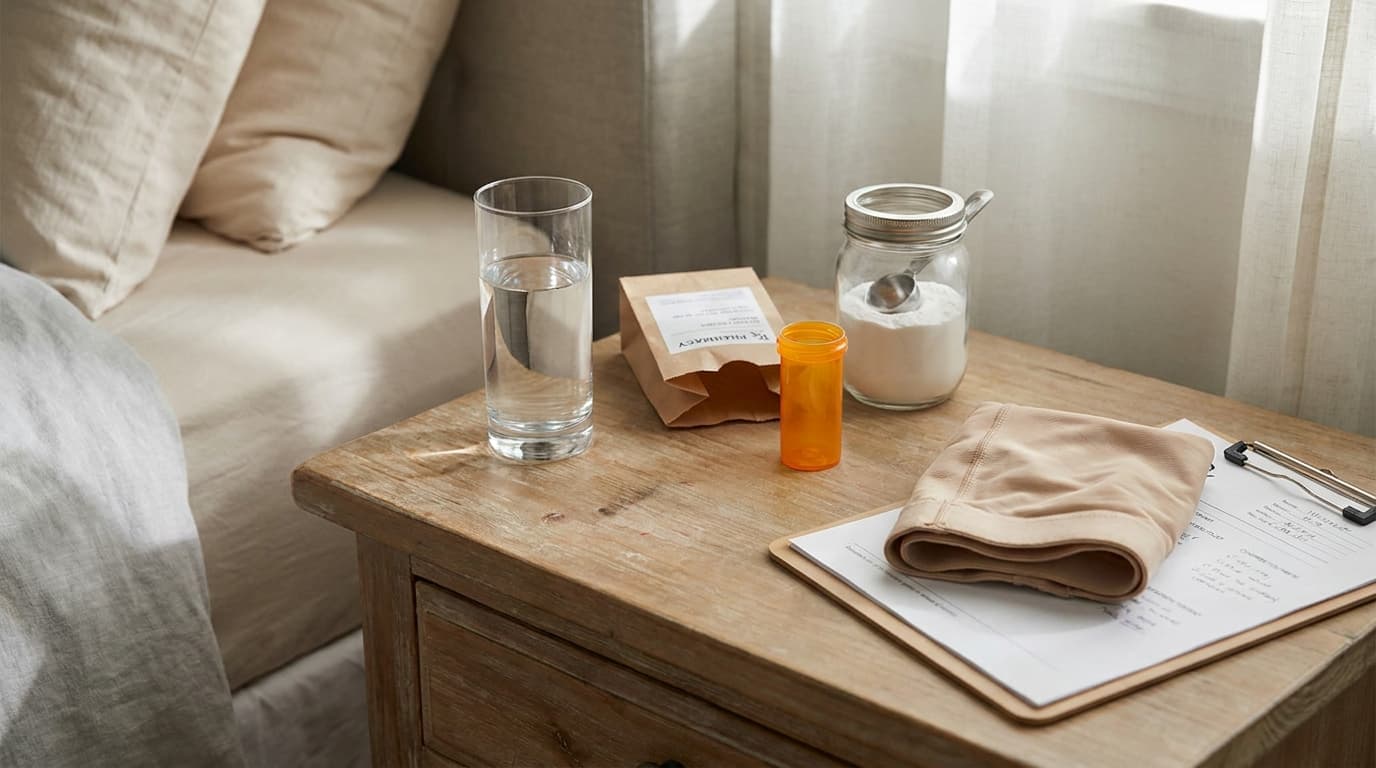
Ask any recovery nurse what the phone rings about on day four after a tummy tuck, and the answer is not pain, not the drains, not the incision. It is that the patient has not had a bowel movement since before surgery, is bloated to the point that the compression garment will not close, and is now afraid to push because the surgeon told her not to strain the repair. She was sent home with a bottle of oxycodone, an anti-nausea prescription, a stool softener she was told to "take as needed," and no plan. Four days later she has a problem that a two-dollar laxative started on the morning of surgery would have prevented.
Post-operative constipation is boring, which is why it gets so little attention in the consult and why it causes so much misery in the first week. It is also not harmless. Straining raises blood pressure hard enough to matter after a facelift, loads a fresh abdominal wall repair in exactly the way the surgeon warned against, and puts a dehydrated patient on a toilet where fainting is a real event. This is the ninth entry in a series on the complications of aesthetic surgery, and it belongs alongside the pieces on nausea and on opioid-sparing recovery, because it is downstream of both.
Why surgery stops the bowel
The short answer: the opioids in the pain prescription are the main cause, and general anesthesia, anti-nausea drugs, dehydration, and lying still for days each add to the effect, so a patient after cosmetic surgery is usually hit by all five at once.
Opioids bind to receptors in the nervous system of the gut as readily as they bind to the ones in the brain. In the intestine, that binding slows the coordinated contractions that move stool forward, tightens the sphincters, and increases the amount of water the colon pulls out of what is passing through. Stool moves slower and gets harder at the same time. Unlike the sedation and the nausea, this effect does not wear off with continued use; opioid-induced constipation is the one side effect to which patients do not develop tolerance, which is why the pain and palliative care literature treats it as an expected consequence rather than a possible one. Across studies of patients taking opioids for more than a few days, somewhere between 40 and 60 percent develop clinically significant constipation, and among surgical patients started on opioids from a normal baseline, the figure is often higher in the first week.
The other contributors stack on top. General anesthesia and the drugs used to reverse muscle relaxants slow gut motility for a day or more on their own; the transient shutdown that follows any operation is called postoperative ileus and is usually mild after body surgery that never touches the abdominal cavity, but it is not zero. Ondansetron, the anti-nausea medication most practices send home, is itself constipating, and the nausea piece earlier in this series noted that fact in passing. Patients arrive at surgery having fasted, lose fluid during the case, are sent home with instructions that emphasize rest, eat very little for two days because they feel awful, and do not walk. Iron supplements, if a patient was told to take them before surgery for a low hemoglobin, finish the job. A patient on a GLP-1 drug starts the whole sequence with a gut that was already moving slowly.
Why straining is the actual danger
The short answer: pushing against a closed airway to pass hard stool spikes blood pressure and abdominal pressure sharply, which is a bleeding risk after a facelift or rhinoplasty, a mechanical load on a fresh rectus plication or hernia repair, and a fainting risk in a dehydrated patient sitting on a toilet.
The Valsalva maneuver, which is what straining is, drives arterial pressure up transiently by a substantial margin and then produces a rebound surge when the breath is released. The facelift hematoma piece in this series covered why blood pressure control in the first 48 hours is the single most important modifiable factor in whether the neck fills with blood overnight; a patient straining on the toilet on the first post-operative evening is doing the one thing every facelift surgeon's discharge instructions tell them not to do. The same applies to a rhinoplasty patient whose nose is packed and splinted, and to any procedure where a pressure spike can reopen a vessel that was cauterized hours earlier.
For abdominoplasty the concern is mechanical. The rectus muscles were sutured back to the midline, and the surgeon has told the patient to stay bent at the hips, avoid lifting, and avoid anything that tightens the abdominal wall hard. Bearing down on the toilet tightens it harder than almost anything else a patient does in the first week. Whether a single episode of straining can actually tear a plication is debated, and the evidence is anecdotal in both directions, but it is not a load anyone wants to test, and it is certainly one that hurts. The broader point in the piece on wound separation applies: tension across a healing closure, repeated, is how closures fail.
Then there is the toilet itself. Straining, dehydration, opioids, and standing up suddenly in a warm bathroom is the recipe for a vasovagal faint, and bathroom syncope in the first days after surgery is a well-documented cause of falls, head injuries, and, occasionally, a torn incision. Recovery nurses tell patients not to lock the bathroom door for a reason.
"The stool softener in the discharge bag is the pharmacological equivalent of a thoughts-and-prayers card. On its own, it does not prevent opioid constipation. It never did.
"
Why the stool softener alone does not work
The short answer: docusate, the standard "stool softener," has repeatedly failed to beat placebo in controlled trials, and a bowel regimen that prevents opioid constipation needs an osmotic laxative, a stimulant laxative, or both, started the day opioids start rather than after the problem appears.
Docusate is the most prescribed constipation drug in American hospitals and among the least effective. A randomized trial in hospice patients on opioids, published in the Journal of Pain and Symptom Management, found that adding docusate to a stimulant laxative changed nothing about stool frequency or consistency compared with the stimulant alone, and systematic reviews since have reached the same conclusion. The drug is a surfactant that is supposed to let water into the stool; the problem in opioid constipation is that the colon is actively pulling water out and the bowel is not moving, and a surfactant does not address either. Its persistence on discharge lists is habit, not evidence.
What does work is well established, because the palliative care and chronic pain fields have had to solve this for decades. The American Gastroenterological Association's guideline on opioid-induced constipation recommends conventional laxatives as first-line therapy, started prophylactically alongside the opioid, with the two useful categories being osmotic agents (polyethylene glycol, the 17-gram powder sold under several names, or magnesium-based salts in patients with normal kidneys) and stimulants (senna or bisacodyl), which directly provoke the contractions the opioid suppressed. The standard prophylactic regimen in most pain services is a stimulant at bedtime plus a daily osmotic, with the dose stepped up if there is no bowel movement by the second day, and it is started on the day of surgery, not on day four. Bulk fiber supplements like psyllium are a poor choice while on opioids and short of fluids; they add mass to a bowel that is not moving and can make the impaction worse.
For patients who fail conventional laxatives, there is a newer class of drugs, the peripherally acting opioid antagonists, which block the opioid's effect in the gut without reversing its effect on pain: methylnaltrexone, naloxegol, and naldemedine all carry FDA approval for opioid-induced constipation, though their labeled use is chronic pain rather than a five-day post-surgical course, and their cost and prescribing hurdles make them a specialist rescue rather than a discharge-bag item. Alvimopan is approved specifically for restoring bowel function after intestinal surgery and is not relevant to cosmetic patients. The real lesson of that drug class is the mechanism it confirms: the constipation is the opioid's doing, and the most effective prevention of all is the one the opioid-sparing recovery piece described, which is to take fewer opioids in the first place. Scheduled acetaminophen and an anti-inflammatory, a long-acting local anesthetic in the surgical field, and a nerve block for abdominal work reduce the pill count, and every pill not taken is a dose of constipation not delivered.
When a missed bowel movement becomes a problem
The short answer: three to four days without a bowel movement after surgery is common and uncomfortable but not an emergency; abdominal distension with vomiting, no passage of gas, worsening pain, or fever is a different condition and needs a same-day call.
Normal post-surgical constipation is a bowel that is full and slow. It produces bloating, cramping, a feeling of pressure, sometimes a headache and loss of appetite, and it resolves, often dramatically, once the laxatives take hold or the opioids stop. It is safe to escalate the regimen at home: a second dose of the osmotic, a bisacodyl or glycerin suppository, a bottle of magnesium citrate in a patient with normal kidneys. Enemas are a last resort and should be discussed with the office first in abdominoplasty patients, less because of the enema itself than because of the positioning and straining that tends to accompany it.
Ileus is different. Postoperative ileus is a bowel that has stopped moving altogether, and its signs are a distended, tense, often quiet abdomen, nausea and vomiting that get worse rather than better, and no passage of gas at all. It is uncommon after surgery that never enters the abdominal cavity, but it is not unheard of after abdominoplasty, especially in patients on heavy opioid doses or with a history of prior abdominal operations, and it is managed in a hospital with bowel rest, fluids, and imaging to exclude an obstruction. The overlap with ordinary constipation early on is the reason a practice should give patients a threshold rather than a reassurance. Fecal impaction is the other endpoint: hard stool lodged in the rectum that the patient cannot pass and that laxatives above it cannot move, which presents as paradoxical leakage of liquid around the blockage and needs manual disimpaction. It is rare in healthy young patients and less rare in older ones, and it is what happens when a week of opioids meets no bowel regimen at all.
Chewing gum, the odd trick that shows up in every recovery protocol, has a genuine if modest evidence base: a Cochrane review of gum chewing after abdominal surgery found a small reduction in time to first flatus and bowel movement, on the order of hours rather than days, at essentially no cost or risk. It belongs in the plan as a supplement to the laxatives, not as a substitute for them. Early walking, which the enhanced recovery protocols place at the center of everything, does more.
What a good discharge plan actually contains
The short answer: a practice that has thought about this sends patients home with a written bowel regimen that starts on the day of surgery, an opioid prescription sized for days rather than weeks, a rescue step, and a threshold for calling, and the patients of those practices simply do not make the day-four phone call.
The enhanced recovery after surgery movement, which began in colorectal surgery and has been adopted unevenly in aesthetic practice, reduced post-operative ileus and constipation by doing several mundane things at once: multimodal analgesia that cut opioid doses, early feeding, early walking, minimizing intravenous fluids, and scheduled laxatives. Plastic surgery practices that have adopted formal enhanced recovery protocols for abdominoplasty and breast surgery report shorter time to first bowel movement and lower opioid consumption in their own published series, and, though the cosmetic literature on constipation specifically is thin, the mechanisms are not procedure-specific. Constipation after a facelift is opioid constipation with a facelift attached.
The practical version fits on an index card. Drink water on a schedule, not by thirst, from the evening of surgery. Start the osmotic laxative and the bedtime stimulant on the day of surgery if opioids are prescribed. Walk in the house every couple of hours while awake. Eat something with each dose of medication. Take the opioid only when acetaminophen and the anti-inflammatory are not enough, and stop it as early as pain allows, which for most cosmetic procedures is day two or three. Escalate the laxatives on day two if nothing has happened. Call on day three or four if escalation has not worked, and call immediately for distension, vomiting, or no gas. Do not strain, and do not lock the bathroom door. None of it is sophisticated, which is the point: the complication is common because the prevention is so easy that nobody bothers to write it down.
The honest summary
Constipation after plastic surgery is not a footnote. It is the most frequent complication of the first week, it is caused mostly by the opioids the practice prescribed, and it is preventable in nearly every case by a laxative regimen that costs a few dollars and starts on the day of surgery. The stool softener alone does not prevent it, and telling a patient not to strain while giving them nothing to prevent the need to strain is an instruction without a mechanism. The dangerous version is not the discomfort but the toilet: straining spikes blood pressure after a facelift, loads a fresh abdominal repair, and drops a dehydrated patient to the bathroom floor. The evidence, from the American Gastroenterological Association's guideline down to a Cochrane review on chewing gum, points to the same simple plan the pain specialists have used for decades. Ask for it before you leave the office. If the practice does not have one, that tells you something about how much thought went into the rest of your recovery.