Industry · August 27, 2026
Fever After Plastic Surgery: What Is Normal in the First Week and What Is Not
A temperature of 38 degrees on the second night after a tummy tuck sends most patients to the phone and some to the emergency room. Most of those fevers are the body's inflammatory response to the operation and mean nothing. A small number are the first sign of an infection, a clot, or something rarer and faster. The difference lies less in the number on the thermometer than in the day it appears, what comes with it, and how the wound and the patient look. Here is the timeline the surgical literature actually supports, the myths that still get repeated, and the fever nobody should sleep on.
By The Editorial Desk
10 min read
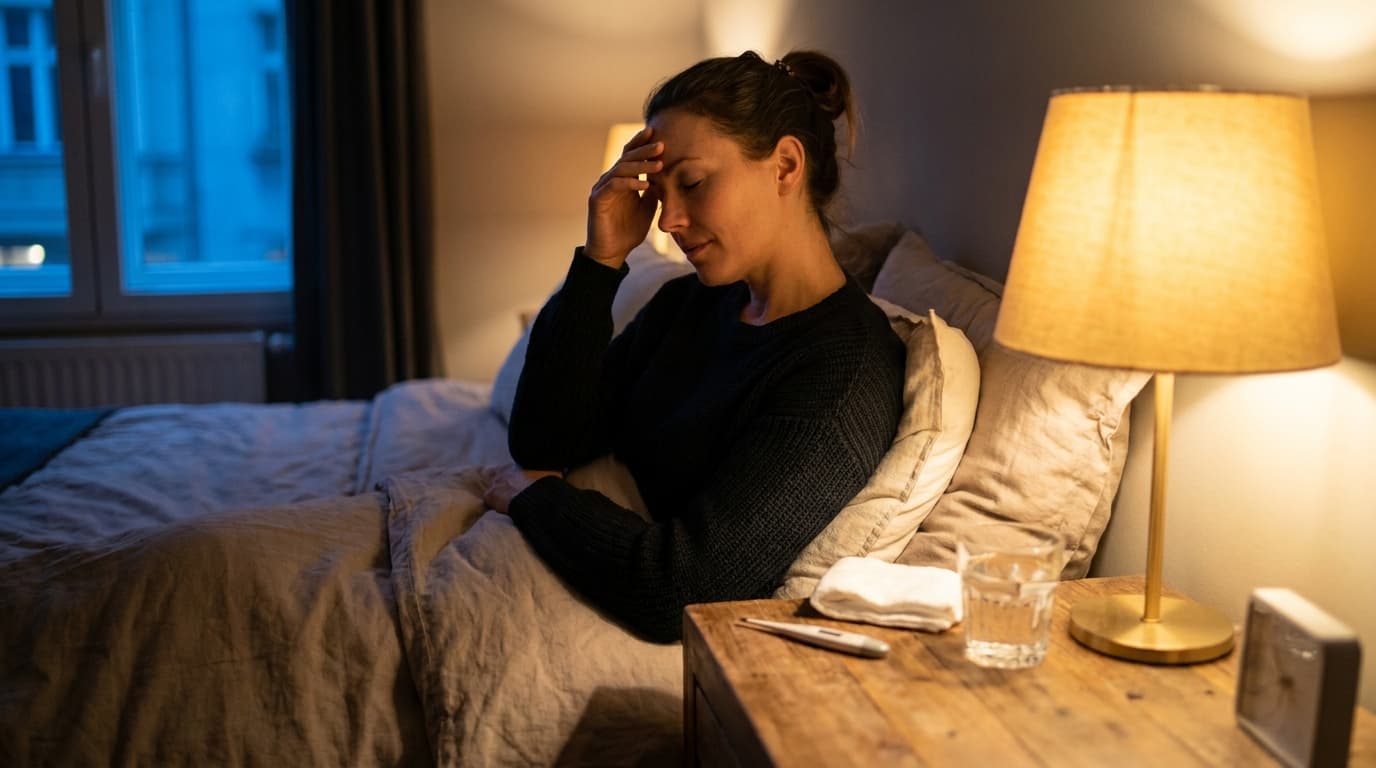
The instruction sheet says to call if the temperature goes above 101, and for a large share of patients recovering from a facelift, a breast augmentation, or an abdominoplasty, it does, usually somewhere in the first two days. The call that follows is often unsatisfying in both directions. The patient wants to know whether the wound is infected. The nurse, who has heard this on day two a thousand times, says it is probably nothing and to take acetaminophen. Both are working from a half-remembered rule about fever after surgery, and neither is quite right.
Fever after plastic surgery is common, and most of it is benign. Depending on how it is defined and measured, studies of surgical patients have found some degree of postoperative temperature elevation in anywhere from a fifth to well over half of cases, and the large majority of those resolve without any treatment and without any cause ever being found. But the same symptom is also the earliest sign of the complications that matter most in cosmetic surgery, and a patient who has been told fever is normal can sit on a dangerous one for a day too long. What separates the two is timing, company, and the wound.
Why the first two days run warm
The short answer: fever in the first 48 hours after surgery is usually the inflammatory response to tissue injury itself, driven by cytokines released from the operative site, and it is not, despite decades of teaching, caused by collapsed lung.
Cutting, lifting, and suturing tissue triggers the release of interleukin-1, interleukin-6, and tumor necrosis factor from the wound, and those molecules reset the hypothalamus in the same way an infection would. The bigger the operation, the larger the surface area of injury, and the higher the early temperature tends to run. A facelift with a neck lift, a full abdominoplasty with liposuction of the flanks, or a mommy makeover that combines both produces far more dissected surface than a blepharoplasty, and the temperature curves in the first two days reflect that. This fever peaks on the first or second postoperative night, seldom exceeds 38.5 degrees Celsius, responds to acetaminophen, and is accompanied by nothing more alarming than soreness and fatigue. Most of it never gets a diagnosis because it does not need one.
The traditional explanation, that early fever comes from atelectasis, the partial collapse of lung segments after general anesthesia, has been repeated in surgical training for generations and is almost certainly wrong. A 2011 review in the journal Chest examined the available evidence and found no study demonstrating that atelectasis causes fever; the two simply occur at the same time. That matters for a practical reason. Patients are still handed incentive spirometers and told that deep breathing will bring the fever down, which is fine advice for the lungs but sets up a false reassurance: a patient who breathes diligently and stays feverish concludes something else is wrong, and a patient who does not breathe and stays afebrile concludes everything is fine. Neither conclusion follows.
The calendar is the diagnosis
The short answer: the day a fever first appears narrows its cause more than any single test, because the common complications of cosmetic surgery each have a characteristic window.
Surgeons learn a mnemonic for postoperative fever, the five Ws, and while it is a teaching device rather than a clinical rule, its logic holds up. Wind, the respiratory causes, belongs to the first two days. Water, meaning a urinary infection, appears around day three to five and mostly in patients who had a catheter during a long procedure. Wound infection typically declares itself between day three and day seven, and later for deep or implant-related infections. Walking, a euphemism for venous thromboembolism, sits in the first week to ten days and produces a low-grade fever that is easy to dismiss. Wonder drugs, meaning drug fever, can appear at any point but tends to follow a new antibiotic or the start of a new medication by a week or more.
For a cosmetic patient that timeline is worth internalizing. A temperature of 38.2 on the first night after an abdominoplasty is the expected inflammatory response. The same temperature appearing fresh on day five, in a patient who had been afebrile since day two, is a new event and demands a new explanation. Fever that resolves and then returns is a different animal from fever that has been present and fading since surgery. And a fever that climbs rather than falls over the first three days is not following the inflammatory pattern at all. The Centers for Disease Control and Prevention's surveillance definition of a deep surgical site infection includes fever above 38 degrees among its criteria, but only in combination with the wound findings that go with it, which is exactly the point: the number by itself means very little, and the number plus the calendar plus the wound means a great deal.
"The thermometer tells you that something is happening. The calendar tells you what it probably is. The wound tells you whether to worry tonight or in the morning.
"
The fevers that cannot wait
The short answer: a high fever in the first 24 to 48 hours, a fever with a wound that is exquisitely painful or discolored out of proportion to its appearance, a fever with a rash and low blood pressure, or a fever with shortness of breath, is an emergency and not a phone call.
The inflammatory fever of the first two days is low and lonely: it comes with nothing. The dangerous early fevers come with company. Necrotizing soft tissue infections caused by group A streptococcus or clostridial species are rare after cosmetic surgery but have been reported after liposuction, abdominoplasty, and breast surgery, and their signature is speed. The patient develops a high fever within the first day or two, pain at the surgical site that is severe and worsening far beyond what the incision looks like, sometimes a dusky or bronze discoloration of the skin, and a rapid decline in how they feel. This is a surgical emergency in which hours matter, and it is the reason the rule that early fever is always benign is a bad rule.
Toxic shock syndrome is the other early catastrophe. It is a toxin-mediated illness from Staphylococcus aureus or group A streptococcus, and it has been documented after rhinoplasty with nasal packing, after breast augmentation, and after liposuction, typically within the first few days. The presentation is a high fever, a diffuse sunburn-like rash, vomiting or diarrhea, dizziness from low blood pressure, and confusion, often with a wound that looks nearly normal. It is uncommon enough that a patient may never hear the term at a consultation and common enough that any practice packing a nose or placing an implant should have mentioned it. Any fever accompanied by a rash and lightheadedness in the first week is an emergency department visit, not a text to the practice.
Two more warrant a fast response. Fever with shortness of breath, chest pain, or a rapid heart rate in the first two weeks should be treated as a possible pulmonary embolism until proven otherwise; blood clots after abdominoplasty and combined procedures remain the leading cause of death in cosmetic surgery, and the fever they produce is modest and misleading. And fever with confusion, petechiae, and breathing difficulty after large-volume liposuction or fat transfer raises the question of fat embolism syndrome, which appears within one to three days. Neither can be sorted out over the phone.
The ordinary infection, and the things that mimic it
The short answer: a fever appearing between day three and day seven with a wound that is red, warm, painful, and draining is a surgical site infection until proven otherwise, but several benign and common events produce a similar picture and a practice should be able to tell them apart.
Superficial surgical site infection after cosmetic surgery is uncommon, on the order of one to three percent across most series and higher for abdominoplasty and combined body contouring, and it announces itself on schedule. The redness spreads outward from the incision in an irregular pattern, the wound becomes more painful rather than less, the drainage turns cloudy or foul, and the temperature rises alongside. Cellulitis around a drain site, or a seroma that has become infected, can present the same way; a fluid collection that was soft and painless and is now tense, hot, and accompanied by fever has usually become an abscess and needs to be drained rather than watched. Implant infections after breast augmentation are the most consequential in this category, because a fever with a red, swollen, painful breast in the first two weeks often ends with the implant coming out, and waiting to see does not improve the odds of saving it.
Several things imitate an infection without being one. Adhesive and tape reactions produce redness around the incision that itches rather than hurts and does not come with fever. A hematoma can produce warmth, swelling, and a low fever as the blood breaks down, without any bacteria involved. Fat necrosis after fat grafting or in a large flap can produce fever, firm tender lumps, and an elevated white cell count in the second week that looks for all the world like an abscess. Drug fever from an antibiotic given at surgery is a diagnosis of exclusion, but a patient who is feverish, comfortable, and improving in every other way, with a normal wound, on day eight of a cephalosporin, is a candidate. The tell in all of these is the same one used for the dangerous fevers: what is the fever traveling with, and how does the wound look against yesterday.
The workup, when one is warranted, is not elaborate. A visit rather than a phone call, an examination of the incision and any drains, a look at the legs and the chest, a listen to the lungs, and, if the picture is unclear, blood counts and cultures. Practices that respond to a day-five fever by calling in a prescription for antibiotics without seeing the patient are guessing, and the guess covers the ordinary infection while missing the collection that needs draining and the clot that needs anticoagulation.
What a good practice tells you before surgery
The short answer: a competent consent conversation sets a specific temperature threshold, explains the two-day inflammatory fever so it does not cause panic, names the symptoms that mean go to the hospital, and provides a way to reach a human at two in the morning.
The failures on this point are consistent. Instruction sheets give a number, often 101 degrees Fahrenheit, without any context, so the patient with a 101.2 on night one is as alarmed as the patient with a 101.2 on day six, and the practice has trained itself to reassure both. Better instructions distinguish the expected early fever from the unexpected later one, and list the accompanying symptoms that change the calculus regardless of the day. The American Society of Plastic Surgeons' patient materials advise contacting the surgeon for fever, increasing pain, redness, or drainage, which is correct, but the ordering matters: fever with any of the others is the combination that should trigger action.
The other thing to ask about is who answers. A fever at 2 a.m. on a Saturday after a Thursday operation, with a wound that looks different and a patient who feels unwell, needs a clinician who knows the case and can decide whether to say come in now or come in at nine. Practices that route after-hours calls to an answering service with no surgical backup, or that operate as itinerant surgeons with no local coverage, leave the patient to make that call alone, and the emergency department physician who sees them will not know which fevers this operation produces. Ask, at the consultation, what happens when you call at night, and ask who has hospital privileges if you need to be admitted. The answers say more about a practice than any before-and-after gallery.
The honest summary
Most fever after plastic surgery is the body's inflammatory response to the operation. It appears on the first or second night, stays below about 38.5 degrees, comes with nothing worse than soreness, responds to acetaminophen, and fades. It is not caused by collapsed lung, and deep breathing will not make it go away. The fever that matters is defined by what surrounds it. New fever from day three onward, fever that resolves and returns, fever that climbs rather than falls, and above all fever with a rash, dizziness, vomiting, breathlessness, chest pain, or pain at the surgical site that is out of proportion to what the wound looks like, are not routine and are not phone calls. A wound that has changed since yesterday gives the fever a source, and a wound that looks the same makes an infection less likely but does not rule out a clot or a collection. Check the calendar, check the company, check the wound, and if the answers do not reassure, be seen. The practice that trained you to expect the early fever and to fear the late one has done its job. The one that just wrote a number on a sheet has not.