Industry · August 4, 2026
The Snoring Question: Sleep Apnea Is the Most Common Undiagnosed Risk in an Elective Consult
Obstructive sleep apnea is common, largely undiagnosed, and screened for in about eight questions. It is also the condition most likely to turn a routine elective operation into a respiratory event, and the risk peaks after discharge rather than in the operating room. Cosmetic surgery is the setting where that matters most, because patients go home to a hotel room or an aftercare apartment with an opioid prescription and nobody watching a pulse oximeter. Here is what the perioperative literature shows, what STOP-BANG can and cannot tell you, and what a practice should do with a positive screen.
By The Editorial Desk
9 min read
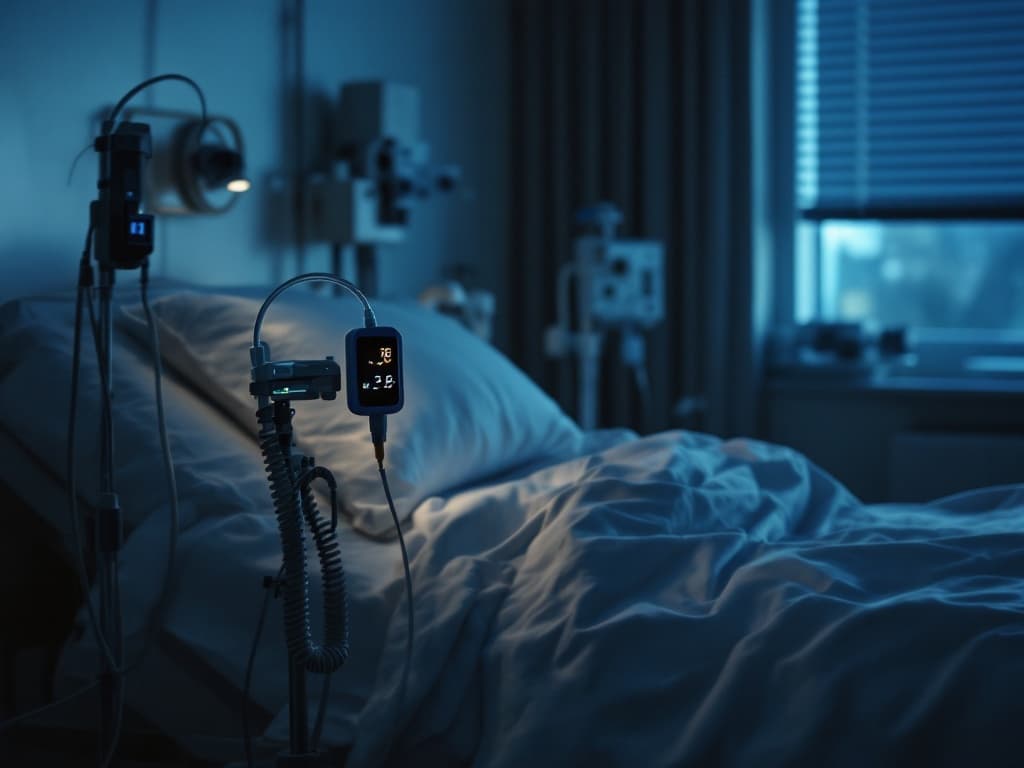
There is a line on every pre-operative health form asking whether you have sleep apnea. Most patients tick no, and a meaningful share of them are wrong. Sleep apnea before cosmetic surgery is not an exotic complication risk. It is a common condition, mostly undiagnosed, that changes how a body handles sedation, opioids, and the first two nights of recovery.
The reason it deserves its own conversation in an aesthetic consult is structural rather than clinical. Hospitals screen for it because they have monitored beds, respiratory therapists, and a nurse who can walk in at three in the morning. Elective cosmetic surgery mostly happens in an accredited office suite or an ambulatory center, and the patient leaves the same day, to a hotel, a rented recovery apartment, or a spare bedroom, with a caregiver who is not medically trained.
That is the setting where an unrecognized airway problem becomes consequential. Not on the table, where the patient is intubated, monitored, and surrounded by people whose entire job is the airway. Afterward, in the dark, unmonitored.
How common the problem actually is, and how often it goes unnamed
The short answer: roughly one in eight middle-aged men and one in sixteen middle-aged women have moderate to severe obstructive sleep apnea, and the large majority have never been diagnosed.
The most cited prevalence figures come from the Wisconsin Sleep Cohort. Peppard and colleagues, publishing in the American Journal of Epidemiology in 2013, estimated that among adults aged 30 to 70, moderate to severe sleep disordered breathing (an apnea-hypopnea index of 15 or more events per hour) affected about 13 percent of men and 6 percent of women. Earlier work from the same cohort, published by Young and colleagues in the journal Sleep in 1997, estimated that a large majority of people with moderate to severe disease had never received a clinical diagnosis, with figures cited in the range of 80 to 90 percent undiagnosed.
Those two findings together describe the actual situation in a consult room. The condition is common. The diagnosis is not. A patient who answers no to "do you have sleep apnea" is usually answering honestly and is sometimes answering incorrectly, because the question asks about a diagnosis rather than about symptoms.
The screening instrument that closed most of that gap is STOP-BANG, developed by Frances Chung's group and published in Anesthesiology in 2008. It is eight yes-or-no items: loud snoring, daytime tiredness, observed pauses in breathing, high blood pressure, body mass index above 35, age over 50, large neck circumference, and male sex. A score of three or more flags intermediate to high risk. A score of five or more suggests a high probability of moderate to severe disease.
It is worth being precise about what that tool is and is not. STOP-BANG is a sensitive screen with modest specificity, which is exactly what a screening instrument should be in this context. It is designed to catch nearly everyone with significant disease at the cost of flagging plenty of people who do not have it. A high score is not a diagnosis. It is a reason to change the plan.
Why the danger concentrates after the operation
The short answer: the intraoperative period is the monitored part. The postoperative period is when residual anesthetic, opioids, and supine sleep converge on an airway that already collapses.
The mechanism is not complicated. Obstructive sleep apnea is a condition where the upper airway loses tone and closes during sleep. General anesthesia, sedatives, and opioids all reduce upper airway tone and blunt the respiratory drive that normally responds to rising carbon dioxide. Layer those onto an airway that is already marginal, add the rebound of deep sleep in the nights after surgery, and the physiology points in one direction.
The outcome data follow. A meta-analysis by Kaw and colleagues in the British Journal of Anaesthesia in 2012 reported that patients with obstructive sleep apnea undergoing surgery had significantly higher rates of postoperative hypoxemia, respiratory failure, cardiac events, and unplanned transfer to intensive care compared with patients without it. Subsequent large database analyses of surgical populations have reported the same direction of effect for pulmonary complications, with the strongest signal in patients who were undiagnosed before surgery.
The American Society of Anesthesiologists has maintained a practice guideline on the perioperative management of patients with obstructive sleep apnea since 2006, updated in 2014. Its recommendations are unglamorous and consistent: screen before surgery, weigh whether the planned setting is appropriate, minimize sedatives and opioids, use regional and multimodal techniques where possible, and extend monitoring after discharge criteria would otherwise be met.
"The operating room is the safest place an apneic patient will be all week. They are intubated, ventilated, and watched by someone whose only job is the airway. The risk starts when that person goes home and so does the patient.
"
The part specific to cosmetic surgery: nobody is watching
The short answer: elective aesthetic surgery discharges patients into unmonitored settings faster and more routinely than almost any other surgical field, which is precisely the exposure the guidelines were written to limit.
The Society for Ambulatory Anesthesia published a consensus statement in Anesthesia and Analgesia in 2012 addressing which patients with obstructive sleep apnea are reasonable candidates for same-day surgery. Its logic is worth repeating in plain terms. A patient with known apnea who uses CPAP consistently, whose other medical conditions are controlled, and whose postoperative pain can be managed largely without opioids is generally an acceptable ambulatory candidate. A patient with untreated or non-adherent apnea, uncontrolled comorbid disease, or an operation expected to require substantial opioid analgesia is a poorer fit for a setting with no overnight monitoring.
Read that against how cosmetic surgery is actually delivered. A significant share of aesthetic patients arrive in the risk profile the screen was built to catch: higher body mass index for body contouring, male patients with larger neck circumference for male aesthetic procedures, patients over 50 for facial work. Many operations run long. Many patients travel and stay in a hotel with a friend rather than at home with family. Some travel internationally and recover in an unfamiliar city, which is one of the costs that never appears in a surgical tourism quote.
The office-based setting also deserves scrutiny on its own terms. Sedation delivered in an office for an "awake" procedure is not a lower airway risk simply because there is no breathing tube. It is arguably a higher one, because a partially sedated patient with an unprotected airway and obstructive apnea can lose that airway quietly. This is one reason facility accreditation and the credentials of whoever is administering sedation deserve a direct question rather than a glance at a lobby certificate, and it is a specific caveat to the enthusiasm around awake and local-only techniques.
What a competent practice does with a positive screen
The short answer: it either sends you for testing or treats you as if you have the condition, and it changes the anesthetic and analgesic plan either way.
Testing first is the more thorough path. A home sleep apnea test is inexpensive relative to the operation, is widely available, and produces a number rather than a probability. If the operation is elective, the timeline is flexible by definition. The argument for testing is strongest when the score is high, when the procedure is long, or when the patient has cardiovascular disease that a diagnosis would change independent of surgery.
Treating empirically is the pragmatic path and is explicitly permitted by the ASA guideline, which allows management based on clinical criteria when a sleep study is not obtained. In practice that means the plan changes: a heavier reliance on regional blocks and local infiltration, non-opioid multimodal analgesia, avoidance of long-acting sedatives, careful head-of-bed positioning, and a longer stay in recovery with oxygen saturation observed off supplemental oxygen before discharge.
Two more items belong in the plan and are frequently forgotten. If you use CPAP, bring the machine to the facility and use it during recovery and at home from the first night. Adherence in the postoperative period is often worse than baseline because of facial dressings, nasal packing, or simple discomfort, and that is the exact week it matters most. And the opioid prescription itself deserves a second look, because the shift toward opioid-sparing recovery protocols is not merely a response to the addiction literature. In an apneic patient it is a respiratory safety measure.
There is also a legitimate reason a surgeon may say not yet. Untreated moderate to severe apnea is a modifiable condition, and it sits alongside nicotine use, uncontrolled blood sugar, and body mass index thresholds in the category of things worth fixing before an optional operation rather than after a complication.
The weight loss variable that changed the conversation
The short answer: significant weight loss reduces apnea severity, and the newer weight loss drugs have moved that from a general observation to a documented effect with a regulatory approval attached.
Obesity is the dominant modifiable risk factor for obstructive sleep apnea, and weight loss has long been known to reduce the apnea-hypopnea index. What changed recently is the quality of the evidence in the pharmacologic arm. The SURMOUNT-OSA trials, published in the New England Journal of Medicine in 2024, tested tirzepatide in adults with obesity and moderate to severe obstructive sleep apnea and reported substantial reductions in the apnea-hypopnea index compared with placebo. The FDA subsequently approved the drug for that indication in patients with obesity, making it the first medication approved specifically to treat the condition.
This intersects with aesthetic practice constantly, because a large share of body contouring patients are arriving after major weight loss on exactly these medications. Two implications follow, and they point in opposite directions. The first is that a patient's apnea may be genuinely better than it was two years ago, which is a real clinical improvement. The second is that these medications carry their own perioperative considerations around gastric emptying and anesthesia timing, and a patient who has lost 60 pounds may still have significant residual disease. Improvement is not resolution, and a stale sleep study or a stale assumption is still a stale input to the anesthetic plan.
The honest summary
Obstructive sleep apnea is the most common serious medical condition that walks into an aesthetic consult undeclared, because most people who have it do not know. The screening takes eight questions and about ninety seconds, and the tool has been in the anesthesia literature since 2008.
The evidence that it matters perioperatively is consistent rather than dramatic. Patients with apnea have higher rates of postoperative hypoxemia, respiratory complications, and unplanned escalations of care, and the risk is concentrated in the days after surgery when sedation, opioids, and rebound sleep overlap. Cosmetic surgery is the field with the least monitoring in exactly that window, which is why the general surgical guidance applies here with more force, not less.
What patients should take from this is short. Answer the snoring questions honestly even if you have never been told you have anything. Ask what your screening score was and what the practice intends to do about it. Bring your CPAP if you have one and use it from the first night. Push for a non-opioid-heavy pain plan and ask how long you will be observed before discharge. If you are flagged and the answer to every one of those questions is a shrug, that tells you something about the practice that has nothing to do with your airway.
None of this is a reason to cancel an operation. It is a reason to have the conversation before the anesthetic is planned rather than after a bad night in a hotel room, and to treat the pre-operative form as a place to volunteer information rather than a box to clear.