Industry · August 26, 2026
Preoperative Testing Before Cosmetic Surgery: Which Bloodwork and ECGs Are Actually Needed
The pre-op packet for an elective facelift or tummy tuck often arrives with a full page of lab orders: a blood count, a metabolic panel, clotting studies, a urinalysis, an ECG, sometimes a chest X-ray. For a healthy forty-year-old, most of that list has no evidence behind it, and the anesthesiology and surgical societies have said so for more than a decade. Here is what the guidelines actually recommend, which tests earn their place before a cosmetic operation, why the unnecessary ones are not harmless, and what a patient should ask when the order sheet is longer than the medical history.
By The Editorial Desk
8 min read
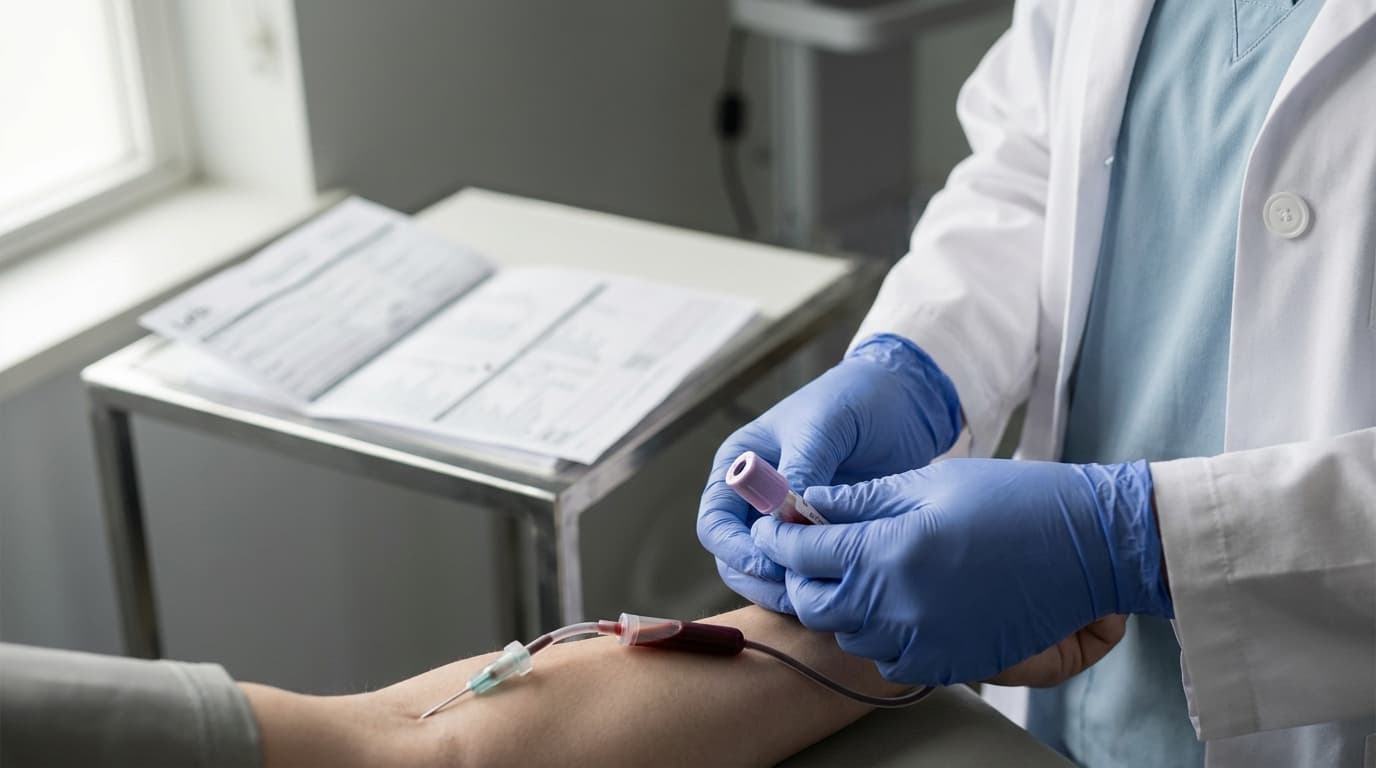
Somewhere between the consultation and the operating room, nearly every cosmetic surgery patient is handed a lab requisition. The form has the reassuring look of thoroughness: a complete blood count, a comprehensive metabolic panel, a coagulation profile, a urinalysis, a pregnancy test, an electrocardiogram, and for patients past a certain birthday, a chest film. The patient assumes each line was chosen for them. In most practices it was not. It is a standing order, printed the same way for the twenty-six-year-old marathon runner having her ears pinned back and the sixty-year-old with hypertension having a neck lift, and its length has more to do with habit, facility policy, and liability anxiety than with anything the tests are likely to find.
That is not a fringe opinion. It is the settled position of the American Society of Anesthesiologists, the American College of Cardiology, and the National Institute for Health and Care Excellence in the United Kingdom, and it has been the position of the Choosing Wisely campaign since 2013. The evidence that routine testing of healthy patients before low-risk surgery changes outcomes is close to nonexistent. The evidence that it causes delays, cancellations, cost, and follow-up cascades for findings that never mattered is substantial. Cosmetic surgery, an elective field with an unusually healthy patient population and an unusually risk-averse culture, is where the gap between the two is widest.
What the guidelines actually say
The short answer: for a patient without significant systemic disease having a low-risk procedure, the major anesthesia and cardiology bodies recommend no routine laboratory tests and no routine ECG, and every test should instead be justified by something in the history or examination.
The ASA's Practice Advisory for Preanesthesia Evaluation states that preoperative tests should not be ordered routinely and should be selected on the basis of the patient's medical condition, the planned procedure, and whether the result would change management. Its Choosing Wisely list makes the point bluntly: do not obtain baseline laboratory studies in patients without significant systemic disease, meaning ASA physical status I or II, who are undergoing low-risk surgery, and specifically not a blood count, a metabolic panel, or coagulation studies when blood loss and fluid shifts are expected to be minimal. The same list advises against baseline cardiac testing in asymptomatic stable patients before low or moderate-risk noncardiac surgery.
The American College of Cardiology and American Heart Association perioperative guideline agrees on the electrocardiogram: a routine preoperative ECG is not useful in asymptomatic patients undergoing low-risk surgical procedures, regardless of age. NICE guideline NG45, which sorts patients by ASA grade and surgery by size, recommends no tests at all for an ASA I patient having minor surgery and only a narrow set for intermediate procedures. None of these documents carves out an exception for aesthetic operations. A facelift under sedation in an accredited office is, in guideline terms, a low-risk procedure in a mostly low-risk population.
Why the evidence is so one-sided
The short answer: large trials and reviews going back forty years have found that routine tests in healthy patients rarely turn up anything, that abnormal results rarely change what the surgeon or anesthesiologist does, and that skipping them does not increase complications.
The landmark study is still cited because nobody has overturned it. In 1985, researchers reviewing thousands of preoperative tests at a university hospital reported in the Journal of the American Medical Association that roughly sixty percent had no recognizable indication, and of those, only about one in five hundred showed an abnormality that might have influenced care. Nearly all of those were then ignored. A randomized trial of nearly twenty thousand cataract patients published in the New England Journal of Medicine in 2000 found no difference in complications between patients who had routine testing and those who had none. A randomized trial in ambulatory surgery patients published in Anesthesia and Analgesia in 2009 reached the same conclusion for a broader mix of low-risk operations: no testing versus indicated testing, no difference in adverse events.
The statistical problem underneath all this is one that patients rarely hear explained. Every laboratory reference range is drawn so that five percent of healthy people fall outside it. Order a panel of twenty values on a healthy person and the probability that at least one comes back flagged is about sixty-four percent. That flag then has to be dealt with: a repeat draw, a call to a primary care physician, sometimes a specialist referral, sometimes a postponed surgery date. The abnormality was never going to hurt the patient. The workup occasionally does.
"A lab panel does not become medicine because it is long. For a healthy patient having an elective operation, every test on the sheet should be able to answer one question: what would we do differently if this comes back abnormal? If nobody can say, the test is not protecting the patient. It is protecting the form.
"
The tests that do earn their place in cosmetic surgery
The short answer: a small number of tests are justified by the specific procedure or by the patient's history, and a good practice orders those deliberately rather than as a bundle.
A hemoglobin or complete blood count is reasonable when meaningful blood loss is expected, which in cosmetic surgery means large-volume liposuction, abdominoplasty, combined body contouring cases, and the longer multi-procedure days. The ASA's own language ties the blood count to anticipated blood loss, and a five-liter liposuction or a circumferential body lift qualifies in a way that a blepharoplasty does not. A pregnancy test for patients who could be pregnant is recommended by the ASA on the grounds that a positive result changes the anesthetic plan and often the decision to operate; most accredited facilities require it on the day of surgery, and that is defensible.
A hemoglobin A1c is justified for patients with known diabetes or the risk factors for it, because uncontrolled glucose is one of the few laboratory findings that clearly predicts wound complications in body contouring, a subject this site examined in its piece on blood sugar and cosmetic surgery. A basic metabolic panel earns its place for patients on diuretics, ACE inhibitors, or other drugs that shift potassium and kidney function, and for anyone with known renal disease. Coagulation studies are indicated for a patient with a personal or family history of abnormal bleeding, liver disease, or anticoagulant use, and are nearly useless as a screen in someone with none of those; the peer-reviewed surgical literature has found repeatedly that a bleeding history taken properly predicts surgical bleeding better than a routine prothrombin time.
An ECG is reasonable for patients with known cardiovascular disease, significant arrhythmia, or symptoms, and for the older patient having a long procedure under general anesthesia where the anesthesiologist wants a baseline to compare against if something changes intraoperatively. That is a clinical judgment, and it is different from a policy that stamps every patient over fifty. Screening mammography before breast surgery should follow the same age-based schedule that applies to the patient whether or not she is having an operation; the American Society of Plastic Surgeons advises that patients be current on breast cancer screening before augmentation, reduction, or lift, which is not the same thing as ordering an extra study. And a small number of practices require a urine cotinine test to confirm nicotine abstinence before a facelift or tummy tuck, which is not a health screen at all but a verification of the single behavioral factor most tied to flap necrosis, and has a defensible logic of its own.
Why the long panel persists anyway
The short answer: facility accreditation policies, medicolegal defensiveness, the ease of a standing order, and a cash-pay model that turns testing into revenue all keep the routine panel alive long after the evidence stopped supporting it.
The accrediting bodies that certify office-based surgical facilities require a preoperative evaluation and leave the specifics to the medical director, which in practice means a single template applied to everyone. Anesthesiologists who contract with several facilities often inherit the strictest template of the group. Surgeons worry, not irrationally, that a complication in a patient who had no testing will be harder to defend than the same complication in a patient who had a normal panel, even though the panel would not have predicted it. A standing order is easier to administer than a conversation, and in a cash-pay field where preoperative labs may be marked up and bundled into the surgical fee, the incentive to trim the list is weak.
None of that is malicious, and some of it reflects a legitimate reality: a cosmetic surgery population is skewing older and heavier than it was, GLP-1 drugs have changed the metabolic picture of the average consultation, and the office-based setting means there is no hospital lab to fall back on if a problem surfaces at induction. The answer to those changes is a better history and a targeted set of tests, which is what the guidelines have asked for all along. It is not a longer default panel for the healthy patient who does not need it.
The tests that matter most in cosmetic surgery are, in the end, not laboratory tests at all. A properly taken history of bleeding, clotting, medications, supplements, nicotine, alcohol, sleep apnea symptoms, and prior anesthesia problems predicts trouble better than any panel, and this site has covered several of those threads, including blood clot risk, sleep apnea screening, and the age and frailty question. A practice that spends its preoperative effort there, and orders bloodwork to confirm what the history suggests, is practicing the medicine the evidence describes.
The honest summary
Routine preoperative bloodwork and ECGs for healthy patients having low-risk elective surgery are not supported by evidence, and the anesthesia and cardiology societies have said so plainly for over a decade. The tests that earn their place before a cosmetic operation are the ones tied to the procedure or the patient: a blood count before large-volume liposuction or abdominoplasty, a pregnancy test where relevant, an A1c for diabetic or high-risk patients, a metabolic panel for those on drugs that move electrolytes, coagulation studies for anyone with a bleeding history, an ECG for known cardiac disease or symptoms, and mammography on the schedule the patient would follow anyway. Everything else on a standing order is habit, and habit has costs: delayed surgeries, unnecessary follow-ups, and a bill for tests that answered no question. Ask why each test is being ordered for you. The practice that can tell you is the one that has read the guidelines, and it is the one that has thought about you rather than the form.