Procedure Deep-Dive · September 1, 2026
Dimpleplasty: The Twenty-Minute Surgery That Manufactures a Scar on Purpose
Cheek dimple creation has gone from a curiosity in a 1962 surgical journal to a social media staple, sold as a lunchtime procedure with no external incision and a price closer to a filler syringe than a facelift. What the marketing leaves out is the mechanism: a dimple is made by deliberately scarring the underside of the skin to the muscle beneath it, the early result is a hole in the cheek that does not move, and the anatomy in the neighborhood includes the parotid duct and a branch of the facial nerve. Here is what the anatomy literature says a dimple is, what the operation actually does, and the questions that matter more than the price.
By The Editorial Desk
11 min read
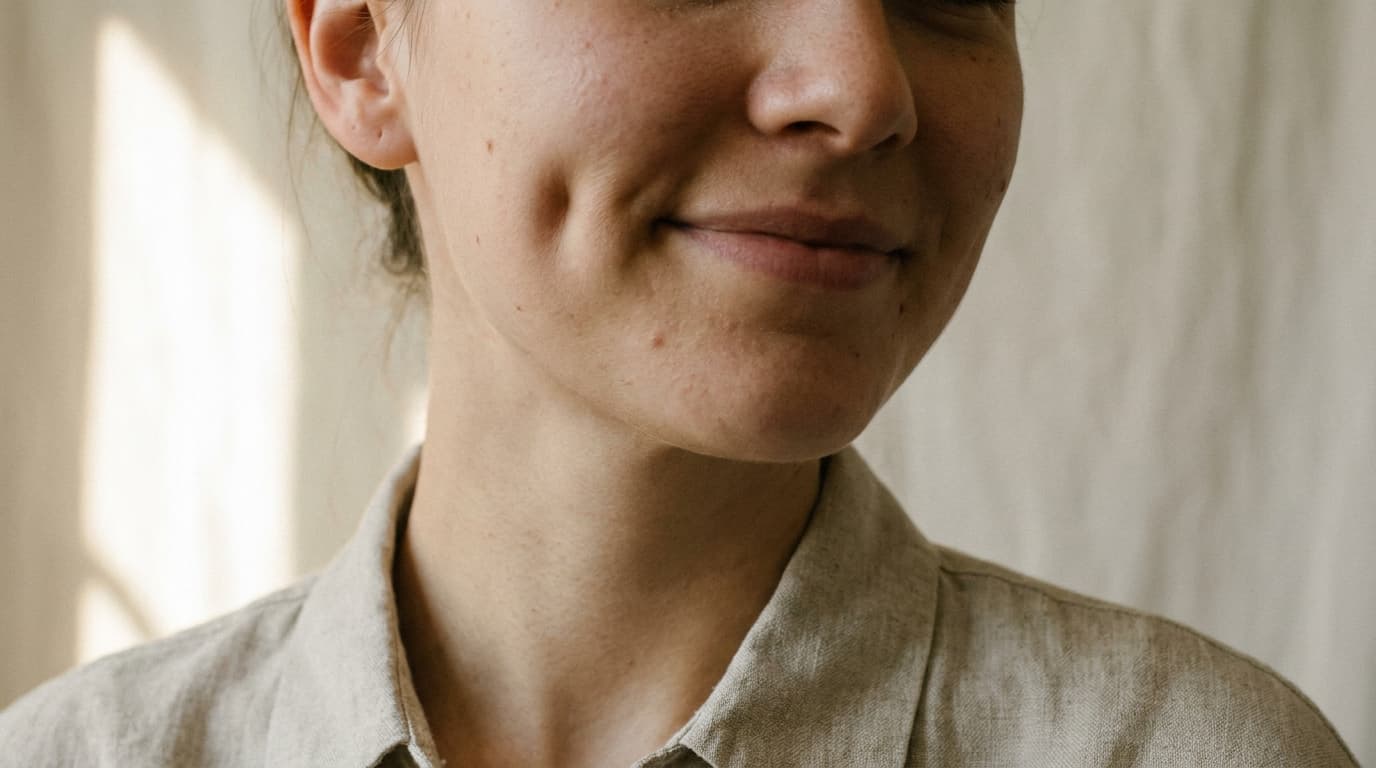
Dimpleplasty is the rare cosmetic procedure that sells itself as a subtraction and delivers an addition. The pitch is compact: twenty to thirty minutes under local anesthesia, no cut on the outside of the face, back to work tomorrow, and a pair of cheek dimples for somewhere between the cost of a syringe of filler and a fraction of a rhinoplasty. It has become one of the more visible small procedures on short-form video, where the before-and-after fits in a single frame and the surgeon's needle work looks like sewing.
What almost never makes it into the video is what the operation is. A dimple, natural or made, is a place where the skin is tethered to the muscle underneath so that the skin dips when the muscle contracts. Surgery cannot install a new muscle variant. It can only create an adhesion, and the way it creates one is by injuring the tissue between skin and muscle on purpose and holding it together with a stitch until scar forms. Dimpleplasty is, in the most literal sense, a controlled scar placed in a flattering location. Everything good and everything bad about the procedure follows from that sentence.
That is not a reason to avoid it. It is the reason the consultation should sound different from the marketing. The relevant questions are not about downtime, which is genuinely short. They are about how the dimple behaves during the months the scar is maturing, what sits under the cheek at the spot being sutured, how often the result fades or over-stays, and who, exactly, is holding the needle.
What a natural dimple actually is
The short answer: a cheek dimple is an anatomical variant, not a defect, produced when a slip of the zygomaticus major muscle splits and inserts into the dermis of the cheek, pulling the skin inward on smiling.
The anatomy literature settled this decades ago. The zygomaticus major runs from the cheekbone to the corner of the mouth and is the muscle that pulls the mouth up and out in a smile. In a substantial minority of people the muscle is bifid: it divides into two bundles, and the lower bundle sends fibers into the undersurface of the skin rather than running clean to the mouth. When the muscle fires, that dermal insertion tugs the skin down toward the bone and the surface dips. Pessa and colleagues, in a cadaver study published in Clinical Anatomy in 1998, found the bifid variant in roughly a third of the hemifaces they dissected, which is why dimples are common enough to feel normal and uncommon enough to feel like an asset.
Two consequences matter for anyone considering surgery. First, a natural dimple is dynamic: it appears when the muscle contracts and vanishes at rest, because the tether is a live muscle, not a fixed adhesion. That is the behavior patients have in mind when they ask for dimples, and it is the behavior surgery finds hardest to reproduce. Second, natural dimples are frequently asymmetric, one-sided, or differently shaped left and right, because muscle variants do not consult a mirror. The internet's insistence that dimples are a simple dominant genetic trait is folklore; inheritance is real but not that tidy, and the broader point about faces made in the piece on baseline asymmetry applies here with force. A surgeon promising two identical dimples is promising something nature rarely delivers.
How the surgery works, and why it is a scar
The short answer: the modern technique is done from inside the mouth, removes a small core of tissue under the chosen point, and passes a suture between the dermis and the cheek muscle so the two heal stuck together, which is a scar by design.
The procedure traces to a 1962 paper by Khoo Boo-Chai in Plastic and Reconstructive Surgery, which described both the operation and the landmark still used to place the dimple: the point where a vertical line dropped from the outer corner of the eye crosses a horizontal line drawn from the corner of the mouth. Sixty years of refinement have not moved the concept far. The surgeon marks that point, or wherever the patient's face and a natural dimple's usual position agree, numbs the cheek from inside, makes a small incision or punch in the buccal mucosa, and removes a core of submucosal fat and a little muscle beneath the marked skin. An absorbable suture is then passed through the underside of the dermis and tied down to the muscle or mucosa, pulling the skin in. There is no cut on the face. The whole thing takes twenty to thirty minutes, and the patient goes home with a stitch inside the cheek, a soft-food list, and an antiseptic mouth rinse.
It is worth dwelling on what the suture is for. It is not the dimple. It is a temporary clamp that holds skin against muscle while the injured tissue between them heals into a fibrous band. Once that band exists, the suture can dissolve and the adhesion persists; when the muscle contracts, the band pulls the skin in. That fibrous band is scar, and scar has its own personality, laid out in the scar biology covered in the evidence review on scar care. It is strong, it contracts as it matures, it does not always form where or as much as intended, and it occasionally does not form at all. Every unpredictability in dimpleplasty is a scar behaving like scar.
"A dimpleplasty does not install a dimple. It creates an injury between the skin and the cheek muscle and holds the two together until scar forms. The stitch is temporary. The scar is the product.
"
The static dimple: the part of the timeline nobody posts
The short answer: a fresh dimpleplasty produces a dimple that is present at rest, often deep and puckered, and the transition to a dimple that shows only on smiling takes weeks to months, with some patients keeping a resting dimple permanently.
This is the single most under-explained fact about the procedure. In the first days the suture is doing all the work, and it holds the skin in whether the face is smiling or not. The result is a static dimple: a visible indentation at rest, frequently deeper than the final version, sometimes with a small pucker of surrounding skin. Patients who expected the dynamic dimple from the video see a hole in their cheek and, understandably, panic. Surgeons who do this well warn about it before the procedure rather than after, because the warning is the difference between a patient who waits and a patient who books a correction consult in week two.
The static phase resolves as the suture dissolves and the scar band matures and relaxes, typically over one to three months, at which point the dimple should soften at rest and deepen with expression. But the maturation is not fully controllable. In a minority of patients the band stays tight and the resting dimple never fully disappears; in others it loosens too much and the dimple fades to nothing. The published series, most of them from high-volume centers in Asia and the Middle East where demand is highest, report high satisfaction alongside a real rate of loss, asymmetry, and requests for revision, and none of them are large randomized trials. There is no registry, the procedure is not tracked in ASPS annual procedure statistics, and the honest state of the outcome data is "case series and experience." A surgeon quoting a precise permanence rate is quoting their own numbers or nobody's.
Two further points about permanence deserve a plain statement. A dimple that is too deep, too high, or simply regretted is harder to remove than it was to make, because the fix requires releasing a scar and then filling the tethered spot, and scars re-form. And the muscle-skin relationship changes with age: cheeks descend, fat pads shift, and a dimple placed at twenty-two on a full cheek may sit differently at fifty on a hollow one. Anyone reading the gallery should apply the questions in the guide to before-and-after photos, and specifically ask to see results at one year and beyond, smiling and at rest, because the two-week photo is the least informative image the procedure produces.
What sits under the cheek
The short answer: the dimple point sits over the parotid duct, the buccal branches of the facial nerve, and the facial vessels, and an intraoral incision opens into one of the most bacteria-dense environments in the body, so the complications of a twenty-minute procedure are not trivial when they happen.
Start with the duct. The parotid gland's duct, Stensen's duct, runs forward across the masseter muscle, turns inward through the buccinator, and opens inside the cheek opposite the upper second molar. That course passes through the general territory of the dimple landmark. A suture that catches the duct, or a core removed too deep, can obstruct it or create a fistula, and the result is a swollen, painful cheek, sometimes leaking saliva into the tissues. It is rare, it is written up, and it is the reason the person doing this should know facial anatomy rather than have watched a technique video.
The buccal branches of the facial nerve run in the same neighborhood, supplying the muscles that move the upper lip and cheek, and the same principle from the piece on facial nerve injury applies at smaller scale: bruising or entrapment produces a weak or asymmetric smile that usually recovers over weeks and occasionally does not. Hematoma and prolonged swelling are the common nuisances. Infection is the common real problem, because the wound is inside the mouth and the mouth is not sterile; the standard rinse, a short antibiotic course in many protocols, and no smoking are not optional decorations on the aftercare sheet. Absorbable sutures placed intraorally can also do what absorbable sutures do everywhere, which is irritate on their way out, described in the note on spitting sutures. Finally, there is the plain aesthetic complication: a dimple in the wrong place, which on a face is a very small distance from the right place, or a dimple whose surrounding skin puckers into a fold rather than dipping into a point.
Who is doing this, and for whom
The short answer: dimpleplasty is cheap, fast, and technically simple to perform badly, which is why it is offered by a wide range of operators, marketed hard to very young patients, and worth treating as a surgical decision rather than a cosmetic add-on.
The economics explain the landscape. A procedure with no general anesthesia, no operating room, no implant, and half an hour of chair time can be priced at a fraction of a surgical case and still be profitable, and it slots neatly into a menu alongside injectables. That makes it attractive to practices without surgical training and to clinics in the medical tourism market, where it is frequently bundled with other procedures and priced to travel. The counter-argument does not need to be long: the anatomy at the dimple point is real, the complications when they occur need a surgeon, and the procedure is permanent in a way most menu items are not. The reasoning in the piece on who is actually performing your procedure transfers directly.
The demographic pull matters too. Demand for dimple creation skews young, is heavily driven by short-form video, and is often framed as reversible or minor, which it is not. The threshold questions the field has developed for cosmetic surgery in teenagers and very young adults, about stability of motivation and the difference between wanting a change and wanting to look like a specific person, apply with unusual precision to a procedure whose main marketing channel is other people's faces. Add the ordinary disclosure question raised in the influencer piece: when the dimpled face in the video belongs to someone who was not charged for the surgery, the video is an advertisement, not a testimonial.
None of this is an argument against dimpleplasty for the right patient. For a stable adult who wants a dimple, understands that the early result is a static indentation, accepts a real chance of asymmetry or fading, and chooses a surgeon who can name the structures under the marked point, it is a reasonable procedure with a short recovery and a satisfied majority. It is an argument against the version being sold, which is a lunchtime tweak with no downside.
The honest summary
A cheek dimple is a muscle variant, present in roughly a third of dissected faces in the anatomy literature, in which a slip of the zygomaticus major inserts into the skin and pulls it in on smiling. Surgery cannot make that muscle. Dimpleplasty, in essentially the form Boo-Chai described in 1962, makes a scar instead: an intraoral incision, a core of tissue removed, and a suture holding skin to muscle until a fibrous band forms. That mechanism explains the whole procedure. The early result is a dimple at rest, sometimes for months and occasionally for good. The final result depends on how scar matures, which is why a minority fade, a minority stay too deep, and symmetry is a hope rather than a specification. The anatomy under the landmark includes the parotid duct and facial nerve branches, and the wound is inside the mouth, so infection and swelling are the routine risks and duct or nerve injury the rare serious ones. There is no registry, no ASPS procedure count, and no randomized data; the evidence is case series from high-volume centers. The decision points, then, are not the price and the downtime. They are whether a resting dimple for a season is acceptable, whether the wish is for a dimple or for someone else's face, and whether the person holding the needle could draw the duct and the nerve on the cheek before picking it up. Ask for the one-year photographs, smiling and at rest. If they do not exist, the practice is still finding out how its dimples age, and the patient should not be the one who tells them.