Procedure Deep-Dive · September 12, 2026
Recovery House or Home for the First 72 Hours: What Actually Goes Wrong in the First Three Nights, Why the Responsible Adult Is a Medical Requirement and Not a Courtesy, What a Nurse-Staffed Aftercare Facility Does That a Spouse Cannot, and How to Decide Who Should Be Watching You
The surgical quote covers the operating room, the anesthesiologist, and the surgeon, and then the patient is wheeled to a car and the most dangerous seventy-two hours of the entire experience begin with nobody medical in the room. Bleeding, oversedation, vomiting, fainting on the way to the bathroom, a drain that stops working, and the slow creep of a lidocaine level all belong to the first three nights, and the person handling them is either a relative with a printed sheet or a nurse in a place that calls itself a recovery house. Here is what the first seventy-two hours actually contain hour by hour, where the responsible-adult rule comes from and what the word responsible means, what a recovery house is and is not licensed to be, how to run the home version properly, and which patients should not go home at all.
By The Editorial Desk
23 min read
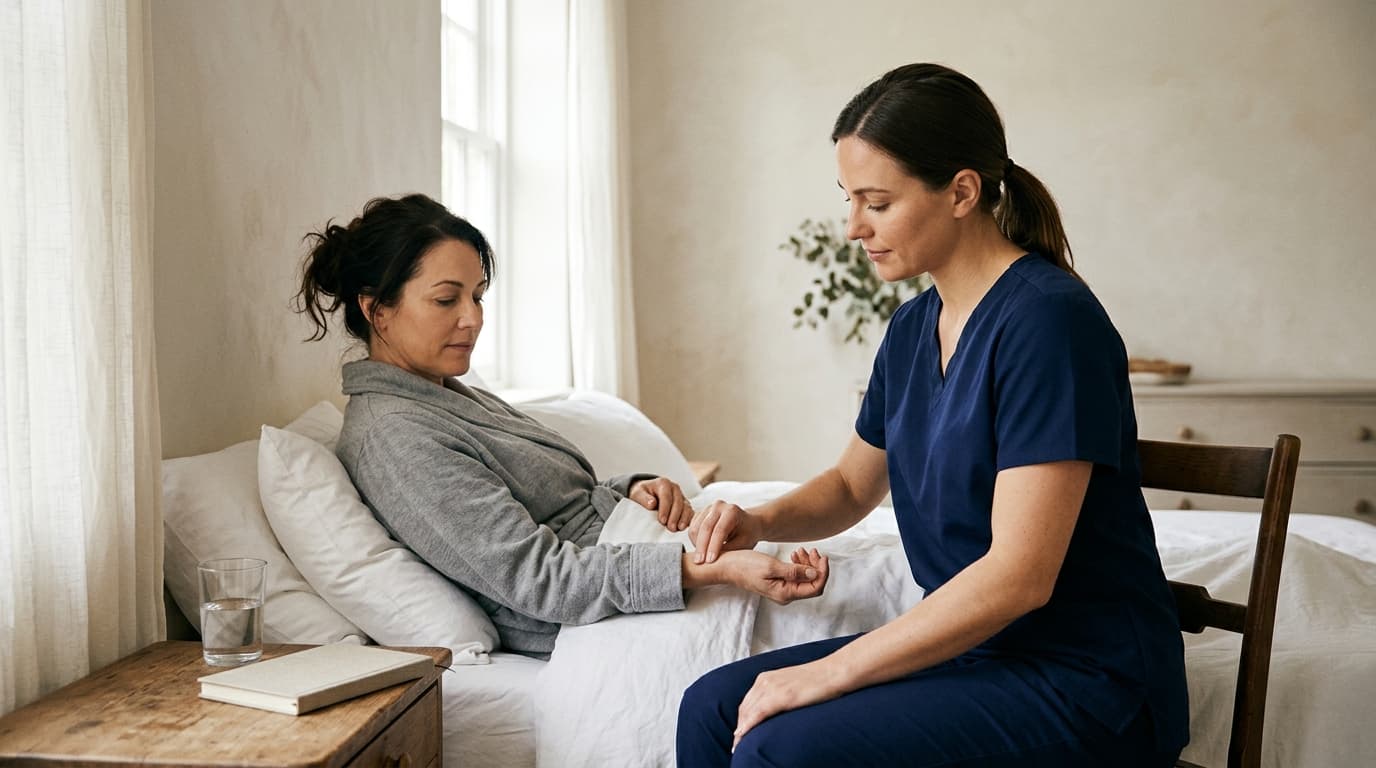
The first 72 hours after cosmetic surgery are the part of the operation that happens after the surgeon has gone home. The patient is discharged from a surgical facility a few hours after waking, still carrying anesthetic drugs, a fresh incision, sometimes a liter or more of tumescent fluid, a bag of pills, and a sheet of instructions, and is handed to whoever agreed to pick her up, or to the van from a recovery house. For the next three nights that person is the entire clinical team. In a well-run recovery the handoff is planned as carefully as the operation. In a badly run one it is a text message to a friend and a rideshare, and the recovery house industry that has grown up around cosmetic surgery in Los Angeles, Miami, and every destination city exists in the gap between those two.
The short version, which the rest of this piece defends: almost every complication that kills or seriously injures a cosmetic surgery patient in the first week either declares itself or is set in motion in the first 72 hours, the surgical societies and the anesthesia societies have written the responsible-adult requirement into their standards for exactly that reason, and the question a patient should be asking is not whether she needs a recovery house but what specifically needs watching in her case and who is qualified to watch it. For a great many procedures the honest answer is a capable adult at home with a written brief. For a defined group of patients and operations, the honest answer is a nurse, and the patient who cannot arrange one should be reconsidering the date rather than the requirement.
This piece sits alongside the piece on how to sleep after plastic surgery, which covers positioning, the piece on driving and returning to work, which covers the escort rule on discharge day, and the piece on pets during recovery, which covers the household. What none of them does is ask the prior question: who is in the house at all, what are they for, and when does the answer have to be a professional. That question is the subject here.
What the first 72 hours actually contain, and why that window and not the first two weeks
The short answer: the first three nights hold the anesthesia complications, the bleeding complications, the fainting and falling complications, the oversedation and breathing complications, and the peak of nausea and pain, all of which move fast and need a response in minutes to hours, while the later complications (infection, seroma, wound separation) arrive from day four onward, move slowly, and give a patient at home a day or more of warning.
The reason the surgical societies draw the line at 24 hours for a responsible adult, and the reason the recovery house industry sells three-night packages, is that the danger in cosmetic recovery is front-loaded and the shape of it changes by the hour. It helps to walk the clock.
Hours zero to twelve, the first evening and night. The patient leaves the facility having passed a discharge score, awake and oriented and able to walk with help, and still measurably under the influence of the anesthetic. The residual drugs wear off in stages over the evening, which is why the earlier piece on driving after surgery treats the first 24 hours as a period of legal and cognitive impairment regardless of how clear the patient feels. Nausea is at its worst here, and the piece on nausea after cosmetic surgery covers why roughly a third of patients vomit after general anesthesia and why the high-risk quartet (female, non-smoker, history of motion sickness, opioids afterward) pushes that toward three in four. The first trip to the bathroom is the classic fall: a patient who has been flat for hours, is vasodilated by anesthetic and opioid, has lost fluid and not yet replaced it, stands up alone, and faints. Urinary retention after general anesthesia is common enough that most facilities will not discharge until the patient has voided, and a patient who has not urinated eight hours after getting home is a phone call, not a wait-and-see. Body temperature is unstable, and the piece on shivering and hypothermia after surgery covers why a patient can be shaking under three blankets with a normal thermometer reading.
Most importantly, the first night is the hematoma window. After a facelift, the largest published series put the majority of expanding hematomas, roughly two in three, inside the first 24 hours, with a cluster in the first twelve, and the piece on hematoma after facelift covers the arithmetic: about one to two percent of women and several times that in men, with the blood pressure spike of vomiting, straining, or pain as the usual trigger. A facelift hematoma is a same-hour problem. The skin over it can die within hours if it is not drained, and a patient asleep alone will not notice the one-sided tightness and pain that signals it until morning. Breast augmentation hematomas, abdominoplasty bleeds, and liposuction bleeds into the treated planes follow the same clock with less drama and the same rule: the first night is when they show.
Hours twelve to thirty-six, the second day and night. Pain peaks. The long-acting local anesthetic the surgeon infiltrated at the end of the case wears off somewhere in this window, and the patient who felt surprisingly well on the first evening meets the operation properly on the morning of day two. Oral opioids, if prescribed, are at their peak use and their peak risk, which is respiratory depression during sleep, and the piece on opioid-sparing recovery covers why the better practices have redesigned pain plans to keep this window off opioids as far as possible. For liposuction patients this window has a second hazard that most caregivers have never heard of: lidocaine from tumescent solution is absorbed slowly, and blood levels peak roughly 12 to 14 hours after infiltration, so the classic early signs of toxicity (a metallic taste, ringing in the ears, numbness around the mouth, drowsiness that seems out of proportion, twitching) appear the night after surgery and not in the operating room. The piece on lidocaine toxicity in tumescent liposuction covers the dose limits that make this rare and the circumstances that make it real. Tumescent fluid drains from the incisions in alarming volumes on day one and two, and a caregiver who has not been told to expect pink fluid soaking through pads will call the wrong number or, worse, no number.
Hours thirty-six to seventy-two, the third day. Swelling peaks around day two to three, and the piece on the swelling timeline explains why the patient often looks worse on the morning of day three than on the evening of surgery. Drains are now producing the fluid that will decide when they come out, and the piece on surgical drains covers the stripping, measuring, and logging that someone has to do at intervals through the night. A low fever in this window is usually atelectasis from shallow breathing rather than infection, and the piece on fever after plastic surgery draws the line between the two. Constipation from opioids and immobility begins to matter. The first shower, per the surgeon's rules, often falls here, and it is the second classic fall. The emotional drop that the piece on emotional recovery describes usually lands on day three as well.
After 72 hours the clock changes character. Infection announces itself from day four to day seven with redness, warmth, and a fever that climbs rather than flickers. Seroma builds over one to three weeks. Wound separation follows tension and movement over days. Blood clots remain a risk for weeks, and the piece on blood clots after plastic surgery covers why the risk stays elevated well past discharge and why calf pain or breathlessness at any point is an emergency, but the highest-risk hours for a clot to form are the immobile ones in this first window. Each of the later problems gives a patient at home a day of warning and a daytime phone call to make. The first 72 hours give her minutes, at night, while she is sedated. That asymmetry is the entire case for planning them differently.
Where the responsible-adult rule comes from, and what the word responsible actually means
The short answer: the American Society of Anesthesiologists, the American Society of Plastic Surgeons, and every accrediting body for office-based surgery require that a patient who has had sedation or general anesthesia be discharged into the care of a responsible adult who stays with her, and "responsible" has a specific meaning in those standards: an adult who is awake, sober, physically capable of assisting, able to understand and follow the discharge instructions, and able to summon help, for the whole first night at minimum.
Patients tend to hear the requirement as a liability formality, the same category as the instruction not to sign contracts for 24 hours. It is not. The American Society of Anesthesiologists' practice guidelines for postanesthetic care state that, as part of the discharge criteria for ambulatory patients, a responsible individual should accompany the patient home, and the accreditation standards of the American Association for Accreditation of Ambulatory Surgery Facilities, the body that certifies most plastic surgery operating rooms in the country, make discharge in the company of a responsible adult a condition of discharge itself. The piece on outpatient facility accreditation covers what those standards otherwise require. The American Society of Plastic Surgeons' patient safety materials repeat the same instruction in plain language: someone should be with you for at least the first 24 hours. The number is a floor, and it is set by the pharmacology of the anesthetic, not by the procedure.
What the standards do not do is define who qualifies in enough detail to stop patients from gaming it, and patients game it constantly. A spouse who works a night shift and will be home by 6 a.m. is not a responsible adult for the first night. A friend who drives the patient home, gets her into bed, and leaves is not. A teenager is not. A partner who has been drinking is not, and a caregiver who shares the patient's sedatives is emphatically not. A relative who cannot physically catch a fainting adult on a bathroom floor is a companion rather than a caregiver, and for a large patient after a large operation that distinction can be the difference between a bruise and a fall onto a fresh abdominoplasty. The better practices write their definition into the pre-admission paperwork, ask for the caregiver's name and phone number in advance, brief the caregiver directly at discharge rather than through the patient, and will cancel a case on the morning of surgery if the plan has fallen apart. A practice that shrugs when a patient says she will be alone is telling you what its safety culture is worth.
"The first three nights are not the recovery. They are the part of the operation that happens after the surgeon has left the building, and the question is never whether someone will be in the house. It is whether that someone knows what they are looking at when it goes wrong at three in the morning.
"
The functional definition of a responsible adult is a list of tasks, and it is worth reading it against the person you are planning to ask. Over the first night, that person needs to: check on the patient at intervals, including while she sleeps, and know the difference between deep sleep and a patient who is hard to rouse or breathing fewer than about ten times a minute; get her to and from the bathroom without letting her stand up alone; give the medications on the written schedule, including the anti-nausea drug on time and not after the vomiting has started; empty, measure, and record drains if there are any; look at the operated area for one-sided swelling, bruising that is spreading, tightness, or pain that is escalating rather than settling; take a temperature; keep fluids going in; and know the surgeon's after-hours number, know that it is answered by a human, and be willing to use it. None of that requires a medical license. All of it requires someone who is awake, present, sober, physically able, and briefed, and the honest way to evaluate a caregiver is to read that list to them and watch their face.
What a recovery house is, and what it is not licensed to be
The short answer: a recovery house is, in most states, a lodging business and not a health facility; it holds no health department license, is not inspected against clinical standards, and can be anything from a nurse-staffed suite in a licensed facility's orbit to a spare bedroom in a residential house run by someone with no medical training, and the words "recovery house," "aftercare facility," and "post-op retreat" carry no regulatory meaning at all.
This is the fact that most patients booking one do not know. In California, in Florida, and in almost every other state, there is no license called "recovery house." A business can rent a room, drive a patient to and from surgery, hand out medications from a bottle labeled with the patient's name, and change dressings, and be regulated as a short-term rental. If it advertises nursing care and employs licensed nurses, the nurses are individually licensed by the state board of nursing, but the facility itself is not a licensed clinic, is not surveyed by anyone, and has no obligation to meet staffing ratios, keep clinical records, stock emergency equipment, or have a physician on call. Florida's 2019 office-surgery law, passed after the run of Brazilian butt lift deaths that the piece on BBL safety protocols covers, tightened who may operate and in what kind of facility, and left recovery houses where they had always been: outside the system. The Miami recovery house that appears in the news after a death is usually a rented residential home with a dozen patients, a shared bathroom, one unlicensed "nurse," and a van, and the piece on the true cost of plastic surgery tourism covers how these operations plug into the volume surgery model that produces the patients.
At the other end of the range, the recovery house is a genuinely good idea done well. The version that exists in Beverly Hills and a handful of other markets is a suite of private rooms, often inside or adjacent to a hotel or a medical building, staffed around the clock by registered nurses or licensed vocational nurses under a nurse manager, with a physician (frequently an anesthesiologist) on call, a relationship with the surgeons who send patients there, pulse oximetry and blood pressure monitoring on a schedule, protocols for drain care and medication timing, and a low enough patient-to-nurse ratio that a night nurse actually walks into each room every hour or two. That is a different product from the rented house, it costs accordingly, and it is what surgeons mean when they say they "require aftercare" for a facelift or a combined body procedure.
What a good one does that a spouse cannot is mostly a matter of judgment and thresholds. A nurse who has watched two hundred facelift patients on the first night knows what normal swelling looks like and what a hematoma looks like at hour six, before the patient is in pain, and will call the surgeon at 1 a.m. without agonizing over whether she is overreacting. A nurse will notice a respiratory rate of eight, an oxygen saturation drifting down on the oximeter, a blood pressure that explains why the dressing is getting tighter, or the drowsiness and metallic taste of an early lidocaine level, and knows that each of those triggers a specific call rather than a wait. A nurse can give an intramuscular anti-nausea injection when the patient cannot keep pills down, can recognize the rash from surgical tape that a caregiver mistakes for infection, and can tell the difference between the ordinary misery of day two and the beginning of something. The surgeon, for his part, gets a report from a clinician rather than from a frightened relative, which changes what he can decide by phone.
What no recovery house can do is substitute for a well-run operation and a surgeon who answers the phone. A recovery house attached to a high-volume operation that discharges patients too early, sends them across town with unstable blood pressure, and cannot be reached at night is a place where complications are observed rather than prevented. The questions to ask about any facility are the same ones that expose the difference: who owns it, whether the surgeon has an ownership interest (which is legal and should be disclosed), who exactly is on shift overnight and what license they hold, what the patient-to-nurse ratio is at 3 a.m., which physician is on call and how quickly he has come in when called, what monitoring equipment is in the room, and how many of the surgeon's own patients have stayed there. A facility that cannot answer the overnight staffing question with a name and a license is a hotel.
Running the home version properly: the caregiver brief, the thresholds, and the setup
The short answer: for the majority of cosmetic operations, a capable adult at home is safe and appropriate, provided the caregiver has been briefed in person by the practice, has a written medication and drain schedule, has a written list of warning signs with numerical thresholds rather than adjectives, knows the after-hours number is answered, and understands that the first night involves being awake at intervals rather than sleeping in the next room.
Most patients recover at home, and most should. Breast augmentation without a lift, an upper eyelid operation, a rhinoplasty, a small-volume liposuction, a chin implant, a lip lift, and most facial injectable work do not need a nurse, and a partner or a parent who takes the brief seriously is at least as good as a professional who has never met the patient. The failure mode of home recovery is not the absence of a license. It is the absence of a plan, and the plan has specific parts.
The brief. The caregiver should be in the room when the discharge nurse gives the instructions, should hear them directly, and should leave with the paper. The patient will remember almost none of what was said, which is the reason the instructions are given to someone else. The better practices schedule a pre-operative phone call with the caregiver for exactly this purpose.
The schedule. Medications should be laid out by time, not by bottle, with the anti-nausea dose given before the first opioid dose rather than after the first vomit, and the antibiotics, stool softener, and any blood pressure medication on the same sheet. The piece on constipation after plastic surgery explains why the stool softener starts on day one and not when the problem appears. The piece on ibuprofen and NSAIDs after cosmetic surgery covers which over-the-counter pain relievers are allowed in which operations, and the caregiver should know that the answer differs by procedure and should not improvise. If there are drains, the sheet should say when to empty them, how to record the volume and color, and what number on that record triggers a call.
The thresholds. The single most useful thing a practice can hand a caregiver is a list of warning signs with numbers on it, because adjectives do not help a frightened person at 2 a.m. The list a good practice provides looks roughly like this, adjusted for the operation: a temperature over 101.5 degrees Fahrenheit, or over 100.4 that persists past a few hours and does not respond to deep breathing and fluids; pain on one side that is getting worse rather than better, with tightness, a spreading bruise, or a visible size difference between sides, which after a facelift or breast surgery means a call now and not in the morning; bright red drain output that increases hour over hour or exceeds the volume the surgeon named, or a drain that abruptly stops in the first day; breathing slower than about ten times a minute, or a patient who cannot be woken enough to answer a question, which means stopping the opioid and calling; vomiting more than twice or an inability to keep medications down for more than a few hours; no urination in eight hours; calf pain, chest pain, or shortness of breath at any moment, which is a 911 call; and after tumescent liposuction, ringing in the ears, numbness around the mouth, a metallic taste, unusual drowsiness, or twitching in the evening or night after surgery, which is a call to the surgeon immediately. Skin over a flap that is turning dusky, purple, or white, which the piece on skin necrosis after facelift and tummy tuck describes, is a same-day visit.
The setup. The bed and the bathroom are where the falls happen. The route between them should be lit, clear, and short, with nothing on the floor and a chair available at the halfway point for a patient who feels faint. Standing should happen in stages: sit for a minute, stand with the caregiver's hands on the patient, walk. A bedside commode for the first night is not an indignity, it is the intervention with the biggest safety return in the whole plan. The earlier piece on sleep positioning covers the wedge, the recliner, and the arm-pillow arrangements that keep a patient from rolling onto the operation. Water and a straw, crackers, the thermometer, the medication sheet, the phone with the after-hours number saved, and a charged charger belong within reach. The piece on showering and bathing after surgery covers the first shower, and a caregiver should be outside the bathroom door for it, because a warm shower on day two or three in a patient who has been horizontal for 48 hours is the second most common way to end up on the floor. Compression garments should be inspected for rolling, bunching, and pressure points at each check, and the piece on the compression garment evidence explains why a garment that is too tight over a flap is worse than none.
The caregiver's own night. The first night is not a night's sleep. A realistic plan has the caregiver checking the patient every two hours through the night, which means an alarm, and a second person to trade off with if the first has to work the next day. A caregiver who plans to sleep through in the next room has agreed to a job without reading the description. For the second and third nights the checks can stretch, and by day three most patients on most operations can be left for a few hours during the day.
Who should not go home, what the choice costs, and how to decide
The short answer: a nurse for the first night, at a recovery house or at home, is the correct plan for facelift and neck lift patients, for combined or long operations under general anesthesia, for large-volume or multi-area liposuction, for Brazilian butt lifts, for abdominoplasty with drains in a patient who lives alone, for patients with sleep apnea or a body mass index over 30 taking opioids, for anyone who has traveled to the city for the operation, and for any patient whose only available caregiver fails the responsible-adult list; the cost of that night runs from several hundred to well over a thousand dollars in Los Angeles, and it belongs in the surgical budget from the start.
The decision is not about how expensive the operation was or how nervous the patient is. It is about which of the first-72-hour hazards apply and how fast they move. The following patients should treat professional overnight care as part of the operation:
- Facelift and neck lift patients. The hematoma clock alone justifies it. The complication is common enough, fast enough, and consequential enough that many facial surgeons write a night of nursing into the surgical plan and will not operate without it, and the piece on the neck lift covers why the first night is the whole game.
- Long or combined operations. The piece on combining procedures covers why the risk of clots, bleeding, and anesthetic complications rises with operative time, and a patient coming out of a five-hour mommy makeover has three operations' worth of first-night hazards and one body to carry them.
- Large-volume liposuction and Brazilian butt lifts. Fluid shifts, the lidocaine peak the night after surgery, the volume of drainage, and the positioning rules after fat grafting to the buttocks make the first two nights a clinical job.
- Abdominoplasty with drains, particularly in a patient living alone. The drains need tending on a schedule, the first standing and walking need hands, and the bent-at-the-waist posture makes the bathroom trip a two-person event.
- Patients with sleep apnea, a BMI over 30, or a history of difficulty with anesthesia. The piece on sleep apnea before cosmetic surgery covers why an opioid prescription, a hotel room, and nobody watching a pulse oximeter is the specific combination that produces the deaths, and the piece on BMI limits covers the rest.
- Out-of-town patients. A patient in a hotel with a friend who flew in is missing the two things that make home recovery work: a familiar environment and a caregiver who can call for help from people they know. The piece on flying after cosmetic surgery covers the separate question of when she can go home.
- Anyone whose caregiver plan fails the list. If the only available adult works nights, cannot lift, will not stay awake, or does not want the job, a nurse is the answer and postponing is the alternative.
Patients who can reasonably go home with a briefed caregiver include most breast augmentations, upper and lower eyelid operations without a brow lift, rhinoplasty, otoplasty, chin and cheek implants, small-area liposuction under a couple of liters, labiaplasty, and gynecomastia surgery. Even here the first night should have someone awake and checking, and the piece on anesthesia choice is worth reading for the difference general anesthesia makes to the first evening regardless of how small the operation was.
The cost, in honest terms, is this. In Los Angeles a registered nurse for private duty in the home runs somewhere in the range of 75 to 150 dollars an hour, so a twelve-hour overnight shift costs roughly 900 to 1,800 dollars, and a licensed vocational nurse is somewhat less. Nurse-staffed recovery suites in the Beverly Hills market charge in the region of 600 to 1,500 dollars a night, with the price rising with private rooms, on-call physician coverage, and lower ratios, and three nights therefore lands somewhere between 2,000 and 5,000 dollars. Transport, meals, and dressing changes are usually bundled. A rented residential recovery house in a tourism market can cost a fraction of that, and the discount is the staffing. The piece on what the surgical quote covers explains why aftercare is usually a line the quote omits, and a patient should ask the coordinator for the number before scheduling rather than discovering it at the pre-operative appointment. A facelift budget that has room for the operation but not for the first night has been built in the wrong order. The night is cheaper than the hematoma, and it is a great deal cheaper than the revision that follows a hematoma nobody caught.
One more point, because it is the one that patients most often get backwards. The recovery house is not a substitute for the surgeon's own aftercare. A practice that says "we require our facelift patients to stay at the aftercare facility for one night" and then sends a nurse practitioner to see the patient there on the morning of day one is running a system. A practice that recommends a facility, has no relationship with it, and does not see the patient until the one-week appointment has outsourced the most dangerous 72 hours of the operation to a hotel and called it a requirement. The question that separates them is simple: who from your office will see me, in person, on day one, and where.
The honest summary
- The danger is front-loaded. Bleeding, oversedation, fainting, vomiting, the tumescent lidocaine peak, and the hematoma window all belong to the first three nights and move in minutes to hours; infection, seroma, and wound separation arrive later and give a day of warning. The first 72 hours are the part of the operation the surgeon does not attend.
- The responsible adult is a clinical standard. The anesthesia society, the plastic surgery society, and the surgical facility accreditors all require discharge to a responsible adult who stays for the first 24 hours, and the word means awake, sober, physically capable, briefed, and willing to call, not merely present in the building.
- A recovery house has no license, so the name means nothing. It can be a nurse-staffed suite with a physician on call or a rented house with a van and a stranger, and the questions that separate them are who is on shift overnight, what license they hold, what the ratio is at 3 a.m., and who owns it.
- Home works when it is planned. A caregiver briefed in person, a medication and drain schedule by the clock, a written list of numerical thresholds, a cleared and lit path to a bathroom or commode, and someone awake at intervals through the first night is a safe plan for most operations.
- Some patients should not go home. Facelifts, long or combined operations, large-volume liposuction and BBLs, drained abdominoplasty in a patient alone, sleep apnea or high BMI with opioids, out-of-town patients, and anyone without a qualifying caregiver need a nurse for the first night, and the cost of that night belongs in the budget before the date is set.
The recovery house industry exists because surgery moved out of hospitals and the first night did not move with it. Somebody has to do what the ward nurse used to do, and the market has answered with everything from serious clinical aftercare to rented bedrooms with a marketing name. The patient's job is not to decide whether she is the kind of person who needs a recovery house. It is to find out what her specific operation does in the first three nights, to look honestly at the person she is planning to ask, and to insist that the surgeon's plan for those 72 hours is written down and staffed before she agrees to the date. The operation is the part the surgeon controls. The first three nights are the part you have to arrange, and they deserve the same seriousness.